This site uses affiliates. Thank you for buying through our links and supporting this blog.


Rotorua to Taupō Drive: Best Stops & One-Day Itinerary

The drive from Rotorua to Taupō takes about an hour, but I’d give it most of the day. Between the two you’ve got colourful geothermal pools, steaming valleys, hot streams and a river that squeezes through Huka Falls with a ridiculous amount of force. It’s a very good stretch of road to take slowly.
I’ve driven this route several times during my years in New Zealand, and my favourite way to do it is pretty simple: Wai-O-Tapu, a soak at Kerosene Creek, lunch in Taupō and a trip out onto the lake. The Champagne Pool is worth stopping for all by itself, and I absolutely love getting out onto Lake Taupō. Huka Falls fits nicely after the cruise, especially if you’re heading back to Rotorua.
Below, I’ll take you through the best stops between Rotorua and Taupō, the detours I’d consider and a realistic one-day itinerary. You certainly don’t need to do everything. I’d much rather you enjoy a few places properly than spend the day watching the clock.

In a hurry?
My picks for this drive:
Wai-O-Tapu admission — my favourite geothermal stop.
Māori rock carvings cruise — an afternoon on Lake Taupō.
Hukafalls Jet boat ride — to add some adventure.
Taupō day tour from Rotorua — if you’re returning to Rotorua.
Stay in Taupō: Acacia Lake View Motel.
Rotorua to Taupō: distance, driving time and route
Rotorua and Taupō are around 80 km apart by road. Follow State Highway 5 south from Rotorua, then the signs into Taupō. Allow approximately one hour for the direct drive in normal conditions, with extra time for traffic, roadworks and whichever stops you choose.
Direct drive: About 80 km / 50 miles; approximately 1 hour
With my recommended stops: A full day: leave Rotorua around 8 am and finish at Huka Falls around 4:45–5 pm
Returning to Rotorua: Allow about another hour after Huka Falls; longer with traffic or extra stops
Best direction: Either works; I’ve written the stops from Rotorua south to Taupō
Most of the attractions sit just off the highway. Ōrākei Kōrako is the bigger detour, while Waimangu is a turn-off near the Rotorua end. The drive itself passes forest and farmland; the colourful, steamy scenery is mostly something you stop and walk into.
If you need a car, compare New Zealand rental cars for your whole road trip. I’d usually keep the same vehicle for Rotorua and Taupō; a separate one-way rental for such a short journey can add fees without saving much time.
My New Zealand rental car guide covers the things I’d check before booking.

🚘 MY GO-TO RENTAL COMPANY: DISCOVER CARS
I always book my rental car through Discover Cars. They compare local and international agencies to get the best deals. No hidden fees, free cancellation, 24/7 support, and optional full coverage for peace of mind.
My one-day Rotorua to Taupō itinerary
I’d leave Rotorua around 8 am and be at Wai-O-Tapu when it opens at 8:30 am. Explore the main park, stop at the mud pools, then have a soak at Kerosene Creek before heading into Taupō for lunch. The afternoon is for the Māori rock carvings cruise, followed by Huka Falls.
That order gives you time to sit down and eat before the boat, and puts Huka Falls on the way back if you’re returning to Rotorua. If you’re staying in Taupō, it’s a short drive out to the falls and back afterwards.
I’ve based this on the 2 pm Ernest Kemp carvings cruise, which the operator lists year-round. Confirm that departure for your date before booking the rest of the day. The times below allow for a normal visit and drive; traffic, queues or a longer soak can still shift things.
| Time | What I’d do |
|---|---|
| Around 8 am | Leave Rotorua after breakfast. Allow about half an hour to reach Wai-O-Tapu, plus time to park. |
| 8:30–10:45 am | Explore Wai-O-Tapu Thermal Wonderland. Give the main walking routes around 1.5–2 hours. You can see the Lady Knox presentation at 10:15 after walking the park. |
| 10:45–10:50 am | Drive past the nearby Waiotapu mud pools and watch them bubble. |
| Around 11 am–noon | Optionally head to Kerosene Creek. Allow about an hour for the short walk, a soak, drying off and getting changed. You briefly double back towards Rotorua to reach Kerosene Creek after Wai-O-Tapu, then rejoin SH5 south. |
| Noon–ish | Drive into Taupō. |
| 12:45–1:30 pm | Lunch at Victoria’s Café Kitchen & Bar on Tongariro Street. If you prefer to eat before reaching town, choose Huka Prawn Park’s Riverside Restaurant or Lava Glass Café; details below. |
| By 1:45 pm | Be at the cruise meeting point at Berth 2, Taupō Boat Harbour. Leave lunch in time for parking and the walk to the boat, and follow the check-in instructions on your booking. |
| 2–4 pm | Cruise to the Māori rock carvings. This is where I’d happily spend the afternoon: out on the lake, with the carvings as the highlight. |
| 4:15-5 pm | Visit the Spa Thermal Park and soak up in the warm Otumuheke Stream. Swim into the river when you need to cool off. |
| 5:20 pm | Visit Huka Falls. Allow roughly 15–20 minutes to drive from Taupo and 20–30 minutes at the bridge and viewpoints. |
| Afterwards | Continue back to Rotorua, or return to Taupō for dinner and an overnight stay. If you’re staying, Acacia Lake View Motel is a practical central option. |
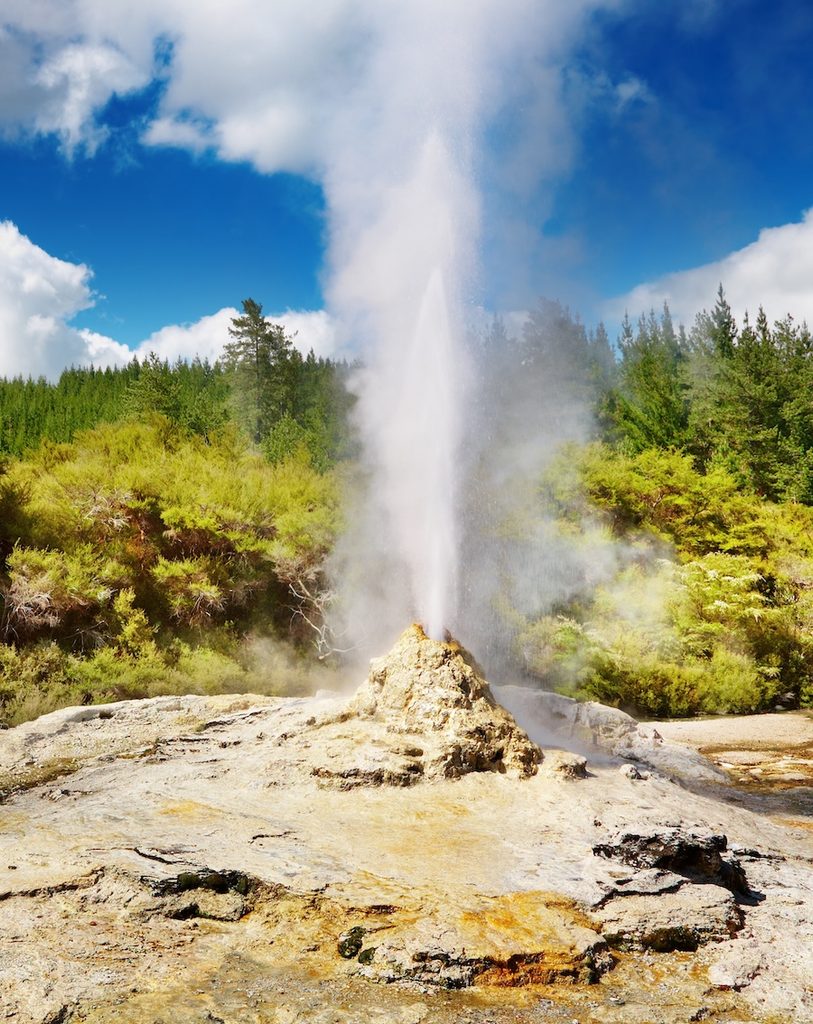
The Lady Knox presentation is at 10:15 am. I find the soap-triggered eruption a bit gimmicky, but you can see the park and still make it in time for the show.
Kerosene Creek is north of Wai-O-Tapu, but the park is the stop I’d give the priority so you have some wiggle room if your visit takes longer. You can backtrack to afterwards or head to Taupo if time is tight. You’ll have another chance for your hot-water-in-the-bush moment in Taupo.
Book the afternoon first
Check the 2 pm Māori rock carvings cruise and then book your Wai-O-Tapu admission. Once the boat is sorted, the other stops are flexible. Be ready to leave Kerosene Creek or Wai-o-Tapu at noon the latest so lunch doesn’t turn into a sandwich eaten while running to the harbour.
Where to have lunch on the Rotorua to Taupō drive
For the day above, my first choice is Victoria’s in Taupō. If you’re hungry earlier or fancy eating by the river, Huka Prawn Park and Lava Glass are both useful stops before town. I’d choose one place and enjoy a proper lunch.
| Lunch stop | Why I’d choose it | How it fits the day |
|---|---|---|
| Victoria’s Café Kitchen & Bar 127 Tongariro Street, Taupō | My pick in town for a sit-down café lunch. I recommend it for good food, and its central location is handy before the cruise. | Aim for 12:45 pm and leave by about 1:30 pm. It currently closes at 2:30 pm, so this is a pre-cruise lunch stop. |
| Huka Prawn Park Riverside Restaurant Wairakei Tourist Park | A sit-down meal beside the Waikato River, with prawn dishes and other options. You can visit just for lunch without making a day of the park activities. | Best if you reach the restaurant by around noon–12:15 pm. Allow about an hour for lunch and leave by 1:15 pm for the drive and parking. If the morning runs later, continue to Victoria’s in town. |
| Lava Glass Café 165 State Highway 5 | An easy stop on the highway, with cooked meals, cabinet food and cakes. A good choice if you’d also enjoy a look at the glass art. | Aim to arrive by around 12:15 pm and leave by 1:15 pm. Allow 15–20 minutes for the onward drive, plus parking. With a later arrival, keep it to a quicker café lunch and save the garden for another visit. |
For a prawn-farm-style stop, Huka Prawn Park is the one to look at. I’d go for the riverside lunch on this itinerary; the park tour and fishing need their own time. The restaurant also notes that the prawns it serves aren’t grown at the park, so don’t plan on catching your own lunch there.
Lava Glass is a nice change of pace after the geothermal stops. You can browse the gallery or add the sculpture garden and glassblowing studio if that interests you. Check the current studio hours first: glassblowing isn’t normally offered on Fridays. With a 2 pm cruise booked, I’d keep this to lunch and a quick browse.
When to do Huka Falls before the cruise instead
If you reach the Taupō end of the route early, or you’re having lunch at Huka Prawn Park, you can visit Huka Falls before lunch and keep the afternoon entirely for the lake. Keep it to the bridge and nearby viewpoints, then make sure you still have time to eat and reach the harbour by your check-in time.
I wouldn’t force that version if the morning has run late. Seeing Huka Falls after the cruise is simpler for a return day trip to Rotorua. If you’re staying in Taupō and want no backtracking at all, visit the falls on the way in, take your time over lunch and book the cruise for the next morning.
A shorter day, or a different geothermal park?
With half a day, keep Wai-O-Tapu, the mud pools and Kerosene Creek, then stop at Huka Falls on the way into Taupō. Allow around 5–6 hours including the drive and a straightforward lunch stop. Leave the cruise for another day.
For a longer walk and a boat trip through a volcanic landscape, make Waimangu’s walk and Lake Rotomahana cruise your main morning activity instead. Allow around four hours there, then have lunch and see Huka Falls. That’s a different version of the day; you won’t have the same time for Kerosene Creek and a 2 pm lake cruise.
For geothermal terraces and a ferry crossing, choose Ōrākei Kōrako instead of Wai-O-Tapu. Allow about two hours at the park plus the detour. It makes sense if you’ve already seen Wai-O-Tapu during your Rotorua stay.

The best stops between Rotorua and Taupō
The detailed driving stops below run roughly from north to south; Wai-O-Tapu gets the early start in the itinerary because of its opening time.
The table starts with the stops as per my suggested itinerary, then the alternatives.
| Stop | Allow | My take / tickets |
|---|---|---|
| Wai-O-Tapu & mud pools | About 2 hours in the park, plus the mud pools | Park admission; my first choice and the start of my suggested day. |
| Kerosene Creek | About 1 hour, plus access-road driving | This one is optional, you have another chance for a soak in Taupo. |
| Lunch in Taupō or on the way | 45–60 minutes | Victoria’s, Huka Prawn Park or Lava Glass Café. |
| Māori rock carvings on Lake Taupō | 2 hours, plus check-in | 2 pm carvings cruise; the afternoon I’d plan around. |
| Otumuheke Stream | 45–60 minutes | Free bathing near town, especially if you’re staying overnight. |
| Huka Falls | 20–30 minutes for the main viewpoints | See the falls after the cruise, or before lunch if time allows. Optional Hukafalls Jet boat ride on a different schedule. |
| Waimangu Volcanic Valley | About 4 hours with the cruise | Walk + Lake Rotomahana cruise; an alternative main park. |
| Ōrākei Kōrako | About 2 hours, plus the detour | Entry + return ferry; an alternative for terraces and the lake setting. |
| Rainbow Mountain / Maunga Kākaramea | 30–45 minutes | A free crater-lake walk if you have extra time. |
| Wairakei Terraces | 1–2 hours | Paid hot pools for ages 14+; an alternative soak. |

1. Waimangu Volcanic Valley
Allow: 2–3 hours for the valley walk; about 4 hours with the lake cruise
Getting there: A signed turn-off from SH5, south of Rotorua
My take: Choose it for a longer walk and the lake, especially if you’ve already seen Wai-O-Tapu
Waimangu is a bigger outing than a quick look at a colourful pool. The walking route takes you through a volcanic valley, past steaming water and geothermal features, towards Lake Rotomahana. It’s the option I’d choose if you want your morning to revolve around a proper walk.
READ NEXT:
Best Geothermal Parks in Rotorua
Compare Rotorua’s geothermal parks, from colourful pools and geysers to bubbling mud
I do prefer Wai-O-Tapu. For me, the stretches of bush between Waimangu’s features aren’t as exciting as all those colours packed into one place. But if you enjoy taking your time in a larger landscape, you might feel completely differently.
The walk and Lake Rotomahana cruise combination gives the visit more variety. It includes a self-guided valley walk, a 45-minute lake cruise and the internal shuttle. You still need to drive to Waimangu yourself; the shuttle operates inside the attraction.
Make Waimangu your main morning stop
Book the Waimangu walk and cruise and allow about four hours for the full visit. Pick your cruise time first, then follow the operator’s advice on when to begin walking. I’d continue to Huka Falls afterwards and keep the rest of the afternoon flexible.

2. Rainbow Mountain / Maunga Kākaramea
Allow: 30–45 minutes for the crater-lake walk and views
Cost: Free
My take: A good short walk when you want to stretch your legs
Maunga Kākaramea, also known as Rainbow Mountain, is just off SH5. The short walk leads to views of a crater lake with rusty, orange and reddish cliffs behind it. I’d add this if you want a little fresh air between driving and visiting a paid attraction.
For this road trip, I’d do the crater-lake walk. The summit hike is a separate commitment: DOC advises allowing around three hours return for the summit route. That can easily become your main activity for the morning.
Wear shoes with some grip, especially after rain, and stay on the formed track. You can check the DOC track information before you set off.
3. Kerosene Creek
Allow: 45–60 minutes, plus the turn-off from SH5
Cost: Free
My take: Bring a towel if a hot soak in the bush sounds good
Kerosene Creek is exactly the sort of stop I want in this day: a warm stream running through the bush, a small waterfall and somewhere to sit in the water for a while. After walking around pools you can only look at, getting into one is a very welcome change.
I do think the atmosphere matters here. When it’s busy, the noise and occasional litter take away from that lovely bush setting. I’d still make room for it, but I wouldn’t promise you a secluded little pool all to yourself. Give it an hour, enjoy the soak and leave time to dry off properly before lunch.
Access is via Old Waiotapu Road, including an unsealed section, followed by a short walk. Check that your rental agreement permits the road, and bring everything you need for a soak. I’d have swimwear and towels somewhere easy to reach, rather than buried under a carful of luggage.
The water temperature and conditions can change. Check Rotorua’s visitor advice for Kerosene Creek, follow signs and keep your head above the thermal water. Take valuables with you. I’d skip a soak if there are warnings or the water looks affected by heavy rain. If you prefer changing facilities and maintained pools, Wairakei Terraces is further down the route.
4. Wai-O-Tapu Thermal Wonderland & mud pools
Allow: 1½–2 hours in the main park; extra time for the mud pools or geyser
Getting there: About half an hour south of Rotorua
My take: My favourite geothermal park, and the stop I’d prioritise
If you only stop at one geothermal park between Rotorua and Taupō, this is the one I’d choose. Wai-O-Tapu is colourful, varied and compact enough that it never feels like you’re walking for ages between the interesting bits.
I honestly think the Champagne Pool alone is worth the admission. That bright orange edge against the greenish water is gorgeous. I always end up lingering here: the steam shifts, the light changes and suddenly I want another photo. It’s one of those places where I’m perfectly happy standing around looking at the same thing for a while.
What I love about Wai-O-Tapu is how much variety there is in a fairly compact area. You get all those different colours and textures without long stretches between the interesting bits. That’s why this is the park I’d spend my money and morning on.
I’d buy Wai-O-Tapu admission and give myself time to follow the main walking routes properly. This is a self-guided visit, so there’s no need to book transport if you’re already driving through.
My first-choice stop on this drive
Book Wai-O-Tapu Thermal Wonderland admission for the colourful pools and main walking routes. If you’re doing just one geothermal park, this is where I’d spend the money. Check opening times before travelling; last admission is earlier than closing.
Would I bother with Lady Knox Geyser?
Lady Knox erupts during a presentation at 10:15 am, with soap added to trigger the eruption. I find that a bit gimmicky. It’s interesting to understand what’s happening, but I prefer the naturally erupting geysers at Te Puia.
If you want to see it, check the official arrival instructions and leave time to drive to the separate geyser area. If you’re happy to skip it, you can spend that time exploring the main park. That’s what I’d prioritise.
Add the nearby mud pools
The nearby mud pools are a separate, free stop. I love watching the mud gurgle and suddenly splat; it’s oddly entertaining for something that is, essentially, mud. I’d allow about 10–15 minutes before heading to Kerosene Creek. They’re an easy little extra, and a good budget stop if you aren’t buying admission to the main park.

5. Ōrākei Kōrako
Allow: About 2 hours at the park, plus the detour off the main route
Getting there: Head to the visitor centre on Ōrākei Kōrako Road
My take: A lovely alternative for terraces and the lakeside setting
Ōrākei Kōrako gives you something a little different: you cross Lake Ohakuri by ferry before walking around the geothermal area. The silica terraces and lakeside setting are the main reasons I’d make the detour.
Wai-O-Tapu would still be my first choice for a first visit, but I’d happily suggest Ōrākei Kōrako if you’ve already been there or are especially drawn to the terraces. It also works well as the main stop on a less hurried drive south.
The entry ticket includes the return ferry and a self-guided walk. There are boardwalks and steps, so wear sensible shoes and allow enough time to explore without rushing back for the last crossing. The park’s visitor information has the latest ferry and access details.
Take the ferry across to the terraces
Book Ōrākei Kōrako entry and return ferry. Drive to the visitor centre yourself, then cross the lake to begin the walk. I’d make this your main geothermal stop rather than squeezing it in after two other parks.
6. Wairakei Terraces hot pools
Allow: 1–2 hours for a relaxed soak
Entry: Paid; hot pools are for ages 14 and over
My take: The comfortable hot-pool option near the end of the drive
If your ideal afternoon involves sitting in hot water for a while, I’d look at Wairakei Terraces. The pools make an easy addition near Taupō, especially if you’ve spent the morning walking.
The main thing to know is that pool admission and the terrace walk are separate. Choose the swimming ticket if you want a soak; don’t assume it includes every part of the site. You can check the pool age limit and book through the official swimming admission page.
I’d make this an alternative to a late-afternoon cruise or jet boat ride. After a morning of stopping and starting, having one place where you can just relax sounds pretty good to me.

7. Huka Falls
Allow: 20–30 minutes for the bridge and nearby viewpoints
Cost: Free to view the falls
My take: A must-stop, even if you’re keeping the drive short
Huka Falls really surprised me. They felt more like a huge torrent than the sort of waterfall I usually picture, with the river forcing its way through a narrow channel before dropping into the pool below. The sheer force of the water is insane.
You don’t need a long walk to appreciate it. The bridge and nearby viewpoints make this one of the easiest stops on the route, and I’d include it even if you’re trying to get to Taupō fairly quickly. You can read more about the viewpoints on the Huka Falls visitor page.
If you want to get closer to the action, the 30-minute Hukafalls Jet ride takes you along the Waikato River to the base of the falls. It departs from its own base on Karetoto Road, not from the walking bridge, so leave time to drive over and check in.
Want to see Huka Falls from the water?
Book the Hukafalls Jet boat ride for the trip to the base of the falls. The boat ride takes about 30 minutes, but I’d leave a larger gap in your afternoon for getting there, check-in and changing afterwards if needed.

8. Otumuheke Stream at Spa Thermal Park
Allow: 45–60 minutes, including the walk from the car park
Cost: Free
My take: An easy hot soak close to Taupō town
Otumuheke Stream is another option for a free soak, this time in Spa Thermal Park on the edge of Taupō. Warm water flows down towards the Waikato River, with a designated bathing area and facilities nearby.
I like coming here towards sunset, when the air starts cooling down but the water is still warm. If you’re staying in Taupō, it’s a lovely way to wind down after a day out. It’s about a ten-minute walk from the car park, so bring your towel and take what you need in one go. Check the local visitor information for access updates.
Stay in the designated bathing area and out of the fast-flowing river, and keep your head above the thermal water. You can also walk between Spa Thermal Park and Huka Falls, but that is a longer outing. I’d allow roughly two hours return for that walk rather than treating it as a quick extra.

A few extra stops if you have more time
These can add something different to the day, especially if you’re staying in Taupō or don’t want a lake cruise. I’d choose the ones that genuinely interest you and leave the rest.
Aratiatia Rapids and Rapids Jet
Aratiatia is worth seeing for the dam release, when the quiet riverbed suddenly fills with rushing water. Arrive about 15 minutes before one of the scheduled releases: normally 10 am, noon and 2 pm, plus 4 pm from October to March. Watch from the designated viewpoints and never enter the spillway or rapids, even when they look dry.
The 2 pm release clashes with the 2 pm lake cruise, and you won’t get from a cruise finishing at 4 pm to the dam in time for the 4 pm release either. If the rapids appeal more, keep the same morning at Wai-O-Tapu and Kerosene Creek, have lunch at Lava Glass around 12:30, then aim to be at Aratiatia by 1:45 pm. See Huka Falls afterwards.
For the adventurous version, Rapids Jet runs a roughly 35-minute ride through another stretch of the Waikato’s whitewater. I like that it’s about the rapids themselves. Book a time that allows for check-in and the drive, and make it your main afternoon activity if the lake cruise would make the day too tight. If reaching the base of Huka Falls matters more to you, choose Hukafalls Jet instead.

Craters of the Moon
I’ll be honest: I don’t think Craters of the Moon is worth adding after Wai-O-Tapu. The steam and craters are much less impressive to me, and coming straight from the Champagne Pool and all those colours, I think it would be a real disappointment.
I’d only consider it if you haven’t visited a bigger geothermal park and want a short, straightforward walk near Taupō. The main loop takes around 40 minutes, with extra time for the viewpoint, and there’s an admission fee. You can check the current entry details if it appeals, but I’d use that hour for the lake or a soak instead.
Lava Glass
Lava Glass is a good little break from all the steam and hot water: a glassblowing studio, gallery and sculpture garden just off SH5. I’d combine it with lunch at the café so it fits naturally into the drive. If you want to watch the glassblowing as well, check the studio schedule and give yourself longer than a quick food stop.
Arriving in Taupō: get out onto the lake
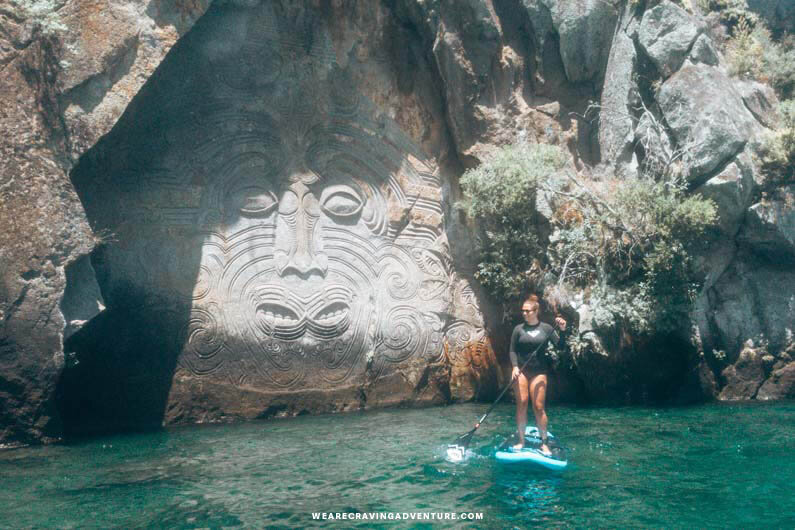
My first choice: A boat trip to the Māori rock carvings at Mine Bay
Allow: About 2 hours for the cruise, plus check-in
When to go: The afternoon you arrive, or the next morning if you want a slower drive
I absolutely love Taupō. After the geothermal park and a soak in the bush, lunch and an afternoon on the lake make such a lovely change of pace. I’d make time to enjoy it instead of arriving, sleeping and immediately driving on.
The Māori rock carvings at Mine Bay would be my first choice. I went there by paddleboard because we were travelling with our own boards, and being able to get really close and jump into the water was amazing. It’s one of those memories that makes me want to go straight back.
That was a calm summer outing, though. Lake conditions matter, and I wouldn’t casually send you off on a paddleboard just because I enjoyed it. For this itinerary, I’d book a boat trip to the carvings and let someone else take care of getting you there.
The Ernest Kemp Māori rock carvings cruise takes about two hours and leaves from Taupō’s marina. It’s an easy way to see the carvings and enjoy the lake after driving down from Rotorua. I’d keep any swimming as a possible bonus, depending on the trip and conditions.
Save your afternoon for the lake
Reserve the 2 pm Māori rock carvings cruise and have lunch first. Huka Falls comes afterwards in my suggested day. If you’d rather linger at the stops along the drive, stay in Taupō and take the cruise the following morning.
Before you leave Rotorua
I’d give Rotorua its own time before this driving day. The Redwoods, rafting and a Māori cultural evening deserve more than being squeezed into the morning you check out. My Rotorua itinerary will help you fit those around the drive.
One experience I’d particularly make room for is the evening at Te Pā Tū. I skipped a cultural evening on my first visit because I worried it would feel too touristy. When I finally went on a later trip, I loved it. The interaction, the setting and the food made it such a good evening, and I was very glad I’d changed my mind.
Book this for the night before the drive
Te Pā Tū cultural experience and seasonal Māori feast is my pick for your last evening in Rotorua. Choose the appropriate return transport option, stay in Rotorua afterwards and start the drive to Taupō after breakfast.

READ NEXT:
Best Māori Villages & Cultural Experiences in Rotorua
Compare Rotorua’s Māori cultural experiences and choose the one that’s right for you
Rotorua to Taupō without a car
You can travel between the towns without driving, but I’d choose the transport based on whether you’re moving to Taupō or returning to Rotorua that evening.
For a day trip returning to Rotorua
The Taupō day trip with Wai-O-Tapu or Ōrākei Kōrako is the option I’d look at. It combines one of those geothermal parks with Huka Falls and time around Taupō, with return transport from Rotorua. Select the park option you actually want when booking.
See the route without driving
Book the Taupō day tour from Rotorua if Rotorua is your base. It’s roughly a seven-hour outing and returns to Rotorua. If you’re changing hotels and taking luggage to Taupō, arrange a one-way transfer or bus instead.
For a one-way journey to Taupō
InterCity runs buses from Rotorua to Taupō, with a journey time of about 1 hour 15 minutes. Check the timetable and luggage allowance for your travel date. It’s a straightforward way to move between towns, but it doesn’t give you sightseeing time at the parks along the way.
If you want a private transfer with attraction stops, confirm the route, luggage space, admission costs and final Taupō drop-off with the operator before paying. I’d be very specific about the one-way part.
Driving from Taupō to Rotorua instead
You can do the same road trip in reverse. I’d start with Huka Falls, visit your chosen geothermal park on the way north, then check into Rotorua. The scenery and stops work in either direction.
The main timing issue is Wai-O-Tapu. If Lady Knox matters to you, reach the geyser area for the morning presentation. Otherwise, allow enough time for the main park before last admission, and keep an eye on the park’s current opening times.
If you’re booking a cultural evening in Rotorua that same night, leave a proper gap to check in and get ready. I’d rather do one less stop on the drive than arrive at dinner flustered and still looking for my bag.

Where to stay before and after the drive
Stay in Rotorua the night before
For the night before this drive, I’d stay centrally so you can go out for dinner or join an evening experience easily. These three are good starting points; my Rotorua accommodation guide has more options.

BOUTIQUE STAY
A central boutique option with a heated pool and mineral pool, plus its own restaurant. I’d consider it for a comfortable base with an easy evening close to town.

HERITAGE CHARACTER
A character-filled hotel opposite Government Gardens, close to the lakefront. A good fit if you’d enjoy an older property with more personality than a standard hotel block.

RELAXED & PRACTICAL
A central base with geothermally heated pools and parking, within walking distance of the lakefront and Eat Street. I’d put it on the shortlist for a stay with several days of exploring.

Stay in Taupō after the drive
I’d stay at least one night in Taupō. Two gives you more room for a lake cruise, a slow morning and whichever activity you didn’t fit into the driving day. For a short stay, walking distance to town would be my priority; for a longer one, I’d also consider a resort or riverside lodge.
CENTRAL & PRACTICAL
My first shortlist for a short stopover: close to the lakefront and town, with parking. Choose the room category carefully if a lake view is important to you.
POOL & RESORT FACILITIES
I’d consider this for a longer, more relaxed stay with a heated outdoor pool and an on-site restaurant. It sits away from the town centre, so plan on driving or taking a taxi for evenings out.
RIVERSIDE SPLURGE
For a special occasion, I’d look at this luxury lodge beside the Waikato River near Huka Falls. This is a stay to leave time for, with riverside suites and grounds to enjoy.

A few practical tips for the drive
I’d pack walking shoes, a rain jacket, water, sunscreen and a towel. Put swimwear somewhere accessible if you’re considering Kerosene Creek or a soak near Taupō. There’s nothing especially complicated to bring, but it’s much nicer than unpacking the boot in a car park.
Have breakfast before you leave Rotorua and leave room for lunch in the plan. You’ll find cafés at some of the larger attractions and plenty of places to eat in Taupō, but I’d still carry snacks. A picnic is an easy way to keep the day flexible.

Summer gives you longer daylight hours and more scope for the lake. In winter, I’d be more selective about stops and avoid setting off before dawn if there’s frost or fog. Check NZTA’s Journey Planner for road conditions and leave some flexibility for the weather. My Rotorua winter guide has more cold-weather ideas.
If you’re travelling with all your luggage, keep bags out of sight before arriving at a stop and carry passports, electronics and other valuables with you. It’s the same habit I’d use anywhere on a New Zealand road trip.

Rotorua to Taupō FAQs
Is the Rotorua to Taupō drive worth it?
Yes, especially if you stop along the way. For me, the best combination is Wai-O-Tapu and Huka Falls, followed by time on Lake Taupō. The highway is a convenient link between them; the attractions are the reason I’d turn the journey into a day out.
How long does it take to drive from Rotorua to Taupō?
Allow about one hour for the direct drive of roughly 80 km. With Wai-O-Tapu, the mud pools, lunch and Huka Falls, I’d allow 4–5 hours. Add a two-hour lake cruise and you’ve got a full day.
Which geothermal park should I visit between Rotorua and Taupō?
My choice is Wai-O-Tapu for the colour and variety. Choose Waimangu for a longer valley walk and optional lake cruise, or Ōrākei Kōrako for the terraces and ferry crossing. I’d pick one of those three for a normal driving day.
Can I visit Taupō as a day trip from Rotorua?
Yes. The direct return driving time is about two hours, so a geothermal park, Huka Falls and a little time in Taupō can fit into a day. If you want to do all of that and a lake cruise, I’d stay overnight. Without a car, the Taupō and geothermal park day tour handles the return journey.
Should I stay in Rotorua or Taupō?
I’d choose Rotorua for Māori cultural experiences, geothermal attractions and adventure activities, and Taupō for lake time and a more relaxed finish to this part of the trip. I love both for different reasons. If you’re travelling south through the North Island, staying in each makes more sense to me than repeatedly driving back and forth.
Can I do this drive on a budget?
Yes, if you already have transport. Rainbow Mountain’s crater-lake walk, the Waiotapu mud pools, Huka Falls and the lakefront make a lovely day without paid attraction tickets. If I were choosing one paid stop, I’d put the money towards Wai-O-Tapu.

Planning a trip to New Zealand?
I spent years living and travelling in New Zealand, and I still have a very long list of places I’d happily go back to. Taupō is firmly on it. If you’re planning a bigger trip, my North Island road trip itineraries will help you work out where this drive fits and how long to give the places around it.
You’ll find more of my favourite walks, day trips and places to stay in the guides below. I’d start with Rotorua, then use the Auckland and Coromandel guides if you’re exploring the upper North Island too.
Read next:
Rotorua
Rotorua itinerary: 1, 2, 3 & 5 days
Best things to do in Rotorua
Where to stay in Rotorua
Best day trips from Rotorua
Rotorua in winter
Māori experiences in Rotorua
Rotorua thermal parks guide
Coromandel Peninsula
Things to do on the Coromandel Peninsula
Auckland to Coromandel
Where to stay on the Coromandel
Your guide to Cathedral Cove
Kayaking to Donut Island, Whangamatā
Auckland
Auckland itinerary & things to do
Where to stay in Auckland
Best day trips from Auckland
North Island itineraries & driving
7-day North Island itineraries
North Island road trip: 2 & 3 weeks
Renting a car in New Zealand
More North Island adventures
Tongariro Alpine Crossing guide
Lord of the Rings filming locations
Paihia & Bay of Islands itinerary
Things to do in Paihia & the Bay of Islands
Travel Insurance
Good travel insurance is an absolute must when traveling abroad, and I’ve learned that the hard way!
Now I always get insured before we leave and Travel Insurance Masters is my go-to platform to find the best insurance options for the specific trip.
The TIM platform works as a search engine and suggests the best insurance company and insurance plan for your criteria so you don’t end up paying more for things you don’t need! It also takes into account your age, nationality, destination etc. which can greatly impact the final price.
You can get your quote & provider recommendations here.
