This site uses affiliates. Thank you for buying through our links and supporting this blog.


Where to See Kiwi Birds in New Zealand: Best Places & Tours

I went to Ulva Island hoping I’d be lucky enough to see a kiwi bird in the wild. I certainly wasn’t expecting two of them to come charging down the track, fighting so fiercely that we had to jump out of their way. And this happened in broad daylight!
If you’re wondering where to see kiwi birds in New Zealand, you should know that my encounter was ridiculously lucky. Kiwi are notoriously difficult to spot in the wild, and most visitors never see one outside a wildlife sanctuary.
During my years living and traveling around New Zealand, I’ve visited conservation centers, wandered through nocturnal kiwi houses and explored some wonderful native bird sanctuaries. My first kiwi encounter was at Auckland Zoo, where I was ridiculously excited to finally see this strange little bird in person. But nothing prepared me for what happened on Ulva Island.
If seeing a kiwi is important to you, I’d recommend planning at least one dedicated kiwi experience. You can watch them in specially lit nocturnal houses, or book a guided night walk to search for truly wild kiwi. Here’s where I’d go, which experiences I’d book, and how to give yourself the best chance of seeing New Zealand’s famous flightless bird.

In a hurry?
Book a kiwi experience!
Wild kiwi: Rakiura kiwi spotting on Stewart Island
Wellington: Zealandia by Night
Conservation: National Kiwi Hatchery in Rotorua
Queenstown: Kiwi Park tickets
Christchurch: Willowbank Wildlife Reserve
Near Auckland: Tāwharanui wild kiwi night tour
Planning a road trip? Compare rental cars in New Zealand.
Best Places to See Kiwi Birds in New Zealand at a Glance
There are two very different ways to see kiwi in New Zealand. A nocturnal kiwi house reverses the lighting so birds are active during your visit, making this the most predictable choice. A guided wild-kiwi encounter means heading into their habitat, usually after dark, with a much greater element of luck. I think both are worthwhile, but choose the experience that matches your expectations.
| Location | Experience | My take |
|---|---|---|
| Stewart Island and Ulva Island | Wild Rakiura tokoeka; guided night walks and daytime birding | My favorite wild kiwi destination |
| Ōkārito and Franz Josef | Wild rowi tours plus West Coast conservation center | Best for rare kiwi and conservation |
| Zealandia, Wellington | Little spotted kiwi on guided night tours | Best wild-kiwi tour near a city |
| Rotorua | Hatchery and Te Puia kiwi conservation | Best for understanding conservation |
| Queenstown Kiwi Park | Managed nocturnal kiwi house | Easy South Island encounter |
| Christchurch Willowbank | Nocturnal house and broader native wildlife | Best convenient family stop |
| Auckland and Tāwharanui | Zoo kiwi viewing and wild-kiwi night tour | Wild viewing near Auckland |
| Other sanctuaries | Kāpiti Island, Ōtorohanga, Pūkaha, Kiwi North and Tiritiri Matangi | Useful if they’re already on your route |
For the thrill of wild kiwi, I’d prioritize Stewart Island, Ōkārito, Zealandia or Kāpiti Island. If your schedule is tight, a good nocturnal house in Rotorua, Queenstown or Christchurch gives you a much more reliable chance to actually observe the birds.
8 Best Places to See Kiwi Birds in New Zealand
Kiwi live across several protected areas and islands, but that doesn’t mean you can simply turn up and expect to see one. These eight location groups balance realistic viewing opportunities, good tours and destinations that fit naturally into a New Zealand itinerary.

1. Stewart Island and Ulva Island: My Favorite Wild Kiwi Encounter
Stewart Island is where I had one of my most extraordinary wildlife encounters anywhere in New Zealand. The island is home to Rakiura tokoeka, a form of southern brown kiwi that sometimes comes out during daylight, making the place especially exciting for birdwatching. But don’t arrive expecting kiwi to be wandering around every corner.
My incredible kiwi encounter on Ulva Island
We took an early morning water taxi to Ulva Island, a beautiful predator-free open sanctuary just off Stewart Island. The crossing took only a few minutes, and we arrived while the forest still felt wonderfully peaceful. We’d heard that kiwi could occasionally be active during the day, so we decided to explore independently and take our time. We stopped constantly to listen for birds and photograph anything that caught our attention.
One particularly curious Stewart Island robin kept us entertained for ages. By the time we’d finally put our cameras away, I realized our generous four-hour allowance might not be so generous after all.
Shortly after crossing Boulder Beach, something rustled in the bushes. A large brown bird emerged, and for a moment I was absolutely convinced we’d found a kiwi. Nope. It was a weka. I’d been so excited about spotting a kiwi that I’d mistaken another flightless New Zealand bird for one. In my defense, they’re surprisingly easy to mix up when you’re unfamiliar with them.
Then, a few minutes later, we heard a strange rasping noise and the vegetation started shaking. Before we could figure out what was happening, two kiwi birds came charging straight toward us, fighting! They were so preoccupied with their argument that they didn’t seem to notice the humans standing on the track. We literally had to jump out of the way.
I couldn’t believe it. Later we showed our video to two Department of Conservation rangers we’d met during the walk. They were every bit as excited as us and explained just how extraordinary the encounter was. Even though they spent time on Ulva Island regularly, they hadn’t experienced anything quite like it. You can watch the original video in my Stewart Island travel guide.
Should you visit Ulva Island specifically to see kiwi?
Absolutely visit Ulva Island, but don’t expect a daytime kiwi sighting. The island is worth exploring for its native forest, beaches and wonderful birdlife, even if every kiwi stays hidden. We went independently by water taxi, but the Ulva Island Explorer combines a cruise through Paterson Inlet and a guided wildlife walk. I loved exploring at my own pace, although a guide would have been extremely helpful for identifying all those birds.
I’d allow at least three to four hours if you’re exploring independently. The tracks are generally easy, but much of the joy comes from stopping, listening and waiting rather than trying to cover the island as fast as possible.
Book a proper wild kiwi tour on Stewart Island
If a wild kiwi sighting is a major reason you’re visiting, book a dedicated evening experience rather than relying on my lucky daytime encounter. The Rakiura Wild Kiwi Experience takes you into kiwi habitat with experienced guides. Depending on the option booked, the trip includes a boat crossing and a guided walk after dark. A sighting isn’t guaranteed, but you’ll have someone who knows where and how to look.
Book your Stewart Island kiwi experience
I’d prioritize the Rakiura Wild Kiwi Experience for a genuine wild encounter, then book Ulva Island Explorer if you’d also like a guided daytime birdwatching trip. They are different experiences, and the Ulva walk isn’t a guaranteed daytime kiwi tour.
Stay nearby: Book accommodation in Oban before you finalize your tours. The Bay Motel is my practical pick; for something more special, compare Church Hill Boutique Lodge. You’ll want to stay overnight for the evening kiwi experience.

2. Ōkārito and Franz Josef: Wild Rowi and West Coast Conservation
The West Coast is another area I’d prioritize, especially if you’re interested in New Zealand’s rarest kiwi. Ōkārito is home to rowi, a species with a small natural population around South Westland’s forests. You have two quite different choices here: a genuine wild-kiwi spotting tour and an indoor conservation experience in Franz Josef.
Ōkārito Kiwi Tours: The wild experience
Ōkārito Kiwi Tours offers specialist evening walks through kiwi habitat. You’ll head into the forest with a guide, listen for calls and spend a good deal of time being very quiet while trying to locate the birds. The operator has advertised an 89% viewing success rate, which is impressive for a wild kiwi but certainly not a guarantee. Check the current figure and booking conditions when you reserve.
The excursions can take around three to five hours and demand patience. This isn’t a leisurely attraction where a bird is waiting behind glass. I’d book it if seeing a wild rowi really matters to you and you’re happy with a proper night-time wildlife search.
West Coast Wildlife Centre: The conservation story
In Franz Josef, the West Coast Wildlife Centre introduces visitors to South Westland’s rare kiwi, including rowi and Haast tokoeka, and the effort involved in breeding and protecting them. Its nocturnal viewing area is a much easier way to observe kiwi, while the conservation displays help explain why every surviving chick matters.
I visited a kiwi conservation center on the West Coast years ago, and one keeper’s explanation has stayed with me. They were telling us how difficult conservation breeding could be when two birds weren’t particularly keen on each other. Apparently one female simply couldn’t tolerate the male they’d paired her with, so they had to keep them apart. Imagine putting all that work into protecting a species and still being unable to convince two birds to get along. Fair enough, really.
I can’t confidently identify which facility that conversation happened at now, so I won’t attribute the anecdote to the current West Coast Wildlife Centre team. But it was a memorable introduction to how complicated kiwi conservation can be.
Book kiwi experiences on the West Coast
For the wild encounter, I recommend booking Ōkārito Kiwi Tours directly. For a daytime conservation visit, book West Coast Wildlife Centre admission and check which encounter options are included.
Stay nearby: I’d base myself in Franz Josef Village and compare Rainforest Deluxe for a rainforest stay or Aspen Court Franz Josef for a comfortable, practical option. Allow for the drive back from Ōkārito after dark, and see my Franz Josef accommodation guide for more choices.

3. Zealandia, Wellington: Best Wild Kiwi Experience Near a City
If you’re staying in Wellington, Zealandia is one of the most accessible places to look for wild kiwi. This large fenced sanctuary just outside the city has restored native habitat and reintroduced wildlife, including little spotted kiwi, New Zealand’s smallest kiwi species.
Zealandia is lovely during the day, but if the kiwi are your priority, book Zealandia by Night. A guide leads you through the forest after dark, listening for kiwi calls and helping you look for the sanctuary’s nocturnal wildlife. You may also encounter wētā, glowworms or other native creatures. Kiwi sightings aren’t guaranteed, but it’s a much better option than wandering around Wellington with your fingers crossed.
Zealandia or Ngā Manu: Which would I book?
I’d choose Zealandia if you’re based in central Wellington and want to walk through an extensive restored forest looking for wild kiwi. The Ngā Manu Kiwi Night Encounter in Waikanae is another specialist option in the wider region, but it’s a different reserve experience and requires getting out of the city. Check the starting point and whether you need a car before booking.
Book your Wellington kiwi experience
For most Wellington visitors, I’d book Zealandia by Night. It’s a proper after-dark nature experience, not a daytime zoo visit. If you’re exploring the Kāpiti Coast, compare the Ngā Manu Kiwi Night Encounter.
Stay nearby: Compare The Intrepid Hotel for a boutique city stay or Quest 256 Lambton for a central apartment-style base. My Wellington itinerary covers the rest of the city.

4. Rotorua: Best for Kiwi Conservation and Education
Rotorua has two very worthwhile kiwi conservation experiences, and I’d particularly recommend the area if you’re curious about how kiwi eggs are incubated and how young birds are protected before being released. Both options involve managed viewing rather than searching for wild kiwi in the forest.
National Kiwi Hatchery: My conservation pick
The National Kiwi Hatchery guided encounter is based at Agrodome in Ngongotahā, outside central Rotorua. You’ll learn about egg incubation, kiwi breeding and the huge effort involved in raising chicks until they’re better equipped to survive. There’s also an opportunity to see kiwi in a nocturnal house.
The breeding and hatching season is usually around September to March, which is particularly interesting if you’re hoping to learn about eggs and chicks while the conservation work is underway. Nothing guarantees you’ll see a hatching, of course. One important detail: the hatchery moved from its old Rainbow Springs location to Agrodome, although some older booking URLs still contain Rainbow Springs in the address.
Te Puia: Kiwi alongside geothermal attractions
The Te Puia Te Rā guided experience is a very different option. It combines the Whakarewarewa geothermal valley, Pōhutu Geyser, Māori arts and crafts and a purpose-built Kiwi Conservation Centre. I’d choose it if you’re already planning a geothermal and cultural visit and would like to see kiwi as part of that experience.
Which Rotorua kiwi experience would I book?
| Experience | Best for | Book |
|---|---|---|
| National Kiwi Hatchery | Breeding, eggs, chicks and the conservation process | Guided hatchery experience |
| Te Puia | Kiwi viewing combined with geothermal sights and Māori culture | Te Rā guided visit |
Book your Rotorua kiwi experience
I’d pick the National Kiwi Hatchery if kiwi are your main interest. For a broader Rotorua outing, Te Puia makes more sense, especially if you also want to see Pōhutu Geyser.
Stay nearby: I’d stay in central Rotorua and compare Pullman Rotorua for a full-service hotel or Aura Accommodation for a more practical, self-catering stay. See my Rotorua things to do guide for other experiences.
5. Queenstown Kiwi Park: An Easy South Island Kiwi Experience
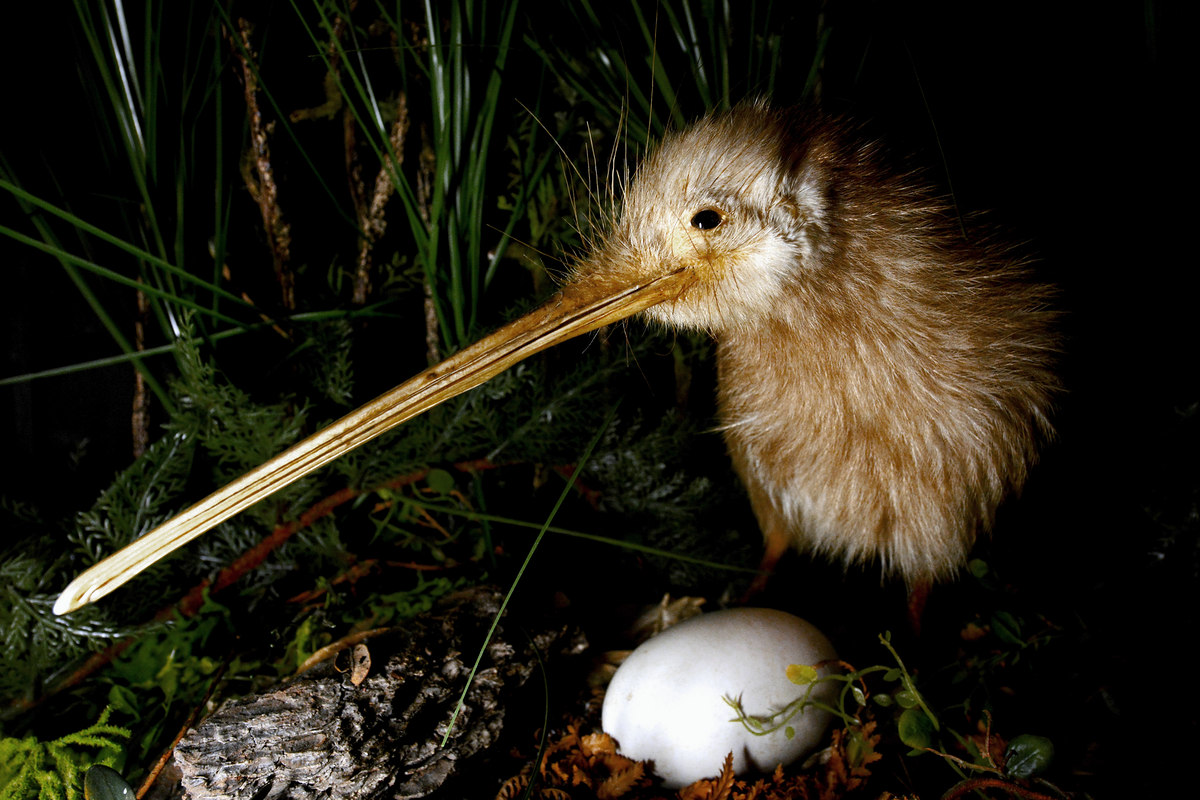
If you’re visiting Queenstown, you don’t need to go far to see kiwi. Kiwi Park is right in town, near the Skyline Gondola, and it’s an easy activity to fit into a busy itinerary. The park has a nocturnal kiwi house, native wildlife exhibits and conservation presentations, including other unusual animals such as tuatara.
I’d allow around two hours, particularly if you want to catch a wildlife presentation. This isn’t a wild encounter, but it’s a useful introduction for first-time visitors who want to properly observe a kiwi rather than spend an evening listening to rustling in a forest.
Book Queenstown Kiwi Park
I’d book Kiwi Park admission if you’re already spending time in Queenstown. It’s a straightforward, bookable wildlife attraction with a kiwi house and other native species.
Stay nearby: For a car-free visit, I’d stay downtown. Compare Crowne Plaza Queenstown or mi-pad Queenstown, and see my Queenstown accommodation guide for the neighborhood trade-offs.

6. Willowbank Wildlife Reserve, Christchurch: Native Wildlife and Kiwi
Willowbank Wildlife Reserve is one of the easiest places to see kiwi in Christchurch, particularly if you’re traveling with family or want to see more of New Zealand’s wildlife in one visit. The reserve has a nocturnal kiwi house, so you can watch the birds during normal visiting hours, along with other native animals including kea, kākā, takahē and tuatara.
I’d set aside two to three hours to look around rather than rushing straight to the kiwi house. General Willowbank admission is sufficient for a regular visit, while the guided native wildlife tour adds an organized introduction to the native animals and conservation work. Check the exact admission inclusions when booking.
Book your Christchurch kiwi experience
For most visitors, I’d recommend Willowbank Wildlife Reserve admission. If you want more in-depth explanations, compare the guided native wildlife tour.
Stay nearby: Christchurch CBD is the most practical base for a broader visit. Compare The Observatory Hotel for a boutique stay or The Mayfair for something more luxurious. My Christchurch accommodation guide has more options.
7. Auckland: My First Kiwi Encounter and a Wild Night Tour
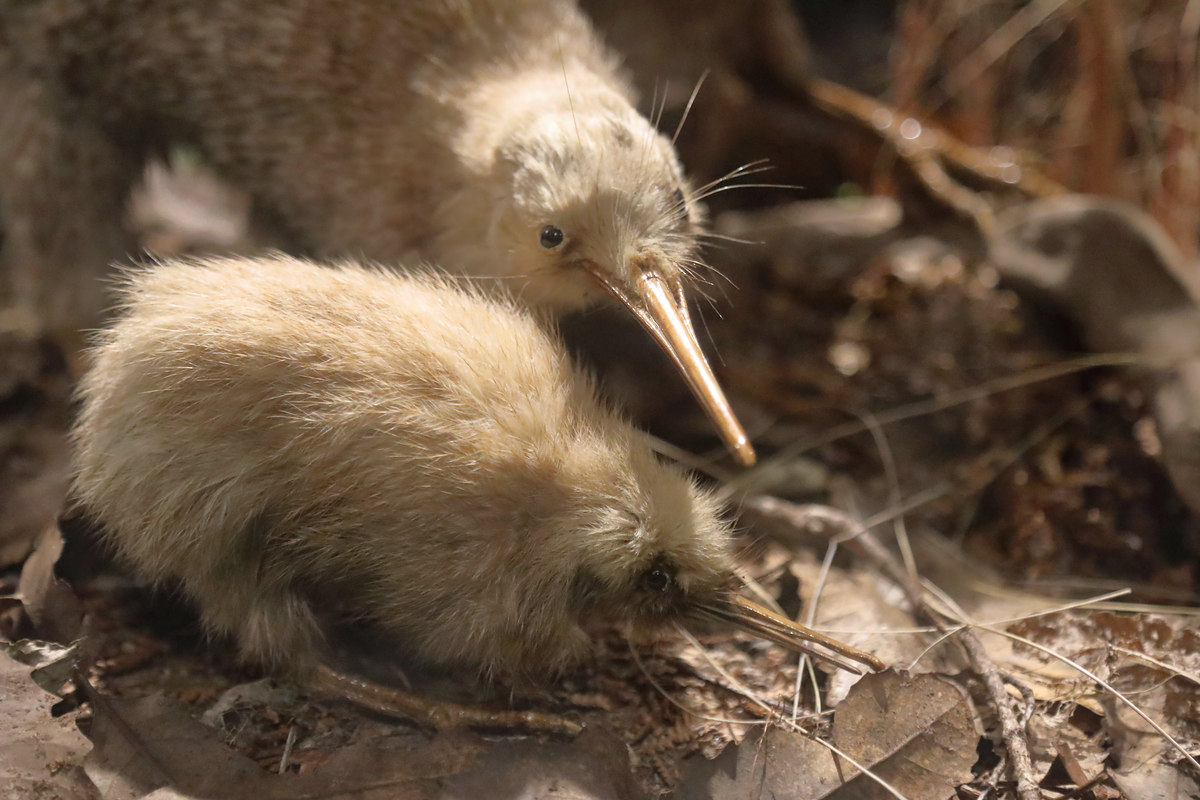
The first kiwi I ever saw was at Auckland Zoo, and I remember being ridiculously excited. I’d been hearing about these strange flightless birds for ages, and it was wonderful to finally watch one move around in person. I had no idea that years later I’d be watching two of them argue their way down a forest track on Ulva Island.
Auckland Zoo: A good first introduction
Auckland Zoo has a nocturnal habitat called Te Pō within its Te Wao Nui native wildlife area. The lighting is designed so kiwi can be active during the day. Give your eyes time to adjust inside the darker enclosure rather than walking through too quickly. I’d recommend it if you’re already planning a zoo visit or want a convenient look at a kiwi without an evening excursion.
Tāwharanui: Wild kiwi near Auckland
If you’d rather look for wild kiwi, Tāwharanui Regional Park north of Auckland has protected habitat for North Island brown kiwi. The Tāwharanui Wild Kiwi Bird Spotting Encounter is a guided after-dark outing, sometimes paired with stargazing. As with every wild-kiwi tour, sightings are possible rather than promised.
I’d choose the night tour over a random evening stroll if seeing a wild bird is the goal. Check the meeting point and transport arrangements carefully because Tāwharanui isn’t in central Auckland.
Book an Auckland kiwi experience
For a wild sighting, I’d book the Tāwharanui guided night encounter. If you want a convenient daytime experience, visit Auckland Zoo and head into the Te Pō nocturnal house.
Stay nearby: Central Auckland is the easiest base for a city visit. I’d compare The Hotel Britomart for a boutique stay or Imagine Beach Road for a practical waterfront-area option. My Auckland accommodation guide goes into the different neighborhoods.
8. Other Kiwi Sanctuaries Worth Considering
These are worthwhile alternatives if they fit your route, but I wouldn’t add every kiwi house in New Zealand just for the sake of ticking another location off a list.
Kāpiti Island: Overnight kiwi spotting
Kāpiti Island, north of Wellington, is an important bird sanctuary and home to little spotted kiwi. The particularly appealing option is an overnight experience with Kāpiti Island Nature Tours, which combines an island stay with an evening walk looking for kiwi. It’s much more immersive than a quick wildlife-center visit, although a sighting is never guaranteed.
Ōtorohanga Kiwi House: An easy Waitomo addition
If you’re exploring Waitomo or driving between Auckland and Rotorua, the Ōtorohanga Kiwi House is a useful stop for managed kiwi viewing. Travelers without a car can consider the Auckland day tour combining Waitomo Glowworm Caves, Ōtorohanga Kiwi House and Blue Springs. That’s a substantial day trip, not a standalone kiwi entry ticket, so I’d only book it if you genuinely want the full route.
Pūkaha, Kiwi North and Tiritiri Matangi
Pūkaha National Wildlife Centre near Mount Bruce in the Wairarapa has native forest and a kiwi house. Kiwi North in Whangārei is another practical option for travelers heading through Northland. Tiritiri Matangi Island near Auckland also has little spotted kiwi, but most visitors come on daytime ferry trips when they’re exceptionally unlikely to appear. I’d go to Tiritiri Matangi for its spectacular native birdlife, not as a dependable kiwi-viewing outing.
Book an additional kiwi experience
For a special wildlife-focused overnight, look at Kāpiti Island Nature Tours. If you’re combining Waitomo with the kiwi house and don’t have a car, this Auckland day trip includes several worthwhile stops.
Stay nearby: For Kāpiti Island, check the operator’s overnight package first because accommodation may be included. If you prefer a Wellington base, compare The Intrepid Hotel or Quest 256 Lambton.
The Kiwi Bird: New Zealand’s Strangest Evolutionary Success Story
Kiwi are such bizarre little creatures because New Zealand’s wildlife evolved in very different conditions from those on most other continents. With millions of years of isolation and few native land mammals, birds filled ecological roles often occupied by mammals elsewhere. Some became enormous, some lost the ability to fly, and kiwi ended up looking almost like furry little forest mammals with beaks.
How New Zealand became a land of flightless birds
Before people arrived, New Zealand had no native land mammals apart from bats. But it wasn’t entirely predator-free. Birds hunted other birds, including the enormous Haast’s eagle, which preyed on moa.
The moa were extraordinary flightless birds, with some species towering over people. They disappeared after human settlement, primarily through hunting and associated ecological changes. Haast’s eagle also went extinct after losing its principal prey. Kiwi survived, but they were poorly prepared for the introduced predators that arrived with people.
Are kiwi birds really related to T. rex?
Yes, but not quite in the way that internet trivia sometimes suggests. Birds are living dinosaurs. Modern birds descend from theropod dinosaurs, the same broad evolutionary group that included Tyrannosaurus rex. Kiwi are not uniquely the closest living relatives of T. rex: chickens, pigeons and sparrows also belong to that surviving dinosaur lineage.
The kiwi’s closest known relatives within the flightless ratite group were actually the extinct elephant birds of Madagascar. That’s another rather wonderful evolutionary twist. Still, it’s hard not to smile at the thought of watching a small, round kiwi probing the forest floor while remembering you’re looking at a surviving dinosaur.
Why are kiwi birds endangered?
New Zealand’s kiwi face serious threats from introduced predators, habitat loss and the vulnerability of young chicks. The Department of Conservation has estimated that roughly 70,000 kiwi remain across the country, although the population and conservation status vary considerably between the five species.
Stoats are particularly dangerous to young kiwi, which are vulnerable until they grow large enough to defend themselves. Adult kiwi face threats from dogs and ferrets. Losing a breeding adult is especially damaging because these birds can live for decades and don’t reproduce quickly. Conservation programs therefore concentrate on controlling predators, protecting habitat, incubating eggs and giving chicks a safer start in life.
Kiwi lay ridiculously enormous eggs
Of all the unusual things about kiwi, the egg might be my favorite. A kiwi egg can weigh about 15–20% of the female’s body weight. Think about that for a moment. A fifth of your body weight, in one egg! If I were a kiwi, I’d be pretty selective about who I was having babies with too.
The egg gets so enormous that the female has very little room left for food toward the end of its development. In several kiwi species, the male incubates the egg, while some species, including rowi, share incubation duties. I can’t say I blame a female kiwi for wanting a little time off after laying something that size.
Kiwi relationships can be surprisingly complicated
Kiwi often form long-term pairs, sometimes remaining together for years. But they’re also territorial birds with strong personalities, and females are generally larger than males. A female that doesn’t accept a potential partner may chase him away or become aggressive.
That brings me back to my conservation-center visit on the West Coast. A keeper explained how difficult it could be to establish breeding pairs. One female apparently couldn’t stand the male they’d paired her with, and the staff had to keep them apart. I found it both hilarious and rather relatable. You can create the perfect conservation setup, protect the eggs and plan everything down to the last detail, but you still can’t make two kiwi fall in love. That was one particular keeper’s story, not how every kiwi pair behaves.
The five kiwi species in New Zealand
We tend to talk about ‘the kiwi bird’ as though there’s only one, but New Zealand has five recognized kiwi species. Several also have distinct geographical populations, which is why a wild bird on Stewart Island isn’t necessarily the same species you’d see in a North Island kiwi house.
| Kiwi species | Where they live | Worth knowing |
|---|---|---|
| Brown kiwi | North Island | Several distinct geographical populations |
| Great spotted kiwi (roroa) | Northern and western South Island | The largest kiwi species |
| Little spotted kiwi (kiwi pukupuku) | Kāpiti Island and other protected locations | The smallest kiwi species |
| Rowi | Ōkārito and managed populations elsewhere | One of the rarest kiwi species |
| Tokoeka | Stewart Island, Fiordland and Haast | Includes the Rakiura tokoeka I encountered on Ulva Island |

Kiwi vs. weka: How to tell them apart
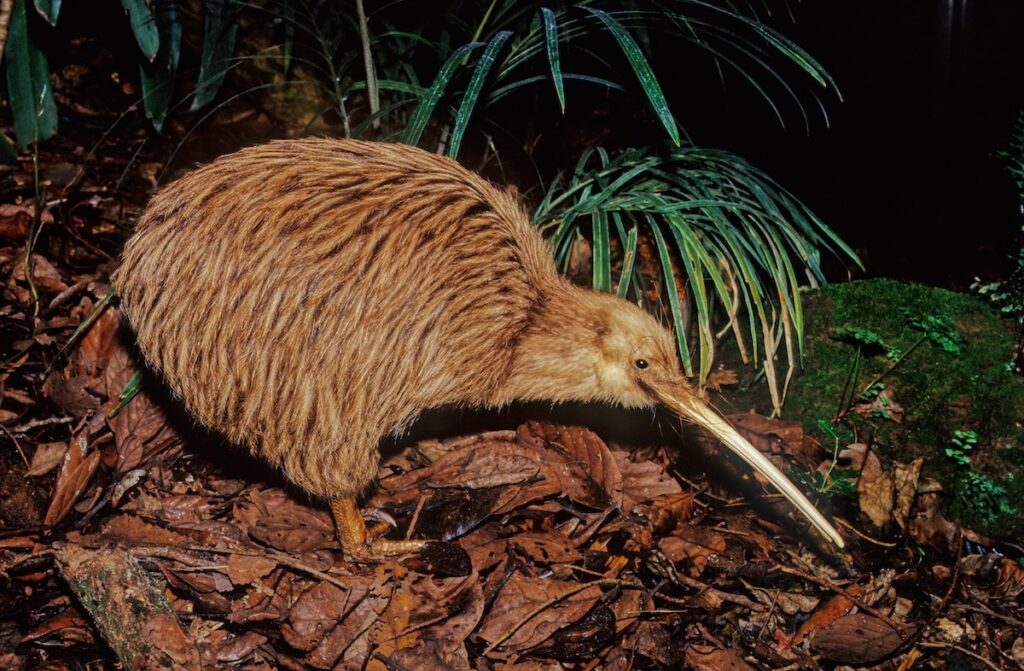
This deserves an explanation because I managed to get it wrong myself. Kiwi and weka are both flightless brownish birds, but a kiwi has a long, slender beak and a rounder, shaggier body. A weka has a much shorter, sturdier beak and looks more like a typical rail. Weka also tend to be quite bold and curious, often investigating people and their belongings in daylight.
| Feature | Kiwi | Weka |
|---|---|---|
| Beak | Long and slender, with nostrils near the tip | Shorter and sturdier |
| Body | Round with shaggy, hair-like feathers | More typical bird shape |
| Active | Mostly nocturnal; some daytime exceptions | Commonly active during the day |
| Behavior | Usually shy and elusive | Often bold and curious |
| Flying | Flightless | Flightless |
The beak is usually the easiest clue. If a brown bird marches over to investigate your bag in broad daylight, it’s considerably more likely to be a weka. Unless you’re as lucky as I was on Ulva Island.
When Is the Best Time to See Kiwi Birds in New Zealand?
Kiwi can be seen throughout the year, but the best time depends on whether you’re going to a nocturnal house, joining a wild-kiwi night tour or hoping to see the hatchery’s breeding work. I’d choose dates according to the operator and experience rather than expecting one month to guarantee a sighting.
| Experience | Best timing | What to expect |
|---|---|---|
| Nocturnal kiwi houses | Year-round | Controlled lighting allows daytime visitors to see kiwi behaving as they would after dark |
| Guided wild-kiwi night tours | Year-round where operated | Dusk or after-dark trips; sighting chances depend on conditions and wild birds |
| National Kiwi Hatchery | September–March for breeding activity | Good period to learn about incubation and chicks; no individual hatching is guaranteed |
| Ulva Island | Year-round | Wonderful birdwatching; daytime wild kiwi are an exceptionally lucky bonus |
| Kāpiti Island overnight | Operator’s active dates | Guided night walk in a protected sanctuary |
Is It Better to See Kiwi Birds in the Wild or at a Conservation Center?
I’ve done both, and I think each experience has its place. Seeing a wild kiwi is absolutely magical. There’s something extraordinary about standing quietly in the forest, listening to rustling in the undergrowth and realizing that one of New Zealand’s rarest birds is right there. But you could also spend hours in the dark without seeing a single one.
A conservation center gives you a much more dependable opportunity to observe a kiwi properly, learn about its behavior and understand the work involved in protecting it. If this is your first trip and you have limited time, I’d prioritize a kiwi house in Rotorua, Queenstown or Christchurch. If wildlife is a major reason for visiting, I’d add a guided wild-kiwi experience on Stewart Island, at Ōkārito or in Zealandia.
My ideal combination would be one conservation-center visit and one proper wild night encounter, particularly if your itinerary already takes you to Stewart Island or the West Coast.
Tips for Spotting Kiwi Birds in the Wild
- Listen before looking. Kiwi have distinctive calls, and guides often locate them by sound before anyone sees movement.
- Move slowly and quietly. You’ll notice far more if you stop to listen rather than march through the forest.
- Avoid bright lights and flash. Follow your guide’s instructions about lighting.
- Stay on designated tracks. Don’t push through vegetation chasing calls or approach nesting birds.
- Be patient. Even skilled guides can’t make a kiwi turn up on schedule.
- Learn the difference between a kiwi and a weka. I can personally confirm that this is useful!
And remember, some of the best wildlife encounters happen when you aren’t expecting them. Just don’t let the dream of a photograph turn into a reason to disturb a bird.
Kiwi Birds in New Zealand FAQ
Where is the best place to see kiwi birds in New Zealand?
For wild kiwi, I’d prioritize Stewart Island, Ōkārito or Zealandia. For a more dependable look, visit a nocturnal kiwi house such as the National Kiwi Hatchery in Rotorua, Kiwi Park in Queenstown or Willowbank in Christchurch.
Can you see kiwi birds in New Zealand for free?
Yes, it’s possible to encounter wild kiwi without paying for a tour in protected forests and on some islands. But sightings are unpredictable, and transport, permits or overnight stays can still cost money. I wouldn’t plan an entire short trip around hoping to spot one for free.
Can you see kiwi birds during the day?
Yes, but daytime sightings in the wild are unusual. Rakiura tokoeka on Stewart Island can be active in daylight, which is how I encountered two fighting birds on Ulva Island. A nocturnal kiwi house is the far more dependable daytime option.
Are kiwi birds extinct or endangered?
Kiwi aren’t extinct. New Zealand has five recognized species with different conservation statuses. Some populations are improving thanks to predator control and careful breeding programs, while others remain seriously threatened.
Can kiwi birds fly?
No. Kiwi have tiny, reduced wings tucked beneath their feathers and are completely flightless.
Are kiwi birds related to dinosaurs?
Yes, like all modern birds, kiwi belong to the surviving dinosaur lineage. But they aren’t uniquely the closest living relatives of T. rex. Their closest known relatives within the flightless ratite group were the extinct elephant birds of Madagascar.
How big is a kiwi bird egg?
A kiwi egg can weigh approximately 15–20% of the female’s body weight, an astonishing egg-to-body-weight ratio that makes laying one a serious undertaking.
What’s the difference between a kiwi and a weka?
Kiwi have long, slender beaks, shaggy feathers and are mostly active at night. Weka have shorter, sturdier beaks, look more like typical birds and are often active during the day. Both are flightless, and both occur on Stewart Island.
Is a kiwi-spotting tour worth the money?
I think so, particularly if you’ve only got a couple of weeks in New Zealand. A guided night experience gives you a better chance than wandering independently through the forest. If you mainly want to see what a kiwi looks like, a conservation center is a more predictable alternative.
Planning a Trip to New Zealand?
Kiwi spotting is one of my favorite New Zealand wildlife memories, but I’d also make time for penguins, dolphins, whales and the country’s other extraordinary native animals. The guides below will help you work these experiences into a realistic road trip rather than racing from one wildlife stop to another.
Read next:
New Zealand wildlife:
Where to see penguins in New Zealand
Where to see dolphins in New Zealand
Whale watching in New Zealand
Best places to see wildlife in New Zealand
Stewart Island and the West Coast:
Stewart Island travel guide
Where to stay in Franz Josef
West Coast New Zealand road trip
Queenstown and Christchurch:
Where to stay in Queenstown
Where to stay in Christchurch
Best day trips from Christchurch
Wellington and Auckland:
Wellington itinerary
Where to stay in Auckland
New Zealand road trips:
South Island road trip: 2 and 3 weeks
North Island road trip
Reliable Travel Insurance for New Zealand
New Zealand’s ACC scheme can cover eligible accidental injuries for visitors, but it’s not a substitute for comprehensive travel insurance. It generally doesn’t cover illness, travel disruption, flights home or treatment after leaving New Zealand.
If you’re planning boat trips, night walks, hiking and a long road trip, make sure your insurance covers the activities you’ll actually be doing. I use Travel Insurance Masters to compare different providers and find suitable cover for each trip rather than paying for extras I don’t need.
Compare travel insurance for New Zealand
Get your travel insurance quotes and provider recommendations here.
