This site uses affiliates. Thank you for buying through our links and supporting this blog.


Renting a Car in New Zealand: What to Know Before You Book

Renting a car in New Zealand is easy right up until the moment the rental desk refuses your credit card, blocks a much bigger deposit than you expected, or tells you the road you planned to drive isn’t actually covered by your rental agreement.
I learned the card lesson the annoying way.
I once turned up to collect a rental car with my credit card safely stored in my phone wallet… but not the physical card itself. The rental desk wouldn’t accept the virtual version. The only physical card I had with me was a debit card, which meant paying an extra fee before they would let me take the car.
Not exactly how I wanted to start a road trip.
That experience pretty much sums up renting a car in New Zealand: the driving itself is brilliant, but the fine print matters.
I’ve driven around most of New Zealand, sometimes with a carefully planned itinerary and sometimes quite literally at the toss of a coin. I’ve crossed mountain passes, crawled behind sheep, navigated one-lane bridges, driven gravel roads and learned that a Google Maps estimate in New Zealand should occasionally be treated as an entertaining suggestion rather than a promise.
And despite all of that, having your own wheels is still how I’d choose to explore most of New Zealand.

In a hurry?
Compare your New Zealand rental car first!
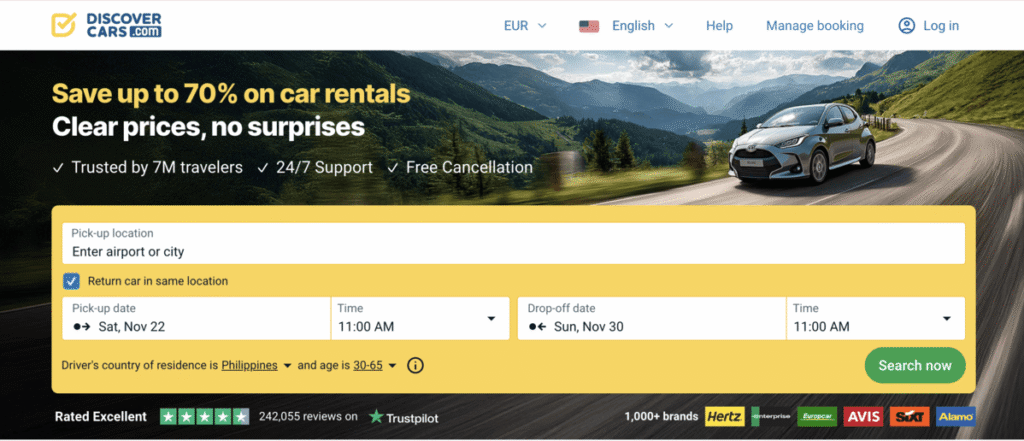
I use DiscoverCars because it lets me compare prices, supplier ratings, deposits, payment-card rules, mileage and rental conditions in one place instead of opening a ridiculous number of rental-company tabs.
I normally prioritize a supplier rating of 8+ over saving the last few dollars. Also check the security deposit and accepted cards before booking — those details matter more than people realize.
Should You Rent a Car in New Zealand?
For most New Zealand road trips, yes.
There are plenty of places where I wouldn’t bother renting a car for a few days. Central Auckland and Wellington are obvious examples. Queenstown can also be surprisingly easy without one if you’re staying downtown and booking organized excursions.
But once your itinerary starts linking several regions together, a rental car becomes incredibly useful.
Public transport is limited once you get away from the major cities, while a car lets you stop for hikes, viewpoints, waterfalls, beaches and random roadside cafés without planning your day around somebody else’s timetable.
| Your trip | Would I rent a car? |
|---|---|
| South Island road trip | Definitely |
| North Island road trip | Definitely |
| Auckland city break only | Usually no |
| Wellington city break only | Usually no |
| Queenstown + organized day tours | Optional |
| Rotorua + surrounding geothermal areas | Yes, unless you’re relying heavily on tours |
| Both North and South Islands | Yes, but check the ferry rules first |
| 1–3 week multi-stop trip | Usually a car |
| Long campervan-style trip | Compare the practicalities before deciding |
A car gives you freedom to change the plan when the weather turns, spend longer somewhere you love and stop at places you would otherwise drive straight past.
In New Zealand because the road trip itself is often part of the experience. The drive into Aoraki/Mount Cook, the West Coast, the Coromandel, the road from Queenstown to Glenorchy and the route through Fiordland are not just transfers between attractions.
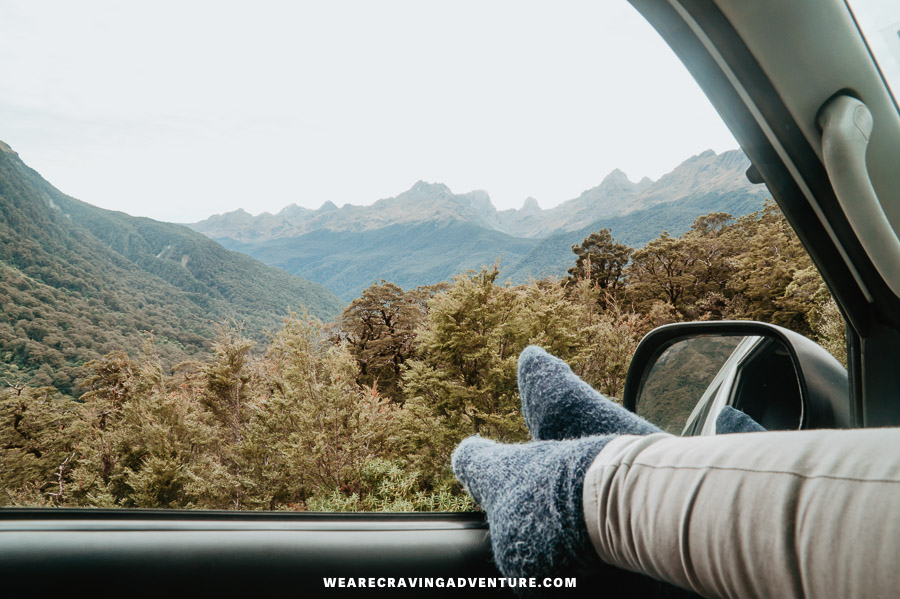
But driving here is also more tiring than the distance on a map suggests. Roads are often narrow and winding, mountain passes can be slow, single-lane bridges are common and weather can change quickly.
If your entire trip revolves around Auckland, Wellington or central Queenstown, renting a car may add parking costs and hassle without giving you much in return.
For almost everything else, I’d rather have one.
Start by checking the actual rental options for your dates.
Prices and availability vary hugely by season and pickup location. I’d rather compare the real options before locking in the rest of a road-trip route.

Requirements for Renting a Car in New Zealand
The legal requirements for driving in New Zealand and the rental company’s own requirements are not always the same thing.
That distinction catches people out. New Zealand may legally allow you to drive with your license, for example, while an individual rental company can still impose a higher minimum age, require a full license held for a certain period or refuse your chosen payment card.
| Requirement | What to know |
|---|---|
| Driver’s license | Bring your current, valid license. Most rental companies require a full license. |
| License not in English | Carry an approved English translation or International Driving Permit as well as your original license. |
| Passport / ID | Bring the identification requested in your booking conditions. |
| Minimum age | Supplier-specific. Many companies start around 21, while some accept younger drivers. |
| Young-driver fees | Common for drivers under 25. |
| License history | Many suppliers require the license to have been held for at least 12 months. |
| Payment card | Most standard rentals require a physical credit card in the main driver’s name for the deposit. |
| Available credit | Make sure the card has enough limit for the security hold. |
| Additional drivers | They need to meet the requirements too and must be added to the rental agreement. |
| Booking confirmation | Keep your rental voucher accessible when you collect the car. |
Using an Overseas Driver’s License in New Zealand
There is an important rule change happening in 2026.
Until October 31, 2026, eligible visitors can drive a car in New Zealand using an overseas license for up to 18 months from their most recent arrival. From November 1, 2026, that limit reduces to 12 months.
If your license isn’t in English, you also need an accurate English translation or an International Driving Permit, and you still need to carry your original license.
For the average visitor doing a few weeks around New Zealand, the time limit is irrelevant. The important bit is arriving with the correct original documents rather than assuming a photo on your phone will do.

🚘 MY GO-TO RENTAL COMPANY: DISCOVER CARS
I always book my rental car through Discover Cars. They compare local and international agencies to get the best deals. No hidden fees, free cancellation, 24/7 support, and optional full coverage for peace of mind.
Renting a Car in New Zealand With a Debit Card
This is where things get messy.
A physical credit card is still the safest assumption when renting a car in New Zealand.
Most rental companies want a physical card in the exact name of the main driver, with enough available credit for the security deposit. Debit cards, prepaid cards and virtual cards may not be accepted, or they can come with different conditions.
Some companies do accept debit cards, but they may impose a larger deposit, compulsory additional coverage or another fee.
And yes, I know how irritating this is because I’ve been the idiot standing at the desk with a perfectly valid credit card trapped inside my phone.
They didn’t care.
My virtual card wasn’t accepted, my physical debit card was subject to different rules, and I had to pay extra to make the rental work.
Since then, I physically pack the card I intend to use at the rental desk.
The card you use to pay for the reservation online does not necessarily have to be the same card used for the security deposit. What matters at pickup is the individual supplier’s payment policy and having an acceptable physical card in the main driver’s name where required.
This is one reason I like booking through DiscoverCars. You can check the deposit, payment policy and rental conditions before choosing a supplier rather than finding out at the desk.
Before booking, check four things:
- Deposit: How much will the supplier block?
- Payment method: Is a physical credit card required?
- Main driver: Whose name must be on that card?
- Debit-card rules: Is debit accepted, and under what conditions?

How I Rent a Car in New Zealand
When I’m comparing car hire in New Zealand, I use DiscoverCars rather than opening ten rental-company tabs and trying to remember which one wanted a huge deposit, which one included unlimited kilometers and which one had an office closing five minutes before my flight lands.
Here’s exactly how I choose my rental car:
- Enter your real pickup and drop-off details. Include your actual age so the results reflect any young-driver restrictions or fees.
- Compare the total price, not just the daily rate. I normally prioritize suppliers rated 8+ rather than chasing the absolute cheapest option.
- Open the Rental Conditions. Check the deposit, payment card, mileage, fuel policy, office hours, one-way fees, ferry rules and road restrictions.
- Choose the right car. Think about luggage, automatic vs manual, winter conditions and how long you’ll actually spend behind the wheel.
- Decide how much protection you want. Check the excess and security deposit rather than assuming “insurance included” means zero financial risk.
- Save your voucher and pack your documents. And yes, physically pack the credit card you need at pickup.
I’m particularly interested in unlimited kilometers for a New Zealand road trip. Distances add up quickly and I have no interest in mentally calculating an odometer allowance while driving across the country.
How Much Does It Cost to Rent a Car in New Zealand?
There isn’t one useful answer because the cost of renting a car in New Zealand changes dramatically with season, location and vehicle type.
Instead of relying on a fixed daily price that may have absolutely nothing to do with your dates, I’d budget around the factors below.
| What affects the rental price? | Why it matters |
|---|---|
| Season | December–February is expensive and busy. |
| Pickup city | Auckland, Christchurch and Queenstown have plenty of supply, but local demand differs. |
| Airport vs downtown | Airport pickup is convenient; downtown can sometimes be cheaper. |
| Vehicle type | Compact cars are generally cheapest; SUVs, premium vehicles and larger vans cost more. |
| Automatic vs manual | Automatics can cost more when supply is tight. |
| One-way rental | Dropping the car in another city can add a relocation fee. |
| Driver age | Under-25 surcharges are common. |
| Coverage | Lower excess or additional protection increases the upfront price. |
| Extras | Child seats, additional drivers and other add-ons can stack up quickly. |
| Booking lead time | Waiting until peak season is underway usually means fewer cheap options. |
The number I care about is the final trip price, not the daily price in the search result.
A cheap-looking car with a large one-way fee, expensive additional driver and awkward airport shuttle can easily be worse value than a slightly pricier rental with better conditions.
Want a realistic price for your trip?
Put your exact dates and pickup/drop-off locations into the search instead of relying on somebody else’s average daily rate.

When and Where to Hire a Car in New Zealand
I recommend booking ahead if you’re traveling during New Zealand’s summer, Christmas/New Year period or school holidays.
December through February is the obvious pressure point, and popular rental locations such as Queenstown, Auckland and Christchurch can lose the cheaper cars and automatics quickly.
I don’t obsess about booking six months ahead for every random Tuesday in May. But once flights and itinerary are confirmed for a summer road trip, I see very little upside in waiting.
Airport pickup is usually the simplest option after a long flight.
Auckland, Christchurch and Queenstown airports all have substantial rental-car supply, and starting directly from the airport means you don’t need to pay for a separate transfer before collecting the car.
But compare the actual pickup arrangements.
Some cheaper suppliers operate just outside the airport and use a shuttle. That can be perfectly fine. I just want to know about it before landing rather than wandering around the terminal looking for a desk that doesn’t exist.
Downtown locations can make more sense if you’re spending your first few days without a car. In Auckland, for example, I’d happily explore the city first and collect the rental only when leaving on the road trip. My Auckland itinerary is easy to adapt around that.
🚘 MY GO-TO RENTAL COMPANY: DISCOVER CARS
I always book my rental car through Discover Cars. They compare local and international agencies to get the best deals. No hidden fees, free cancellation, 24/7 support, and optional full coverage for peace of mind.
One-Way Car Rentals in New Zealand
One-way rentals can save a huge amount of backtracking, and on the right itinerary I think they’re worth paying for.
Just check the fee.
An Auckland-to-Wellington, Christchurch-to-Queenstown or similar route may carry a relocation charge depending on the supplier, route and season.
And if your itinerary crosses between the North and South Islands, do not assume “Auckland to Queenstown” means one car automatically travels the whole way.
The Cook Strait ferry deserves its own section further down.
What Kind of Car Should You Rent in New Zealand?
For most New Zealand trips, you do not need a giant SUV or 4WD.
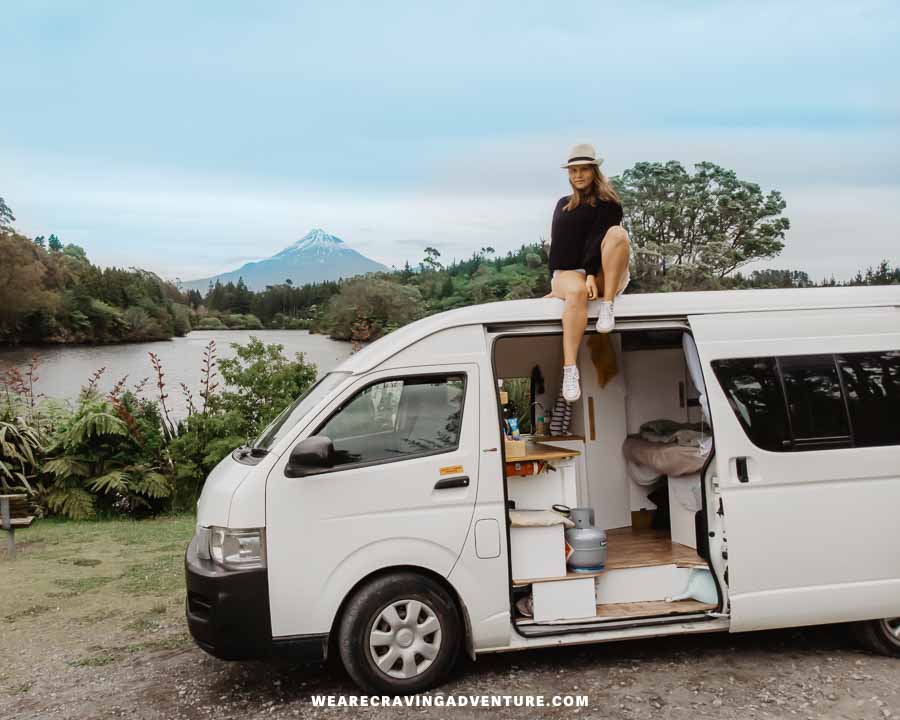
A compact or mid-size car is usually ideal: cheaper to rent, more fuel-efficient, easier to park and perfectly capable of handling the paved roads used on most visitor itineraries.
The right choice comes down to passengers, luggage, season and route.
| Trip | What I’d choose |
|---|---|
| Normal summer road trip | Compact or mid-size |
| 2–4 people with lots of luggage | Mid-size or SUV |
| Long South Island trip | Comfortable mid-size car |
| Winter alpine itinerary | Winter-ready vehicle; tyres and chains matter more than badge or size |
| Regular gravel-road plans | Check rental conditions first, then consider extra clearance |
| Beach or off-road driving | Usually avoid with a rental car |
Automatic vs. Manual Rental Cars
If you’re coming from the US or simply don’t drive manual regularly, book an automatic.
This is not the country where I’d choose to relearn clutch control.
New Zealand has steep hills, tight bends, unfamiliar left-side driving and enough distractions outside the windshield already.
Automatics are widely available, but booking earlier gives you more choice, particularly during the busy season.
Do You Need a 4WD in New Zealand?
Usually, no.
I’d take a normal car on the vast majority of New Zealand itineraries.
A 4WD can give you extra traction and clearance in particular conditions, but it does not turn restricted roads into permitted roads, make ice disappear or override your rental agreement.
If the rental agreement says you cannot drive Skippers Canyon, onto a beach or through a riverbed, arriving in a Land Cruiser doesn’t magically change the contract.

Renting a Car in New Zealand in Winter
Winter is where I’d pay more attention to the vehicle itself.
You don’t necessarily need winter tyres for a city trip around Auckland in July. But if my itinerary involved Queenstown, Wānaka, alpine passes, ski fields or Fiordland in genuinely wintry conditions, I would rather spend a little more for a properly winter-ready vehicle than choose the absolute cheapest rental.
Winter tyres are designed to perform better in cold, snowy and icy conditions. New Zealand does not require every vehicle to use winter tyres for a fixed winter season, but I’d absolutely ask what tyres are fitted if I knew I was planning significant alpine winter driving.
If winter tyres are fitted, they must be on all road wheels and have at least 4 mm of tread depth.

What About Snow Chains?
Snow chains are different.
A winter tyre is not a substitute for an official chain requirement.
Road restrictions can change with conditions, and if authorities require chains to be carried or fitted, follow the instruction even if you have winter tyres or four-wheel drive.
The clearest example is State Highway 94 to Milford Sound. Between Lower Hollyford Road and Milford Sound, from May 1 to November 30, drivers must carry or fit chains when the relevant signs require it.
Around Queenstown, I’d also carry chains on a winter alpine itinerary, particularly for the Crown Range and ski-field roads, and know how to fit them.
Before an alpine winter drive:
- Check that the chains fit your rental vehicle.
- Make sure the rental company allows you to use them.
- Know which wheels they go on.
- Know how to fit them before you’re standing beside an icy road.
- Check current weather and road conditions before leaving.
If the weather is genuinely awful, the correct road-trip hack is sometimes not driving.
Rental-Car Conditions That Can Catch You Out
This is the boring section that can save you a lot of money.
Credit Cards and Deposits
As mentioned above, most standard rentals require a physical credit card in the main driver’s name.
Check both the deposit amount and accepted cards before booking.
DiscoverCars makes this particularly easy because you can compare the security deposit and payment rules alongside the rental itself.
Unlimited Kilometers
Most of the New Zealand rentals I’m interested in have unlimited kilometers, but never assume.
You can cover enormous distances on a two or three-week itinerary.
An allowance that looks generous when you book in Auckland suddenly looks much less generous after Queenstown, Milford Sound, Mount Cook, the West Coast and several scenic detours have had their way with your route.
Additional Drivers
If someone else will drive, put them on the rental agreement.
New Zealand drives can be long and tiring, so splitting the wheel time can be worth whatever additional-driver fee applies.
🚘 MY GO-TO RENTAL COMPANY: DISCOVER CARS
I always book my rental car through Discover Cars. They compare local and international agencies to get the best deals. No hidden fees, free cancellation, 24/7 support, and optional full coverage for peace of mind.
Office Hours
This is especially important if your flight lands late.
A fantastically cheap car is less fantastic when the rental office closes before you clear immigration.
Check after-hours pickup fees and instructions before booking.
Fuel Policy
I prefer the straightforward full-to-full arrangement.
Return the car with the agreed fuel level and keep the final fuel receipt until the rental is completely closed out.
Late Returns
Don’t assume there is a universal grace period.
There isn’t.
Check the specific rental conditions and contact the office if you know you’re running late. A late return can trigger an additional charge or another rental day depending on the supplier.
Can You Take a Rental Car Between the North and South Islands?
Sometimes. Rental-car ferry policies vary between companies.
Some rental companies allow you to drive the same vehicle onto the Cook Strait ferry between Wellington and Picton.
Others require you to return the North Island car, travel as a foot passenger and collect another vehicle on the South Island.
This matters before you book your ferry ticket.
If your rental company requires a vehicle swap but you’ve already paid for a vehicle space on the ferry, congratulations: you’ve just bought your rental car a cruise it isn’t allowed to take.
Before booking an inter-island rental, check:
- Does the same vehicle cross?
- Do you need separate rental agreements?
- Is there an inter-island or one-way fee?
- Where exactly are the Wellington and Picton depots?
- Do you need to book the ferry as a vehicle or foot passenger?
I’d confirm the current policy with the rental company before paying for ferry travel.

READ NEXT:
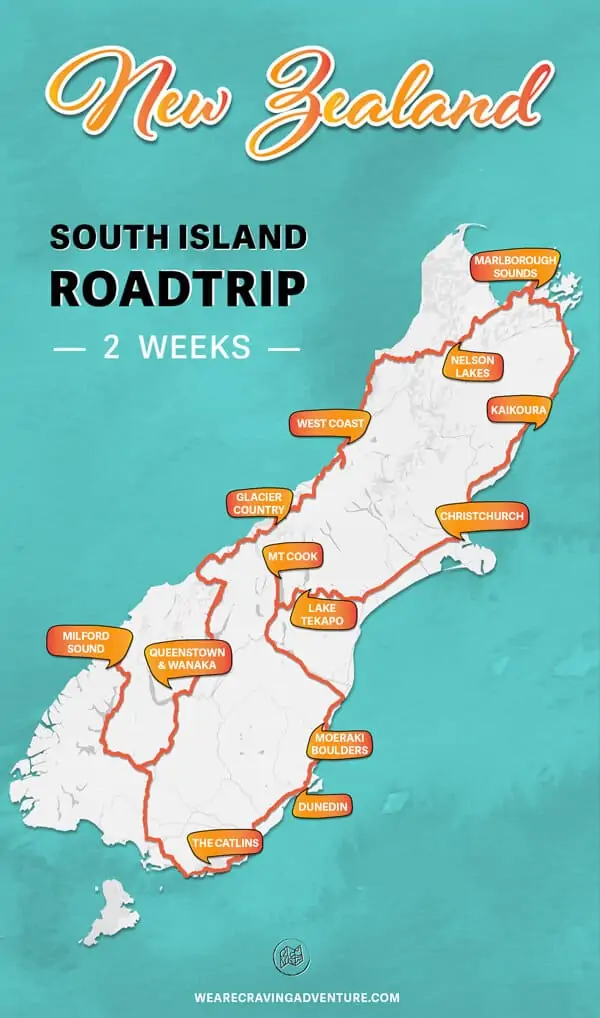
New Zealand South Island Road Trip Itinerary
Plan the ultimate 2 & 3 week South Island road trip route
Can Rental Cars Drive on Gravel and Unsealed Roads in New Zealand?
This is another case where “the road exists” and “your rental agreement allows you to drive it” are two different statements.
New Zealand has plenty of unsealed roads, and many are perfectly manageable in a normal car when conditions are good.
But rental companies may exclude particular roads, beaches, riverbeds, fords and off-road areas from their coverage.
So before building some wonderfully adventurous gravel-road detour into your itinerary, search the rental conditions for:
- Unsealed roads
- Gravel roads
- Prohibited roads
- Off-road use
I’ve driven plenty of gravel around New Zealand. The road surface itself doesn’t automatically worry me.
Voiding the rental coverage for the sake of an Instagram detour does.
🚘 MY GO-TO RENTAL COMPANY: DISCOVER CARS
I always book my rental car through Discover Cars. They compare local and international agencies to get the best deals. No hidden fees, free cancellation, 24/7 support, and optional full coverage for peace of mind.
Can You Drive a Rental Car on 90 Mile Beach?
I wouldn’t assume so.
Some beaches in New Zealand fall within the legal definition of a road, which means normal road rules can apply. But that has absolutely nothing to do with whether the rental company permits you to take its car onto sand.
Many don’t.
Soft sand, salt water and tides can turn a quick detour into a remarkably expensive recovery job.
If 90 Mile Beach is important to you, check the rental agreement explicitly or take a tour designed for the beach.

Rental-Car Insurance in New Zealand
Rental-car insurance is unnecessarily confusing because several completely different products get described with similar reassuring words.
Here’s how I think about it.
Basic Rental Protection
Your rental normally comes with whatever basic protection is specified in the booking.
That can still leave you responsible for a substantial excess or deductible if the car is damaged or stolen.
Check the actual excess amount rather than simply seeing “insurance included” and moving on.
Rental-Company Excess Reduction
The supplier may offer its own additional cover or excess-reduction package, either online or at the desk.
Depending on the product, that can reduce the deposit or your excess directly with the rental company.
DiscoverCars Full Coverage
I personally add Full Coverage when I rent through DiscoverCars.
But it is important to understand what you’re buying.
On a normal booking, Full Coverage is a reimbursement product separate from the rental company’s own insurance.
That means the local rental company can still require its normal security deposit. If eligible damage happens, you generally pay the supplier first and then submit the covered costs for reimbursement.
Current coverage can include eligible costs such as the rental excess, theft excess, windows, tyres, wheels, mirrors, underbody, towing, lost keys and certain administrative charges, subject to the policy terms.
Full Coverage does not mean you can ignore the rental agreement.
If the contract prohibits a particular road and you drive it anyway, don’t assume additional coverage will magically rescue the situation.
I still choose it because I’d rather pay a predictable extra amount upfront than take a large excess gamble.
A friend of mine once skipped the extra protection, clipped a curb at something like 15 km/h (9 mph) and ended up paying more in excess than the rental and insurance would have cost together.
It wasn’t a dramatic crash.
That was rather the point.
My rental-insurance checklist:
Check the basic excess, the security deposit, what the supplier’s own excess-reduction product costs and exactly how any third-party coverage works.
If I’m booking through DiscoverCars, I personally add Full Coverage — but I still bring the required credit card and follow the supplier’s rental agreement.
Isn’t ACC Enough?
No.
New Zealand’s Accident Compensation Corporation (ACC) provides no-fault cover for eligible accidental injuries that happen in New Zealand, including injuries suffered by international visitors.
But it isn’t travel insurance and it certainly isn’t rental-car insurance.
ACC doesn’t cover ordinary illness, disrupted travel plans, emergency travel home or your continued treatment once you return overseas.
And it doesn’t exist to pay for the dent in your rental car.
I still travel with proper travel insurance and separately make a decision about rental-car protection.
How to Save Money on Car Rental in New Zealand
New Zealand rental prices can climb quickly, but I wouldn’t optimize so aggressively for price that I create a miserable pickup experience.
These are the savings I actually think are worth making.
1. Book Early for Summer
The combination of high demand + limited cheap cars + automatic transmission preference means December through February is not the time I’d play chicken with the booking calendar.
If your dates are firm, compare prices early.
2. Compare the Complete Rental
This is the whole reason I use an aggregator.
Compare New Zealand car rentals on DiscoverCars.
- Final rental cost
- Deposit
- Supplier rating
- Included kilometers
- Fuel policy
- One-way fee
- Payment-card requirements
- Cancellation
- Coverage
The cheapest first number isn’t necessarily the cheapest rental.
3. Rent the Smallest Car That Comfortably Fits
A smaller car is cheaper to rent, cheaper to fuel and easier to park.
Don’t squeeze four adults and four giant suitcases into something the size of a lunchbox just to save a few dollars a day, but equally, you probably don’t need a seven-seat SUV for two people doing a standard summer road trip.
4. Skip the Rental GPS
Use your phone.
I’d rather bring a phone mount and charger than pay a daily rental fee for an extra navigation device.
Download offline maps before remote drives.
5. Avoid Unnecessary One-Way Fees
Sometimes a one-way route is worth every cent.
Sometimes rearranging the itinerary into a loop saves a substantial relocation fee without sacrificing anything.
Compare both versions before booking flights.
6. Return the Fuel Yourself
Rental-company refueling charges are rarely a bargain.
Fill up before returning the vehicle according to your agreed fuel policy.
7. Read the Fine Print
This is not glamorous advice.
It is also the advice most likely to save you from standing at a rental desk thinking, Wait, how much?!
Picking Up Your Rental Car in New Zealand
Before leaving the depot, inspect the car properly.
I take clear photos or a slow video around the entire vehicle, including:
- Bumpers
- Wheels
- Windscreen
- Mirrors
- Doors
- Roof if visible
- Interior
Make sure any existing damage is already noted on the rental agreement.
I’m not expecting the rental company to try anything shady. I simply prefer having a time-stamped record rather than debating whether a scratch existed ten days earlier.
Check the fuel level and odometer too.
If you’re driving in winter, this is also when I’d confirm the tyres, snow chains and any relevant instructions with the rental company.
There is no general New Zealand requirement for an ordinary passenger car to carry a warning triangle, so I would not make that part of a legal checklist.
The things that matter are that the vehicle is roadworthy and that you have the equipment required for the route and conditions you actually plan to drive.
Returning Your Rental Car in New Zealand
Returning the car is mostly about leaving yourself enough time.
Refill according to the fuel policy, remove your stuff and take another quick set of photos.
If possible, I prefer returning during office hours so somebody can inspect the vehicle while I’m there.
That isn’t always practical with early flights.
If you’re using an after-hours key box, follow the supplier’s exact instructions and photograph the car where you leave it.
And if you’re running late, call.
Don’t rely on a mythical universal 30-minute grace period because rental-company late-return policies vary.

Driving in New Zealand
Driving in New Zealand is one of my favorite ways to explore the country, but it is not your average motorway road trip.
A drive that appears straightforward on a map can involve mountain passes, one-lane bridges, tiny towns, construction, tractors, sheep, photo stops and about 47 moments where somebody in the passenger seat says, “WAIT, LOOK AT THAT.”
The scenery is jaw-dropping, but the roads are often narrow and twisty and journeys regularly take longer than you expect.
Locals are used to these roads and may drive much faster than you’re comfortable driving them.
Don’t try to keep up.
If you notice a queue forming behind you, use a safe passing bay or pull-off and let it go past.
Outside the cities, you’ll pass through rural areas where the road is shared with farm vehicles and occasionally actual farms.
One minute you’re on smooth tarmac. The next you’re staring at a one-lane bridge trying to decipher which arrow means me.
That’s normal.
Treat the driving as part of the trip rather than something to rush through.

Unique Driving Conditions in New Zealand
Single-Lane Bridges
They’re common, particularly in rural areas. Watch the signs as you approach. They show which direction has priority.
Livestock
Sheep and cattle on the road are not just something the tourism board invented for postcards. Slow down, leave space and follow any instructions from the farmer.
Narrow and Winding Roads
Even roads with a state-highway number can feel more like rural lanes. Allow more time than the raw distance suggests.
Gravel Roads
Slow down considerably, leave more space and remember the rental-company restrictions discussed earlier. Loose stones are not kind to windscreens.
Weather and Terrain
Rain, fog, snow and ice can change conditions very quickly. Mountain and coastal roads deserve particular respect. Check conditions before long alpine drives rather than relying purely on the weather outside your hotel window.
Spectacular Distractions
This one is stupidly easy to underestimate. New Zealand frequently places a ridiculous view directly in front of the driver.
Pull over somewhere designed for it.
Do not stop half in the road because Aoraki appeared between the clouds and apparently deleted your understanding of traffic.

Toll Roads in New Zealand
New Zealand currently has only three toll roads, all on the North Island:
- Northern Gateway Toll Road north of Auckland
- Tauranga Eastern Link
- Takitimu Drive
There are no toll booths.
With a rental car, check the rental company’s toll policy before driving one.
Some companies may process tolls on your behalf and add an administration fee, while others expect you to pay them yourself.
I’d rather spend two minutes checking than receive a surprise fee several weeks later.

Fueling Up in New Zealand
You’ll find plenty of fuel stations around cities, towns and main highways.
Remote areas are different.
Parts of the West Coast, Fiordland and the central South Island can have long gaps between convenient fuel stops.
Top up before you need to.
I say that with the authority of somebody who has watched a fuel gauge become increasingly offensive in the middle of nowhere.
My personal experience has also been that prices vary a lot.
I’ve regularly found better-value fuel around places such as Taupō, while remote tourist areas like Mount Cook can be painful.
If you’re going somewhere remote, fill up in the larger town before it.
Many rural stations are unmanned and card-only, so make sure you have a payment card that works.
Diesel Rental Cars and Road User Charges
If you rent a diesel, ask how the rental company handles Road User Charges (RUC).
Diesel road charges are distance-based in New Zealand, and rental companies can handle them differently. Check whether anything will be billed separately at the end of your rental.

Parking in New Zealand
Parking is usually easy once you’re out of the major cities.
In Auckland, Wellington and central Queenstown, I pay much more attention to hotel parking when booking accommodation because daily parking can quickly become another hidden road-trip expense.
Smaller towns often have free parking, although time limits still apply.
One rule that surprises visitors: you generally park facing the direction of traffic on your side of a two-way road. Don’t simply pull into a convenient space facing the wrong way.
Read the signs.
New Zealand parking enforcement may be friendly enough, but the ticket still contains a number you have to pay.

Navigating New Zealand Roads
Phone navigation works perfectly well for normal road-trip use, and I don’t pay extra for an in-car GPS.
But I don’t blindly follow an app into the wilderness.
Navigation apps can suggest gravel roads, tiny shortcuts or routes that make considerably more sense to an algorithm than to the rental agreement.
Before heading somewhere remote, check:
- What road is the app actually sending me down?
- Is the road open?
- Does my rental company allow it?
Download offline maps too. Cell coverage can disappear for surprisingly long stretches.
And add some padding to drive times. A route may technically take three hours. Then you stop for coffee, a waterfall, sheep, a viewpoint and another viewpoint because apparently the first mountain wasn’t enough.
Suddenly it’s five.
NZ Road Rules Visitors Need to Know
- Drive on the left. If you normally drive on the right, pay particular attention after turns, junctions and roadside stops.
- Follow the posted speed limit. Urban limits commonly range around 30–50 km/h (19–31 mph), while open-road limits are often 80–100 km/h (50–62 mph), but the posted sign always wins.
- Seatbelts are compulsory.
- Don’t use a handheld phone while driving. Set up navigation before moving and use a proper mount.
- Drivers under 20 have a zero-alcohol limit. Drivers aged 20+ are subject to New Zealand’s legal alcohol limits, but if I’m driving unfamiliar roads I’m considerably more conservative than whatever the legal maximum happens to be.
- Carry the license and documents required for your rental.
And if you’ve just landed after a long international flight, consider whether collecting a car and immediately driving several hours is genuinely the brilliant itinerary decision it looked like from your sofa.
Jet lag and unfamiliar roads are a rotten combination.
When I’d Leave the Rental Car Parked and Book a Tour Instead
I love having a car in New Zealand.
That doesn’t mean I insist on personally driving every kilometer.
There are a few situations where paying somebody else to drive is simply the better day.
These are the tours I’d consider instead of driving:
Hobbiton and Waitomo small-group day tour from Auckland
A long sightseeing day where having the attraction timings, transport and lunch coordinated for you makes life considerably easier. See my day trips from Auckland guide for more options.Small-group Milford Sound tour and cruise from Queenstown
Milford Sound is spectacular to self-drive from Te Anau, but Queenstown to Milford and back in one day is a lot of driving. I’d seriously consider letting somebody else handle it, especially in winter. My Milford Sound tours guide compares the options in more detail.Te Pā Tū Māori cultural evening in Rotorua
I loved this experience, and having transport arranged means you can relax into the evening instead of worrying about getting yourself back afterward. See my Rotorua itinerary for how I fit it into a wider trip.
If you’re spending a few days somewhere before starting a road trip, this can also let you delay the rental pickup and avoid paying for a car that spends two days sitting in a city parking garage.

Renting a Car vs. Campervan in New Zealand
Both can be fantastic.
They’re also very different trips.
- Go campervan if you have plenty of time and genuinely want the campervan experience.
- Choose a car if you value comfort, easier driving and seeing more in less time.
Campervans: Freedom With Chores Attached
There is something deeply appealing about waking beside a lake, making coffee and having the entire road trip packed into one vehicle.
If you have several weeks and genuinely want the campervan experience, go for it.
Just don’t mistake it for the effortless option.
Campervans are larger, slower and less pleasant on narrow winding roads. You also add water tanks, waste, campground logistics, legal overnight parking and the daily question of where exactly everything inside the van migrated to on the last corner.
During busy periods, the idyllic camping spots can also fill early.
Depending on the location and supplier, larger vans and some camper-style vehicles can also appear in DiscoverCars search results, so I’d run the comparison before assuming you need a separate booking platform.
Rental Cars: Faster and Easier
For a one-to-three-week trip where the goal is seeing as much of New Zealand as possible, I generally prefer a car.
They’re easier to drive, easier to park, more efficient and more pleasant on winding roads.
And after a big hiking day, I quite like having a shower and an actual bed rather than converting the dining room into a bedroom while searching for a missing pillow behind the driver’s seat.
There is no universal winner.
Pick the experience you actually want rather than the vehicle that looks best on Instagram.

FAQs About Renting a Car in New Zealand
Is It Easy to Drive in New Zealand?
Generally, yes.
The signage is good and traffic outside the major cities is often fairly light.
What makes driving slower and more tiring is the road geometry rather than chaos: narrow roads, bends, hills, one-lane bridges and weather.
If you’re comfortable driving on the left and give yourself realistic travel times, it’s an excellent country for a road trip.
Can Americans Rent a Car in New Zealand?
Yes.
For most visitors, renting a car in New Zealand as an American is straightforward.
You can use a current US driver’s license while you remain within New Zealand’s overseas-license time limit. Because a US license is already in English, you normally don’t need a translation or IDP for that reason.
The bigger adjustment is driving on the left.
I’d book an automatic, take the first hour slowly and be particularly conscious when pulling back onto the road after stops.
Can You Rent a Car in New Zealand Under 21?
Sometimes.
There isn’t one universal minimum rental age across every company.
Some suppliers accept drivers below 21 while others don’t, and younger drivers can face additional charges or a restricted vehicle selection.
Enter your actual age when searching and check the individual Driver Requirements before booking.
Can You Rent a Car in New Zealand Under 25?
Yes, usually.
Drivers aged 21–24 have plenty of rental options, but a young-driver surcharge is common.
Compare the total price including that fee rather than assuming the company with the cheapest base rental is cheapest for you.
Do I Need an International Driving Permit in New Zealand?
Not necessarily.
If your current overseas license is in English and otherwise meets New Zealand’s rules, you generally don’t need an IDP.
If it isn’t in English, carry an approved translation or IDP along with the original license.
What Side of the Road Do You Drive on in New Zealand?
The left.
The steering wheel is normally on the right side of the car.
If you normally drive on the right, the moments that deserve extra concentration are turns, roundabouts and pulling back onto an empty road after a stop.
Are New Zealand Roads Safe?
Yes, but they demand attention.
A state highway here doesn’t necessarily look like the giant multi-lane road the word highway may suggest.
Expect bends, steep sections, one-lane bridges and fast-changing weather.
Drive for the actual conditions rather than treating the posted maximum speed as some sort of challenge.
Can I Drive a Rental Car on the Beach?
Only if the rental agreement allows it — and many don’t.
The legal definition of a road can include places such as beaches, but rental companies can separately prohibit driving their cars there.
I would assume beach driving is excluded until the contract proves otherwise.
What Should I Know About Fuel Prices in New Zealand?
They vary noticeably.
Remote and tourist-heavy locations can be much more expensive than larger towns.
I’ve personally found Taupō good for filling up and Mount Cook painful.
The more important rule is simply don’t arrive in a remote area already running low.
I have tested that strategy for you.
Would not recommend.
Planning a Trip to New Zealand?
New Zealand is one of those countries where having a route matters, but leaving enough space to change it matters just as much.
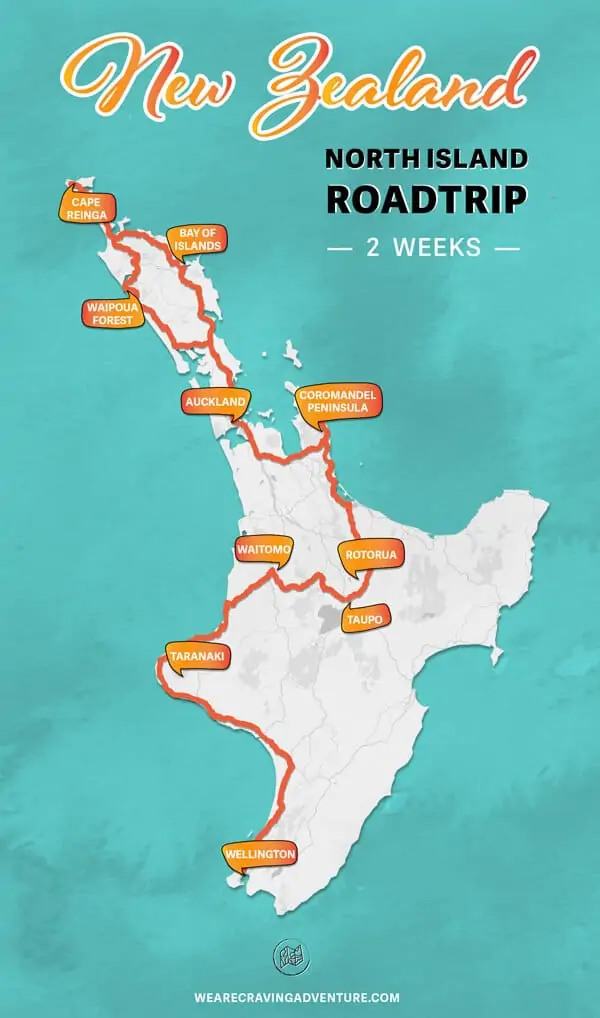
A car makes that balance much easier. To help you plan the rest of your trip, I’ve put together a growing collection of practical New Zealand travel guides covering both islands.
Read next:
New Zealand road trips:
South Island 2 & 3 week itineraries
North Island 2 & 3 week itineraries
Auckland:
Auckland itinerary
Best day trips from Auckland
Rotorua:
Rotorua itinerary
Where to stay in Rotorua
Coromandel Peninsula:
Coromandel Peninsula guide
Cathedral Cove guide
Where to stay on the Coromandel
Queenstown & Milford Sound:
Queenstown itinerary
Where to stay in Queenstown
Queenstown to Glenorchy scenic drive
Milford Sound guide
Best Milford Sound cruises and tours
Christchurch & Wānaka:
Christchurch itinerary
Wānaka itinerary
West Coast:
Best things to do on the West Coast
Franz Josef Glacier heli hiking
New Zealand Travel Insurance
New Zealand’s ACC scheme is not a replacement for comprehensive travel insurance.
ACC can help with treatment for eligible accidental injuries that happen in New Zealand, including injuries to international visitors, but it doesn’t cover everything that can go wrong on an overseas trip.
I always arrange travel insurance before leaving, and Travel Insurance Masters is the comparison platform I use to compare policies for a specific trip.
It searches different providers based on things such as your destination, nationality, age and trip details rather than assuming one policy is best for everybody.
For a New Zealand road trip, I’d pay particular attention to medical cover, trip interruption, baggage, the activities you’re planning and any rental-car excess protection already included in the policy.
That last one is worth checking before paying twice for overlapping coverage.
Compare travel-insurance quotes and provider recommendations
