This site uses affiliates. Thank you for buying through our links and supporting this blog.


Where to Skydive in New Zealand: 9 Best Places Compared

The biggest mistake when booking a skydive in New Zealand is choosing entirely by altitude or Instagram photos.
You can spend days obsessing over Queenstown versus Wānaka, only for the weather to cancel your carefully chosen jump. Meanwhile, you have already driven past two perfectly good drop zones with clear skies.
Having lived in New Zealand and driven these routes many times, my advice is simple: pick the best skydive that fits your itinerary and book it for your first available day there. This gives you some wiggle room if the weather refuses to cooperate.

In a hurry? Book your New Zealand skydive
These are the skydives I would shortlist first:
Mount Cook tandem skydive — my pick for alpine scenery
Queenstown tandem skydive — easiest for most Queenstown itineraries
Taupō tandem skydive — best North Island all-rounder
Franz Josef tandem skydive — glaciers, rainforest and the Tasman Sea
Abel Tasman tandem skydive — best for golden beaches and coastal views
How to choose your New Zealand skydive
New Zealand has mountain, glacier, lake, volcanic and coastal drop zones. There is no single perfect choice for every trip, but a few practical details make the decision much easier.
Choose a skydive that fits your route
A skydive can occupy several hours once you include check-in, briefing, equipment, the flight to altitude and possible weather delays.
I would not drive halfway across the country for a particular drop zone unless skydiving is the main reason for the trip. Mount Cook, Queenstown and Wānaka all have fantastic alpine scenery. Taupō, Auckland and Tauranga are much more practical for most North Island itineraries.
If I had to narrow it down, these would be my picks:
- Best alpine scenery: Mount Cook skydive
- Best for convenience: Queenstown skydive
- Best North Island skydive: Taupō skydive
- Best glacier and coastline combination: Franz Josef skydive
- Best coastal scenery: Abel Tasman skydive
Book your first available day
Skydiving depends on cloud, visibility and wind conditions. Even a beautiful day on the ground can be unsuitable at altitude.
Book your jump early in your stay. If it gets canceled, you may be able to move it to the following morning instead of missing out completely.
This matters most around Mount Cook and Franz Josef, where the weather can change quickly.
Decide whether the extra altitude is worth it
Jump heights are normally advertised in feet, so you will see options such as:
- Around 3,000 m (10,000 ft): roughly 25–30 seconds of freefall
- Around 4,000 m (13,000 ft): roughly 40–45 seconds
- Around 4,500 m (15,000 ft): roughly 55–60 seconds
- Around 5,000 m (16,500 ft): roughly 65–70 seconds
- Around 5,500 m (18,000 ft): up to approximately 75–85 seconds
Freefall times differ slightly between operators.
My slightly biased opinion? If this is a once-in-a-lifetime jump and your budget allows it, go higher. The initial fear is not reduced by choosing a lower altitude, but the experience ends much faster.
Check the complete cost
Current New Zealand tandem jumps generally start at around NZ$279, while the highest jumps can reach NZ$799 before optional extras.
Photo and video packages can add a painful amount to the total. Most operators do not allow tandem passengers to bring a personal camera or GoPro, so decide in advance whether you want professional footage.
Check restrictions before paying
Age and weight rules vary between operators. Some have fixed limits, while others assess passengers individually according to harness fit, weather and aircraft loading.
If you are close to the stated limit, contact the operator before booking. Do the same if you have a medical condition, reduced mobility or a recent injury.
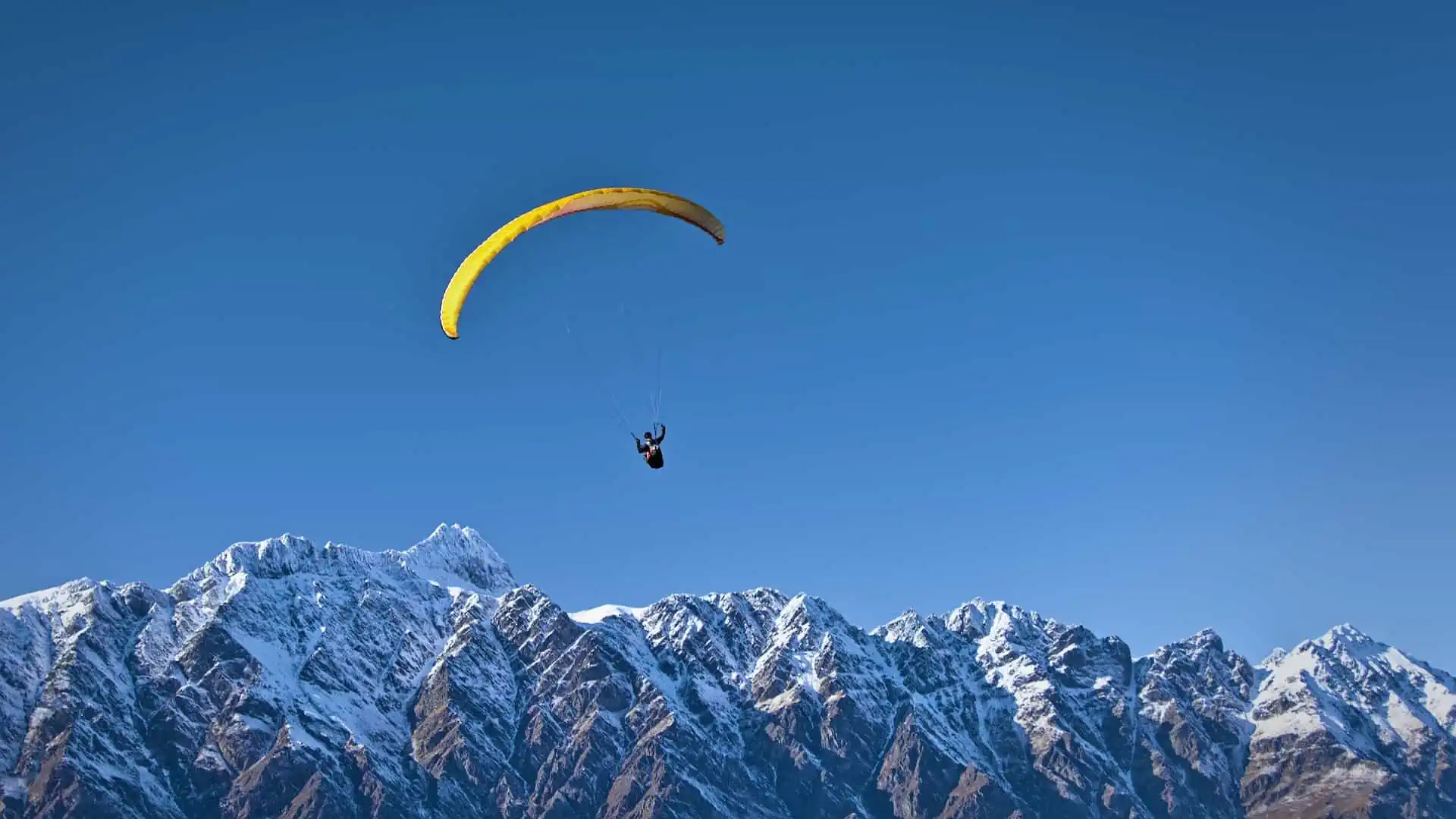
Best places to skydive on New Zealand’s South Island
1. Mount Cook skydive
Best for: The best all-around alpine scenery
Location: Pukaki Airport, near Twizel
Altitude: Up to 5,000 m (16,500 ft)
Allow: 2–3 hours
If scenery is the priority, Mount Cook would be my first choice.
The drop zone is at Pukaki Airport near Twizel, rather than inside Aoraki/Mount Cook Village. On a clear day, the flight and descent deliver views across Aoraki/Mount Cook National Park, the Southern Alps and the bright blue waters of Lakes Pukaki, Tekapo and Ōhau.
It also fits naturally into a Christchurch to Queenstown road trip. You do not need to make a large detour or sacrifice an extra travel day for the jump.
The current bookable options include approximately 4,000 m (13,000 ft) and 5,000 m (16,500 ft). I would choose the higher jump if the price difference does not wreck your budget.
Just do not schedule it immediately before a non-refundable tour or a long drive. The Mackenzie Basin can look beautifully calm from the ground while wind or cloud delays the aircraft.

2. Queenstown skydive
Best for: Convenience and dramatic mountain scenery
Location: Transfers from central Queenstown
Altitude: 2,700, 3,600 or 4,500 m (9,000, 12,000 or 15,000 ft)
Allow: 3–4 hours
Queenstown is the obvious choice if you want a spectacular jump without reorganizing your road trip.
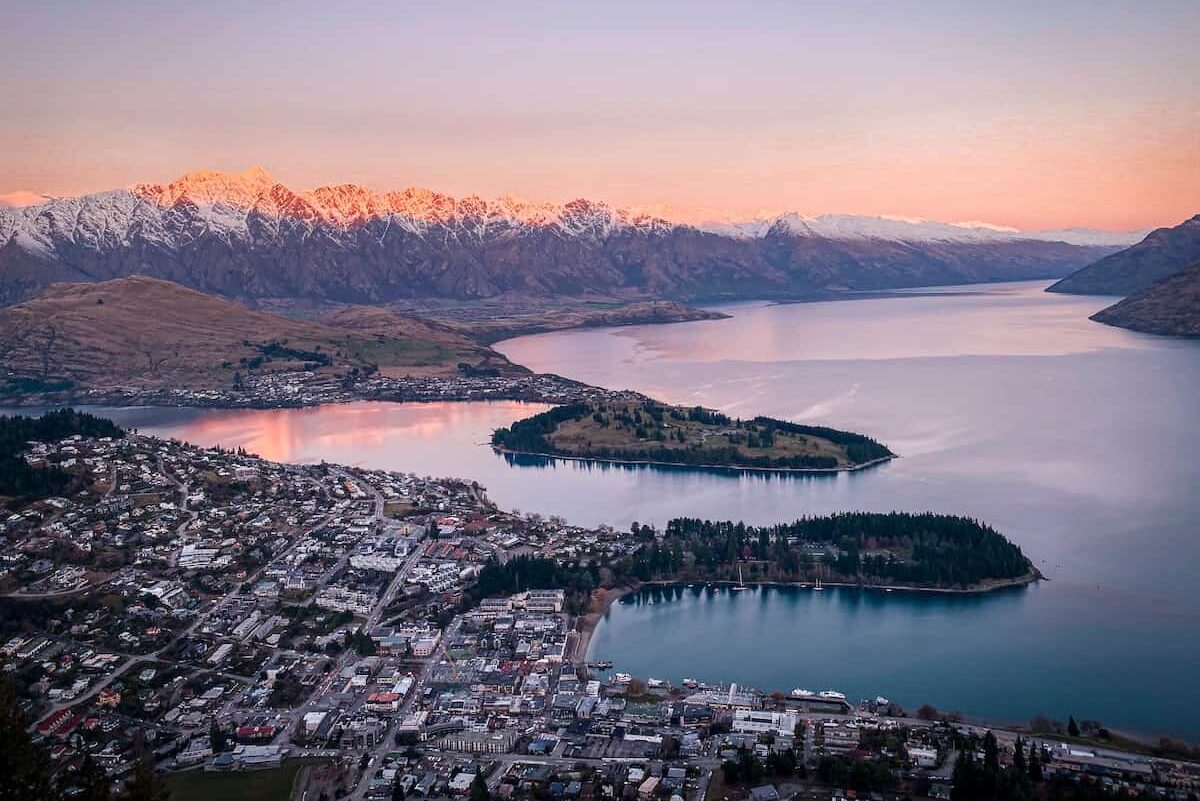
The flight climbs above the Wakatipu Basin, with views across Lake Wakatipu, the Remarkables, Coronet Peak and the surrounding Southern Alps. The scenery is properly dramatic, even before anyone opens the aircraft door.
NZONE offers jumps from approximately 2,700, 3,600 and 4,500 m (9,000, 12,000 and 15,000 ft), with the highest option giving you up to about 60 seconds of freefall.
Transfers leave from central Queenstown, so this is particularly easy if you are staying in town without a car. It also combines neatly with a longer Queenstown itinerary or the Queenstown to Glenorchy drive.
Queenstown is rarely the cheapest place to do anything, but the convenience is difficult to beat. Book your Queenstown skydive here.
3. Wānaka skydive
Best for: A quieter Southern Lakes base
Location: Wānaka Airport
Altitude: 2,700, 3,600 or 4,500 m (9,000, 12,000 or 15,000 ft)
Allow: Around 3 hours
Wānaka has much of the same alpine drama as Queenstown, but the whole experience feels a little less hectic.
The flight can reveal the Southern Alps, Mount Aspiring, Lake Wānaka, Lake Hāwea and the Clutha River. On a clear day, you may also see Aoraki/Mount Cook in the distance.
The jump heights are the same as Queenstown: approximately 2,700, 3,600 or 4,500 m (9,000, 12,000 or 15,000 ft). Book your Wanaka jump here.
Choose Wānaka if it is already part of your itinerary and you prefer its calmer atmosphere. Choose Queenstown if central transfers and a broader choice of nearby activities matter more.
I would not drive from Queenstown to Wānaka solely to save a small amount of money. The Crown Range is beautiful, but adding a weather-dependent activity to a mountain drive is an excellent way to make your day unnecessarily complicated.

Queenstown vs Wānaka vs Mount Cook
- Choose Mount Cook for the most dramatic high-alpine scenery.
- Choose Queenstown for the easiest logistics and central transfers.
- Choose Wānaka for a quieter base with excellent Southern Alps views.
- Choose whichever has the best weather window if your route includes more than one.
4. Franz Josef skydive
Best for: Glaciers, rainforest, mountains and sea in one view
Location: Franz Josef
Altitude: Up to 5,500 m (18,000 ft)
Allow: Around 3 hours
Franz Josef squeezes a ridiculous amount of New Zealand scenery into one jump.
The aircraft climbs above the West Coast, with the Tasman Sea on one side and the Southern Alps on the other. Depending on visibility, you may see Aoraki/Mount Cook, the Franz Josef and Fox glaciers, lakes, rainforest and coastline.
Current options reach approximately 5,500 m (18,000 ft), with up to about 85 seconds of freefall. Book your Franz Josef skydive here.
The downside is the West Coast weather. Book for your first day in Franz Josef and keep the following day flexible if possible.
If the jump gets canceled, there is still plenty to explore along the West Coast. If the sky clears, you may also want to make room for a Franz Josef Glacier heli-hike.

5. Abel Tasman skydive
Best for: Coastal scenery on the South Island
Location: Motueka
Altitude: Up to 5,500 m (18,000 ft)
Allow: 2–3 hours
Abel Tasman swaps glacial lakes for golden beaches, turquoise water and forest-covered national parks.
The drop zone is in Motueka, near Abel Tasman National Park. From altitude, you can look across Tasman Bay, Abel Tasman, Kahurangi and Nelson Lakes National Parks. On exceptionally clear days, the view can stretch across both main islands.
Available heights reach approximately 5,500 m (18,000 ft), making this one of the longest tandem freefall options in New Zealand. Book your Abel Tasman skydive here.
This would be my coastal pick if you are already exploring Nelson, Motueka or Abel Tasman. I would not treat it as a sensible detour from Queenstown or Christchurch.
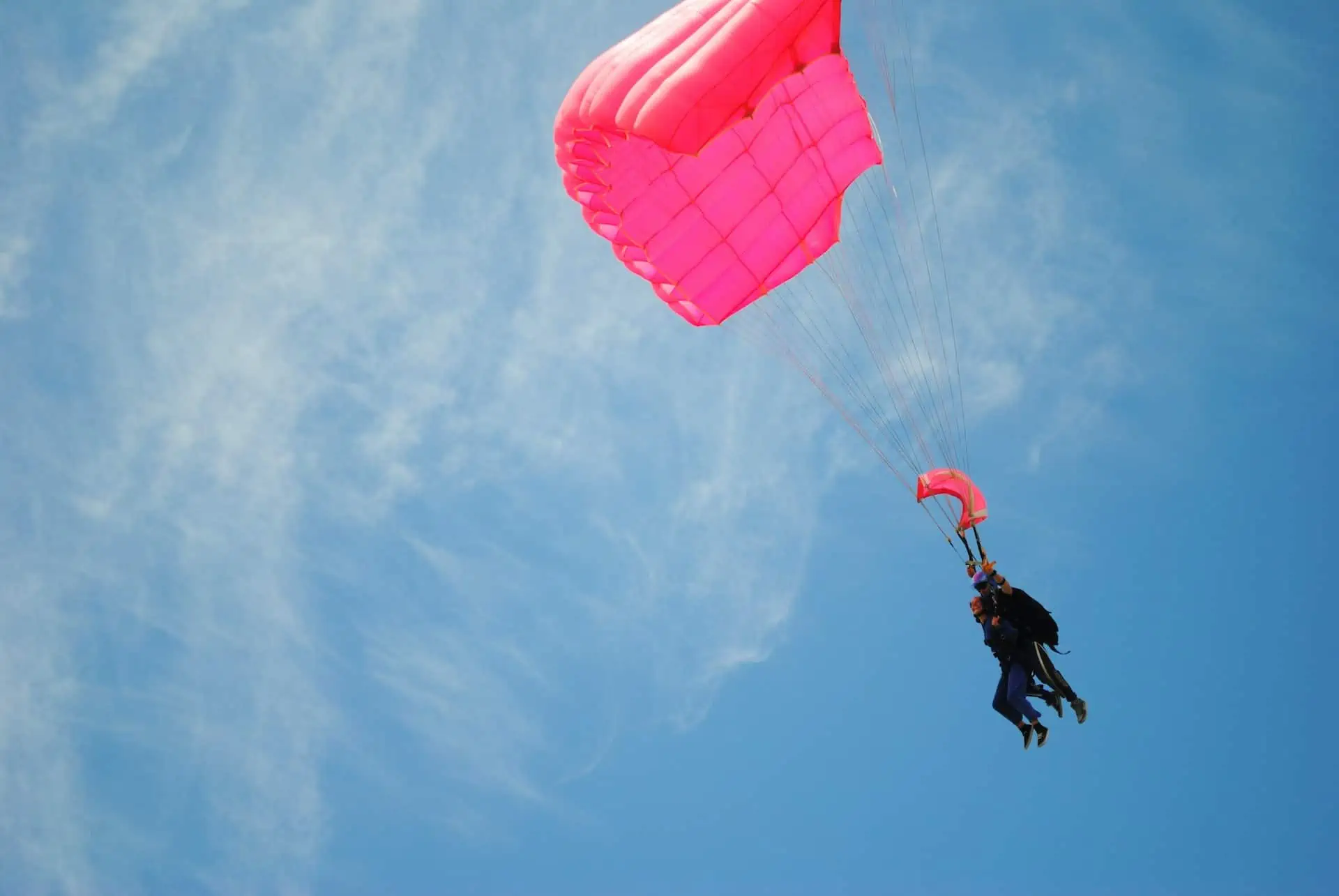
Best places to skydive on New Zealand’s North Island
6. Taupō skydive
Best for: The best North Island all-rounder
Location: Taupō Airport
Altitude: Up to 5,000 m (16,500 ft)
Allow: 2–3 hours
Taupō is my default recommendation for a North Island skydive.
It is easy to reach, prices are usually competitive and the flight looks across Lake Taupō toward Tongariro National Park, Mount Ruapehu and Mount Ngauruhoe.
Available jumps range from lower altitudes to approximately 5,000 m (16,500 ft). Complimentary pickups are available from parts of Taupō, depending on the option selected. Book your Taupo skydive here.
Do not assume a Rotorua transfer is included. Group pickups and transfers can change with availability and minimum numbers, so check the exact booking details before relying on one.
Taupō is particularly useful if your route includes Rotorua, the Tongariro Alpine Crossing or a wider North Island road trip. The volcanic scenery makes it feel completely different from the South Island jumps.

7. Auckland skydive
Best for: Travelers with limited time around Auckland
Location: Parakai, approximately 45 minutes from central Auckland
Altitude: 4,000, 4,900 or 5,500 m (13,000, 16,000 or 18,000 ft)
Allow: Around 3 hours, plus travel time
Auckland’s skydive is not directly above the city center. The base is in Parakai, northwest of Auckland, so you need to include the drive in your plans.
What you get instead is a wide coastal panorama. On a clear day, the view can include the Tasman Sea, Pacific Ocean, Hauraki Gulf and islands scattered around the Auckland region.
The highest option reaches approximately 5,500 m (18,000 ft), with up to about 75 seconds of freefall. Book your Auckland jump here.
This is a practical choice if you are flying into Auckland and your itinerary does not reach Taupō or the South Island. Just do not describe it to your travel companions as a quick city-center activity. It is not.

8. Bay of Islands skydive
Best for: Islands, beaches and Northland scenery
Location: Near Bay of Islands Airport, Kerikeri
Altitude: Multiple heights, including high-altitude options
Allow: 3–4 hours with transfers
The Bay of Islands is the North Island answer to Abel Tasman.
Instead of mountains and glaciers, the flight reveals beaches, countryside, blue water and dozens of islands scattered across the bay.
The drop zone is near Kerikeri, and selected bookings include pickups from central Kerikeri or Paihia. Marketplace inventory and included transfers can vary, so check the option details carefully. Book your Bay of Islands skydive here.
This is a fantastic choice if Northland is already part of your trip. I would not travel all the way north purely for the jump unless the coastal scenery is the main attraction; Taupō and Auckland are easier for most North Island routes.

9. Tauranga skydive
Best for: Mount Maunganui and Bay of Plenty trips
Location: Tauranga Airport
Altitude: 3,600 or 4,500 m (12,000 or 15,000 ft)
Allow: 1.5–2 hours
Tauranga is easy to overlook, but it fits certain North Island routes brilliantly.
The flight climbs above Mount Maunganui and the Bay of Plenty’s beaches, farmland and coastline. On a clear day, views can stretch toward the Coromandel Peninsula, Rotorua’s lakes and several North Island volcanoes.
You can choose between approximately 3,600 and 4,500 m (12,000 and 15,000 ft), with the higher jump offering close to a minute of freefall. Book your Tauranga jump here.
It makes the most sense if you are already visiting Mount Maunganui, Rotorua or the Coromandel. For a dedicated North Island skydiving trip, Taupō remains my first recommendation.

Is skydiving in New Zealand safe?
Skydiving is an adventure activity and is inherently risky. In New Zealand, commercial adventure aviation operators are regulated under Civil Aviation Rule Part 115.
Operators will delay or cancel jumps when wind, cloud, visibility or other conditions are unsuitable. That can be frustrating when your itinerary is tight, but it is not something to argue with.
Follow the briefing, wear the equipment exactly as instructed and disclose any medical condition, recent injury, medication or mobility issue before the jump.
What happens if the weather is bad?
Weather cancellations are common enough that you should plan for them. Most marketplace bookings allow you to reschedule or receive a refund when the operator cancels, but the exact terms vary by product.
- Book your first available morning in the area.
- Keep the following morning flexible where possible.
- Avoid booking immediately before a fixed tour, ferry, flight or long drive.
- Contact the operator if the weather looks uncertain instead of assuming the jump is canceled.
- Remember that blue sky at ground level does not guarantee suitable conditions at altitude.
Indoor skydiving in New Zealand
If jumping from an aircraft is not happening, New Zealand has two wind-tunnel alternatives.
iFLY Queenstown is a controlled indoor wind tunnel in central Queenstown. The standard experience includes instruction, equipment and two short flights. It is useful for families, nervous first-timers or anyone who wants the freefall sensation without the aircraft door.
Freefall Xtreme at Velocity Valley in Rotorua is an outdoor wind tunnel. It is one option within the park’s ride passes rather than a replacement for a full tandem skydive, but it is a fun add-on if Rotorua is already on your route.
Skydiving in New Zealand FAQ
How much does it cost to skydive in New Zealand?
Entry-level tandem jumps generally cost around NZ$279–359. Higher jumps can cost approximately NZ$500–799, and professional photo or video packages are usually extra. Prices change, so treat these as planning figures and check the live booking page for your date.
Where is the best place to skydive in New Zealand?
Mount Cook is my first choice for alpine scenery, while Taupō is the best all-around option on the North Island. Queenstown is easiest without a car, and Franz Josef has the most dramatic combination of glaciers, rainforest, mountains and coast.
What is the highest skydive in New Zealand?
Several New Zealand drop zones advertise tandem jumps from approximately 5,500 m (18,000 ft), including Franz Josef, Auckland and Abel Tasman. Bay of Islands inventory also includes high-altitude options. Availability changes, so check the current product rather than planning your route around an old altitude claim.
Is a higher skydive worth it?
If this is likely to be your only skydive and the price is manageable, I think it is. A lower jump may give you roughly 25–30 seconds of freefall, while the highest options can reach approximately 75–85 seconds. The scenic flight and canopy ride are still part of every jump, so a lower altitude is not a bad experience if that is what your budget allows.
How long does a skydive take?
Allow approximately two to four hours for check-in, briefing, gearing up, the scenic flight, freefall, canopy descent and possible operational delays. Add transfer time if the drop zone is outside town.
What should I wear skydiving?
Wear comfortable layers and secure, closed-toe shoes. Operators provide the technical gear and usually a jumpsuit, goggles and gloves where required. It can be cold at altitude even when the ground feels warm.
Can I take a GoPro on a tandem skydive?
Generally, no. Tandem passengers are normally not permitted to carry personal cameras or GoPros. If you want footage, book or purchase the operator’s photo and video package.
Are there age or weight limits?
There is no universal rule across every drop zone. Children are assessed according to age, size and harness fit, and anyone under 18 normally needs parental or guardian consent. Maximum weights commonly sit around 100–115 kg (220–254 lb), but some operators apply surcharges or stricter limits. Contact the operator before paying if you are close to the stated limit.
Do I need skydiving experience?
No. Tandem skydives are designed for beginners. You receive a safety briefing and remain attached to an experienced tandem instructor throughout the jump.
Planning a Trip to New Zealand?
New Zealand is heaven on earth for nature and wildlife lovers, with absurd scenery and outdoor adventures around nearly every corner. These guides will help you fit your skydive into the rest of the trip without turning your itinerary into a logistical mess.
Read Next
Queenstown and Wānaka:
Queenstown itinerary
Where to stay in Queenstown
Best day trips from Queenstown
Wānaka itinerary
Queenstown to Glenorchy drive
Mount Cook, Christchurch and the West Coast:
Best hikes in Mount Cook National Park
Christchurch to Queenstown road trip
Christchurch itinerary
Best day trips from Christchurch
Best things to do on the West Coast
Franz Josef Glacier heli-hike
Auckland and the Bay of Islands:
Auckland itinerary
Where to stay in Auckland
Best day trips from Auckland
Paihia and Bay of Islands itinerary
Things to do in Paihia and the Bay of Islands
Taupō & Rotorua:
Rotorua to Taupō scenic drive
Rotorua itinerary
Best things to do in Rotorua
Best day trips from Rotorua
Where to stay in Rotorua
The Coromandel:
Auckland to Coromandel road trip
Best things to do on the Coromandel Peninsula
Where to stay on the Coromandel Peninsula
New Zealand guides:
10-day South Island itinerary
Two-week South Island road trip
7-day North Island itinerary
Two-week North Island road trip
Renting a car in New Zealand
Best Lord of the Rings filming locations
New Zealand travel insurance
Good travel insurance is an absolute must when traveling abroad, and we have learned that the hard way.
ACC in New Zealand covers treatment for many accidental injuries, but it does not replace comprehensive travel insurance. Illness, luggage, cancellations, repatriation and exclusions for adventure activities still need careful attention.
We always get insured before we leave, and Travel Insurance Master is our go-to platform for comparing plans for a specific trip.
The platform works like a search engine and suggests insurance companies and plans based on your criteria, including your age, nationality and destination. Always read the policy wording and confirm that your planned adventure activities are covered.
Compare policies and get your personalized travel insurance recommendations here.
