This site uses affiliates. Thank you for buying through our links and supporting this blog.


Best Geothermal Parks in Rotorua: Which Should You Visit?

If you only visit one geothermal park in Rotorua, make it Wai-O-Tapu Thermal Wonderland. It’s my favorite for its color, variety, and just how much there is to see within a relatively compact walk. Honestly, I think Champagne Pool alone makes it worth visiting.
But I wouldn’t choose every park for the same reason. Te Puia is where I’d combine impressive geysers with Māori culture, Hell’s Gate is the one I’d book for a geothermal walk and mud bath, and free Kuirau Park deserves a place in your itinerary too. I enjoyed it more than some of the paid parks I’ve visited.
After living in New Zealand for years and returning to Rotorua on different trips, I’ve worked out what I enjoy most: plenty of interesting features close together, a bit of variety, and something that makes me stop and stare. Long stretches of bush between bubbling pools can be lovely, but they don’t give me quite the same excitement as Wai-O-Tapu.
Below, I’ll help you choose your geothermal park, explain the ticket upgrades that actually add something, and show you how to visit without a car. My starting point would be Wai-O-Tapu entry, then one additional experience that fits the rest of your trip.

In a hurry?
These are my geothermal picks
My favorite park:
Wai-O-Tapu Thermal Wonderland for Champagne Pool, vivid colors, and variety.
Geothermal sights and culture:
Te Puia’s Te Pō Combo for the guided valley visit, Māori performance, and hāngī dinner.
A park and spa in one:
Hell’s Gate walk, mud bath and sulphur spa. I’d book the full experience here.
Two parks without driving:
Wai-O-Tapu and Waimangu morning tour from Rotorua. Both entries and transport are included.
Which geothermal park in Rotorua should you visit?
These are the differences I’d focus on when choosing. The time estimates are what I’d allow at each attraction; add travel time unless you’re booking a tour.
| Park | Why I’d choose it | Allow | What I’d book |
|---|---|---|---|
| Wai-O-Tapu | My first choice for colorful pools and concentrated variety | 1.5–2 hours; extra for Lady Knox | Park admission |
| Te Puia | Natural geysers, Māori arts, kiwi and a cultural evening | 90 minutes to 4.5 hours | Te Pō Combo |
| Hell’s Gate | Mud, steam and a proper mud-bathing experience | About 3 hours with spa | Walk + mud bath + spa |
| Waimangu | A longer valley walk with a lake cruise or kayaking | 3–4 hours with cruise | Walk and cruise |
| Ōrākei Kōrako | Silica terraces and a park reached by boat | About 2 hours | Entry and return ferry |
| Kuirau Park | Free, central and wonderfully easy to fit in | 30–45 minutes | No ticket needed |
| Whakarewarewa | A Living Village visit with additional geothermal trails | 2–3 hours for the combo | Village and trails combo |
I’d choose Wai-O-Tapu plus Kuirau Park for a first taste of Rotorua’s geothermal scenery. Add Te Puia if you want culture and geysers, or Hell’s Gate if a mud bath is high on your list. If you love geology and want a longer outing, Waimangu or Ōrākei Kōrako brings a different setting into the mix.

1. Wai-O-Tapu Thermal Wonderland: my favorite geothermal park
Wai-O-Tapu has the strongest wow factor for me. I love how quickly the landscape changes, with steaming water, mineral deposits, craters, and pools in colors that look almost unreasonable. There’s a lot happening within the walking route, and that concentration is a big part of why I prefer it.
Champagne Pool is the highlight. That orange rim against the water, with steam moving across the surface, is just stunning. I wouldn’t rush this part, and I’d give myself enough time to enjoy the rest of the park rather than treating it as a quick photo stop.
My less enthusiastic opinion is about Lady Knox Geyser. The eruption is deliberately triggered, and the scheduled demonstration feels a bit gimmicky to me. If you’ve never seen a geyser, you may still enjoy it. I simply wouldn’t make it the reason for choosing Wai-O-Tapu.
Wai-O-Tapu is roughly a half-hour drive south of Rotorua. The main park opens at 8:30am, so you can start early or plan around the geyser presentation. The nearby mud-pool stop is separate from the main walking circuit; I’d leave a little time for that too.
My Wai-O-Tapu timing tip
The Lady Knox presentation takes place at 10:15am each day, at a separate site from the main walking park. If you want to see it, follow the park’s arrival advice and allow time to drive between the two.
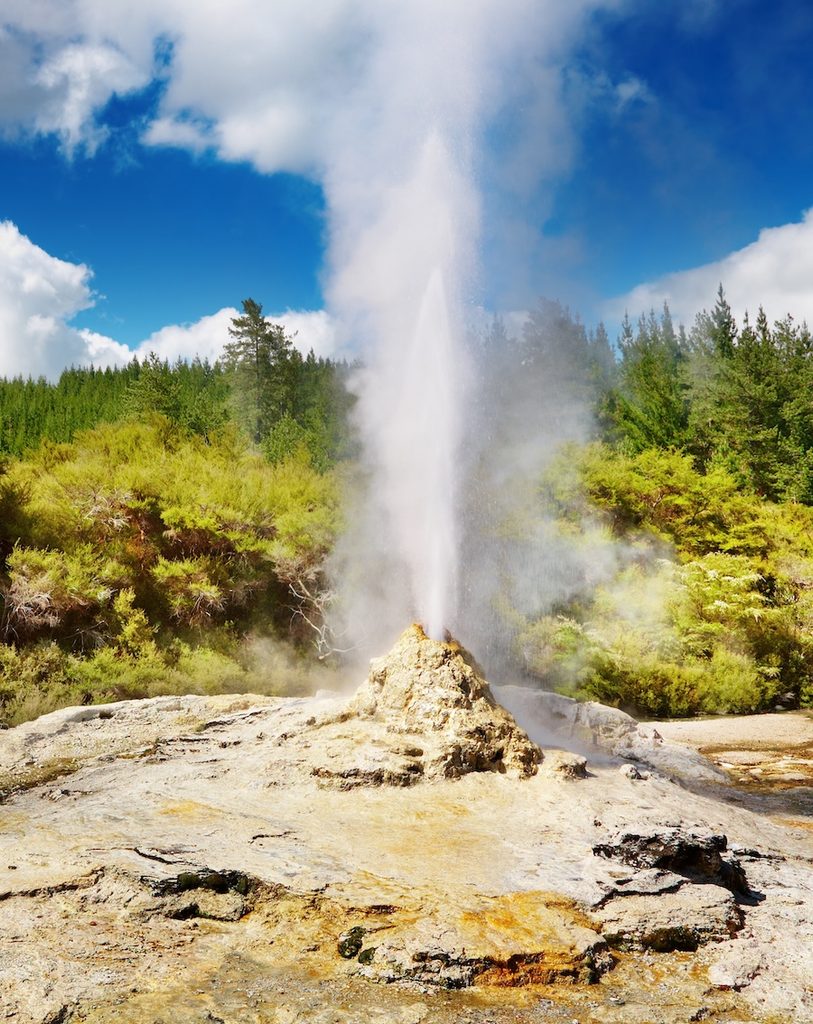
Why do they put “soap” in Lady Knox Geyser?
The morning demonstration uses a surfactant, a substance that reduces water’s surface tension, to help trigger the eruption. The water has already been heated underground; the additive doesn’t create that heat.
In simple terms, it helps bubbling and steam expansion get going in the geyser’s plumbing. That release pushes water upward. This explanation of the demonstration goes into the mechanism in more detail.
So Lady Knox is a real geothermal feature, but the timing of the morning eruption is induced. That distinction is why I prefer the naturally erupting geysers at Te Puia.
If you’re happy to skip the geyser, I’d head into the main park around the presentation time. While a lot of people are gathering for Lady Knox, you can get started on the walking route. It’s a useful way to get ahead of that wave of visitors, although I wouldn’t promise an empty park.
That’s the version of the morning I’d choose, especially if you’ve already seen geysers elsewhere. It also works best when you’re driving yourself; a guided tour will have its own schedule.
The Wai-O-Tapu tickets and tours I’d choose
Book Wai-O-Tapu admission if you have a car. Allow roughly 1.5–2 hours for the park itself, with additional time for the geyser presentation if you want it.
Book the Wai-O-Tapu half-day tour from Rotorua if you want transport and park entry together. This follows the geyser-show schedule, so it won’t give you the same flexibility as driving yourself.
Book Wai-O-Tapu and Waimangu together for a five-hour morning trip with Rotorua pickup and both park entries. The Waimangu portion is a walk; its lake cruise isn’t included.
Book Wai-O-Tapu, Waimangu and Te Puia in one day if you want a full day of geothermal sightseeing with the driving organized. Expect shorter visits at each stop rather than a leisurely day at every park.
You can also combine Wai-O-Tapu with a Taupō day trip from Rotorua. Choose the Wai-O-Tapu option when booking; the alternative visits Ōrākei Kōrako. If you’re starting in Auckland, I’ve listed the Hobbiton, spa and cultural combinations further down.

2. Te Puia: geysers, Māori culture and a proper evening experience
Te Puia is also stunning. It feels less colorful to me than Wai-O-Tapu, but the geysers are seriously impressive, and I like that the visit can include much more than looking at geothermal features.
Pōhutu is the big draw. It erupts naturally and can reach around 30 meters, compared with the 10–20 meters described for Lady Knox. It’s a different kind of spectacle. Nature still controls the timing, so give yourself time rather than expecting an eruption the moment you arrive.
A daytime guided visit also takes in the Kiwi Conservation Centre and the New Zealand Māori Arts and Crafts Institute. I think that combination makes Te Puia particularly worthwhile if you’re trying to fit geothermal scenery and a cultural introduction into a short stay.
It’s on the edge of Rotorua at 20 Hemo Road, which makes it much easier to reach from town than Wai-O-Tapu. You can arrange a taxi or use local public transport rather than renting a car just for this visit.
Which Te Puia ticket should you book?
For geothermal sightseeing and a cultural evening together, I recommend the Te Pō Combo. It starts with the guided valley visit, then continues with dinner, the performance, and another visit to the geothermal landscape. That’s the complete experience I’d choose.
The word Combo matters. The evening-only ticket includes a geyser visit, but it doesn’t give you the same guided exploration of the valley, arts institute, and kiwi center. If the geothermal area is part of why you’re choosing Te Puia, book the combo.
| Ticket | What’s included | When I’d choose it |
|---|---|---|
| Te Pō Combo — my recommendation | 90-minute guided valley visit, kiwi center and arts institute, followed by hāngī buffet dinner, cultural performance and an evening geyser visit. About 4.5 hours. | Your first visit when you want geothermal sightseeing and the full cultural evening. |
| Te Rā + Haka | Guided valley, kiwi and arts visit, plus a cultural performance. About 2 hours; no meal. | A shorter daytime visit when you can’t stay for the evening. |
| Te Rā Guided Experience | 90-minute guided valley, kiwi and arts visit. The basic ticket has no performance or meal. | If your Māori cultural evening is booked elsewhere. |
| Te Rā Combo with hāngī lunch | Guided visit, cultural performance and buffet lunch. Allow the morning and lunchtime. | The most complete daytime alternative. |
| Te Pō evening only | Hāngī buffet dinner, performance and geyser-terrace visit. About 3 hours; no preceding 90-minute guided tour. | If you’ve already explored the valley or can’t arrive for the full combo. |
There is also Mārama, the evening geyser light trail, with lighting and sound along a roughly one-hour walk. A dinner-and-trail package is another option. I’d treat these as nighttime additions: my first choice for understanding the geothermal area is still a guided valley visit, with Te Pō Combo if you also want the cultural evening.
Why I’d book the Te Pō Combo
You get time in the geothermal valley before the evening begins, then stay for the hāngī buffet and cultural performance. The Te Pō Combo brings those parts together in one visit.
If you’re booking your cultural evening elsewhere, choose Te Rā + Haka or the guided daytime visit for your time at Te Puia.
For a full day with transport from Rotorua, Te Puia is also included in the Wai-O-Tapu and Waimangu combination tour. From Auckland, the Wai-O-Tapu, Te Puia and haka day tour combines the two parks, while the Waitomo Caves and Te Puia tour adds glowworms. Neither is the Te Pō dinner experience.
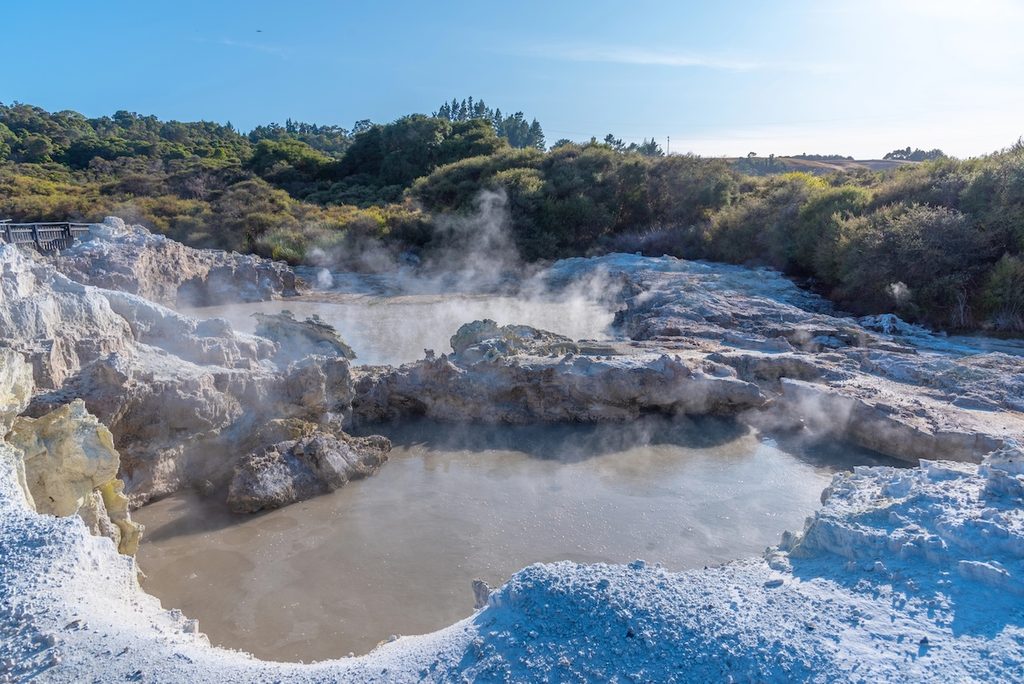
3. Hell’s Gate Geothermal Park: the one I’d book with a mud bath
Hell’s Gate is much less about bright colors and much more about bubbling mud, steaming ground, and that feeling that something very energetic is happening underneath your feet. It doesn’t have the same visual variety I love at Wai-O-Tapu, so I’d choose it for a different reason.
The mud spa is that reason. I think it’s an incredible addition, and this is one place where I’d go for the full experience: explore the geothermal park, then get into the mud bath and sulphur pools.
The geothermal walk includes steaming features, mud formations, and Kakahi Falls. Give yourself time to walk first, rather than rushing in just for a soak and leaving without seeing the landscape around it.
My Hell’s Gate recommendation: book the walk and spa together
Hell’s Gate geothermal walk, mud bath and sulphur spa is the ticket I’d choose. Allow around three hours so the walk and bathing both feel like part of the visit.
Mud bath and spa only works if your itinerary doesn’t allow the full visit, or you’ve already walked the park. It doesn’t include the geothermal walking route.
Geothermal walk only is available if you want to explore without bathing. For me, the mud bath is what makes Hell’s Gate especially worth adding to another park.
A practical detail: the mud bath is limited to 20 minutes. The rest of your spa time is spent in the sulphur pools and other designated bathing areas. It’s warm water mixed with geothermal mud, rather than a deep tub of thick mud.
Bring older swimwear and remove jewelry as advised by the staff; sulphur can leave a smell in fabric and affect some metals. Hell’s Gate also offers a prebooked Rotorua shuttle. Arrange that directly and confirm your collection rather than assuming transport comes with every entry ticket.

Geysers, mud pools, fumaroles… what am I looking at?
Geyser: a hot spring whose underground passages allow pressure to build and water and steam to erupt.
Mud pool: water mixes with clay produced by altered rock, while rising gas and steam create the bubbles.
Fumarole: a vent releasing steam and other gases. That plume coming out of apparently dry ground has a name!
Sinter terrace: a formation built as silica-rich water leaves mineral deposits behind. Te Ara explains these geothermal features in more detail.
Hot spring: naturally heated groundwater reaching the surface. Some springs are near boiling; a pretty pool is not necessarily a swimming pool.
Is Hell’s Gate Rotorua’s only mud bath?
Hell’s Gate describes itself as Rotorua’s only geothermal mud-bathing experience. There is another mud-based option, though: Wai Ariki’s Restorative Journey includes a mud lounge where you apply mud to your skin. It’s a different experience from sitting in the mud bath at Hell’s Gate.
I’d choose Hell’s Gate for the park walk and mud bath together. Wai Ariki makes more sense as a separate spa visit in central Rotorua, with a sequence of mineral pools, hot and cold experiences, and the mud application. I’ve included it in the spa options below.

4. Waimangu Volcanic Valley: choose the walk and lake cruise
Waimangu is the one I’d consider if you want to spend longer in a geothermal landscape, with a walk through the valley and a boat trip on Lake Rotomahana. I wouldn’t choose it expecting the same compact succession of colorful sights as Wai-O-Tapu. I’d choose it because I wanted the wider landscape and the lake as part of the day.
The valley’s story is tied to the 1886 Mount Tarawera eruption. On the walking route, look for Frying Pan Lake and Inferno Crater; beyond the main geothermal sights, the walk continues through native bush toward the lake.
That longer, greener walk is a different experience. Personally, I’m most drawn to places where the unusual features are packed together. If you enjoy walking as much as the geothermal stops, I’d give Waimangu more time rather than trying to squeeze it into a quick circuit of several parks.
I’d book the walk and cruise combination here. The 45-minute Lake Rotomahana cruise takes you to geothermal features you can’t see from the walking track, which gives a clear reason to choose the longer experience.
Waimangu tickets: walking, cruising or kayaking
Walk and Lake Rotomahana cruise is my first choice. Allow around 3–4 hours for the self-guided valley walk, guided cruise, and internal return bus.
Self-guided valley walk is the shorter option. You can use the internal shuttle, but the lake cruise and transport from Rotorua are not included.
Private valley walk and Steaming Cliffs kayak tour adds a guided paddle on Lake Rotomahana, with equipment, lunch, and Rotorua accommodation transfers. This is the active alternative to the boat cruise; allow around five hours.
If you don’t have a car, the Wai-O-Tapu and Waimangu morning tour includes a Waimangu walk, or the three-park full-day tour adds Te Puia. Neither includes the lake cruise. The private kayaking trip is another option with Rotorua transfers included.
5. Ōrākei Kōrako Geothermal Park: terraces and a lake crossing
Ōrākei Kōrako, often called the Hidden Valley, has an arrival that immediately sets it apart: you cross Lake Ohakuri by boat to reach the geothermal walking area. It’s further from Rotorua, so I’d consider it particularly if you’re traveling toward Taupō.
The park’s main attractions include silica terraces, hot springs, mud pools, and Ruatapu Cave, with a thermal pool below its opening. You’re here to look into that geothermal landscape; this isn’t a cave-adventure tour or a place to swim.
I’d choose Ōrākei Kōrako for the terraces, lake setting, and self-guided walk. Wai-O-Tapu would still be my first booking if I had to pick one park, but this makes sense as a second visit when you want a different setting rather than another version of the same outing.
Allow about two hours at the park, plus the drive. The operator puts it around 45 minutes from Rotorua or 25 minutes from Taupō. There are steps on the route, so I wouldn’t treat it as an interchangeable option for someone who needs step-free access.
How I’d visit Ōrākei Kōrako
Book park entry with the return ferry if you’re driving. The boat crossing is included; road transport from Rotorua is not.
Book the Taupō day trip from Rotorua and select Ōrākei Kōrako as your geothermal stop. The trip also includes Huka Falls and Lake Taupō sightseeing.
Take the Tarawera and Ōrākei Kōrako helicopter tour if a scenic flight is already on your wish list. This combines a Mount Tarawera landing with time inside the geothermal park, departing from Rotorua’s lakefront. It needs at least two adult fares and suitable flying conditions.
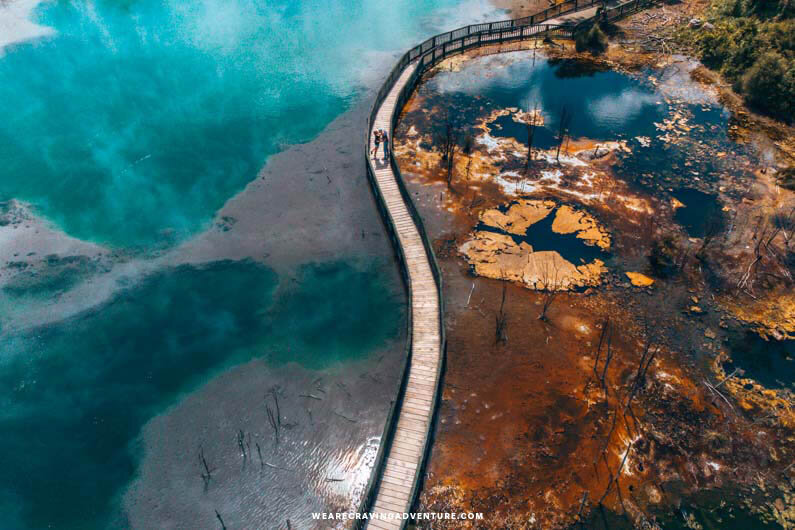
6. Kuirau Park: the free geothermal park in Rotorua I wouldn’t skip
I really enjoyed Kuirau Park. It’s free, right in Rotorua, and has a surprising variety of geothermal features within a compact area. Honestly, I found it more enjoyable than some paid parks where I felt I was walking a long way between the interesting bits.
There are steaming pools, bubbling mud, and a hot lake, with paths and boardwalks linking the sights. The designated footbaths are another reason to stop. Use those rather than dipping into any other water you see.
I’d allow around 30–45 minutes for a look around, with longer if you want to linger. It’s the easiest geothermal visit to fit into a short stay, and you can walk here from central accommodation.
I would still visit Wai-O-Tapu as well. Kuirau Park gives you a brilliant, convenient introduction, but Champagne Pool and the color at Wai-O-Tapu are what I’d make the extra trip for. Book Wai-O-Tapu admission if you’re driving, or the Wai-O-Tapu and Waimangu morning tour if you want transport arranged.

7. Whakarewarewa: geothermal trails with a Living Village visit
Whakarewarewa is worth considering if you want to understand how people live alongside Rotorua’s geothermal activity. I found the people I met at the Living Village welcoming and happy to explain things. That human connection is the part I’d focus on when deciding whether to visit.
For the immersive cultural experience, I still preferred my evening at Te Pā Tū. For a daytime visit to Whakarewarewa, I’d combine the guided village tour with the geothermal trails, rather than choosing it purely as an alternative to Wai-O-Tapu’s scenery.
My guide to Rotorua’s Māori villages and cultural experiences explains the differences in more detail, including why I loved the hands-on activities and food at Te Pā Tū.
The village and geothermal trails combo includes a guided village visit and time to explore the trails independently. The All Day Pass adds a cultural performance. The basic village-and-trails combo does not include that performance.
You can also buy a trails-only ticket. These routes have hot lakes, mud pools and native bush, but the trails do not provide access to Pōhutu Geyser. Te Puia and the Living Village have separate entrances and ticketing, even though both are associated with the Whakarewarewa geothermal area.

READ NEXT:
Best Māori Villages & Cultural Experiences in Rotorua
Compare Rotorua’s Māori cultural experiences and choose the one that’s right for you
Rotorua geothermal tours and park combinations I’d book
I’d decide what I wanted from the second visit before adding another ticket. My favorite combinations bring something different into the day.
| What you want | The combination I’d choose | How to book |
|---|---|---|
| Color and an easy extra stop | Wai-O-Tapu + free Kuirau Park | Wai-O-Tapu entry; walk to Kuirau separately |
| Color, geysers and a cultural evening | Wai-O-Tapu in the morning + Te Puia’s Te Pō Combo from 4pm | Wai-O-Tapu entry + Te Pō Combo; arrange transport between them |
| Color and mud bathing | Wai-O-Tapu + Hell’s Gate full experience | Wai-O-Tapu entry + Hell’s Gate walk and spa; allow travel across Rotorua |
| Two geothermal parks with transport | Wai-O-Tapu + Waimangu, from Rotorua | Five-hour morning tour; Waimangu walk, not cruise |
| A full day comparing three parks | Wai-O-Tapu + Waimangu + Te Puia, from Rotorua | Three-park full-day tour; no hāngī evening |
| A longer walk and time on the water | Waimangu valley + Lake Rotomahana | Walk and cruise or private walk and kayak tour |
If I had one full day and wanted the cultural evening too, I’d visit Wai-O-Tapu in the morning, leave some breathing room in the afternoon, and book the Te Pō Combo from 4pm. On a short visit, I’d rather enjoy those properly than feel I had to collect every geothermal park in Rotorua.
Another combination I’d happily recommend is Wai-O-Tapu followed by Te Pā Tū’s cultural evening and feast. Those are my personal favorites for geothermal scenery and an immersive cultural evening respectively. I loved the participation at Te Pā Tū, the food, and how thoughtfully everything was organized. Book them separately and leave time to return to Rotorua before your evening transfer.
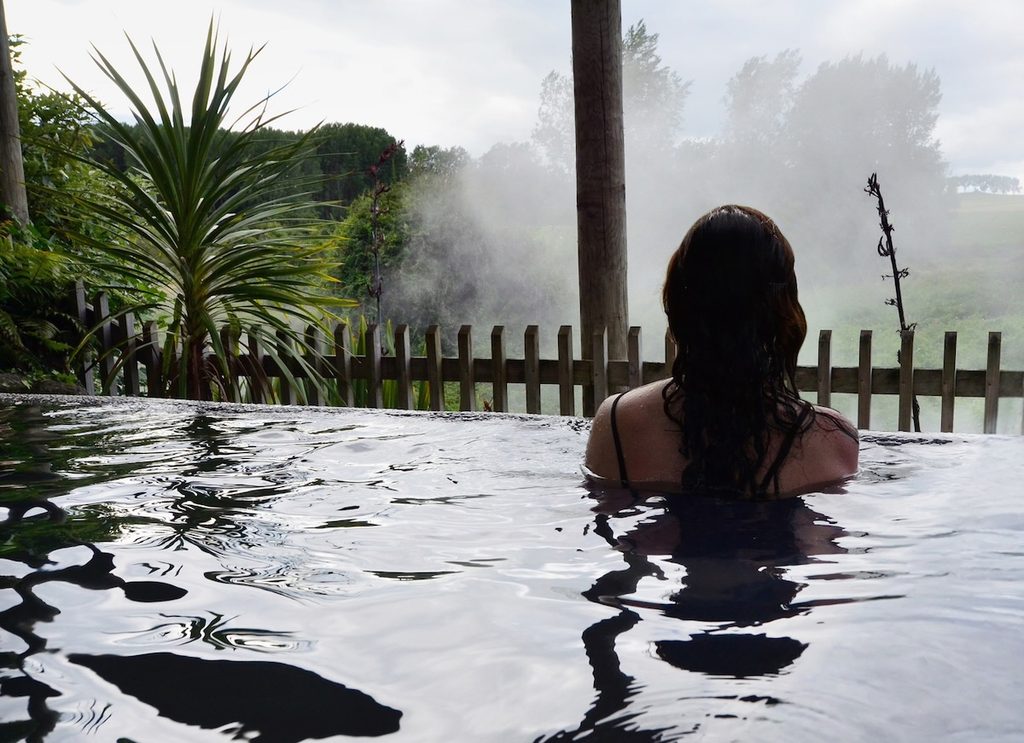
Geothermal spas and hot pools to add to your visit
A geothermal sightseeing ticket usually doesn’t include swimming. At Wai-O-Tapu, Te Puia, Waimangu and Ōrākei Kōrako, the thermal features are for viewing from the paths. If you want to bathe, book a designated spa experience.
Hell’s Gate for the park and mud bath together
This remains my recommendation when you want both within one attraction. The walk, mud bath and sulphur spa ticket is the complete option, while the mud bath and spa ticket leaves out the walking park.

Wai Ariki for a separate spa visit in town
The two-hour Wai Ariki Restorative Journey combines geothermal mineral pools, hot and cold stages, steam, and the mud lounge. I’d consider this after a morning at Wai-O-Tapu if I wanted a dedicated spa session back in Rotorua. It’s for ages 16 and over, and it’s a spa rather than a geothermal sightseeing park.
Polynesian Spa for mineral pools by the lake
The Deluxe Lake Spa ticket is another easy addition once you’re back in town, with shared mineral pools, a cold plunge, and places to relax beside Lake Rotorua. This is a family-friendly bathing area, so I wouldn’t book it expecting private pools or an adults-only setting. Pair it with your chosen park as a separate booking, or choose the Wai-O-Tapu and Polynesian Spa day trip if you’re traveling from Auckland.
Waikite Valley for hot pools and a spring walk
For a bathing-focused outing with transport, the Thermal Path tour from Rotorua visits thermal sites including the Waiotapu mud pools and Te Manaroa Spring, then includes time at Waikite Valley’s bathing pools. Allow around four hours. It does not include entry to Wai-O-Tapu Thermal Wonderland, so book that separately if Champagne Pool is on your list.

Why does Rotorua have so much geothermal activity?
Rotorua sits in the Taupō Volcanic Zone, where heat from magma deep underground warms the surrounding rock. Water seeps down through cracks, heats up, and circulates back toward the surface.
Where it emerges, we get hot springs, steam vents, and other geothermal features. The type of feature depends on the water supply, temperature, rock, and underground pathways. GNS Science explains how these geothermal systems work.
The colors have several causes too, including mineral deposits and heat-loving microorganisms. The geothermal formations at Ōrākei Kōrako are a lovely example of how varied that landscape can be.
Where to stay in Rotorua
I’d stay in central Rotorua if you’re combining geothermal visits with a cultural evening or spa session. It keeps restaurants and the lakefront within easy reach, and it makes returning after a long day much simpler. My Rotorua accommodation guide compares the areas and hotels in more detail; these are three I’d shortlist.

CENTRAL COMFORT
A modern central hotel with spacious rooms, a restaurant and gym. I’d choose it for a comfortable base close to the lakefront and places to eat.

BOUTIQUE WITH POOLS
A central boutique hotel with a heated outdoor pool and an indoor mineral pool. I’d shortlist it if a soak back at the hotel sounds like a good end to the day.

SELF-CONTAINED STAY
Studios and apartments with kitchen facilities, free parking, a heated pool and mineral pools. I’d choose it for the practicalities of a Rotorua road-trip stay.

Visiting Rotorua’s geothermal parks from Auckland
If you’re based in Auckland and can’t stay in Rotorua, these day trips combine park entry with return transport. They’re long days, generally around 12–13 hours, so I’d pick the combination you most want rather than adding activities just because they fit on the list.
| Day trip from Auckland | What the package adds | The detail to know |
|---|---|---|
| Hobbiton and Wai-O-Tapu | Hobbiton guided visit, Wai-O-Tapu entry and return transport | The morning Lady Knox presentation is not something I’d assume this route includes. |
| Wai-O-Tapu, Te Puia and haka | Two geothermal parks, Te Puia guided visit and cultural performance | A daytime cultural visit; no Te Pō dinner. |
| Wai-O-Tapu and Polynesian Spa | Park entry and Deluxe Lake Spa admission | Choose this for geothermal mineral bathing after sightseeing. |
| Wai-O-Tapu, Secret Spot hot tubs and lunch | Park entry, a 45-minute hot-tub session and lunch | Secret Spot is a separate hot-tub venue, not a spa inside Wai-O-Tapu. |
| Wai-O-Tapu, Redwoods and Blue Spring | Park entry and two contrasting nature walks | The Redwoods stop is a ground-level forest walk, not the paid elevated Treewalk. |
| Wai-O-Tapu and Mitai Māori Village | Geothermal park, guided Mitai visit, haka and hāngī buffet lunch | This package has lunch, not the full evening dinner experience. |
| Waitomo Caves and Te Puia | Guided cave and geothermal visits, with both entries | No Wai-O-Tapu, hāngī dinner or included haka performance on the standard tour. |
My choices would be Hobbiton with Wai-O-Tapu if both are on your must-see list, Wai-O-Tapu with Te Puia and haka for geothermal scenery and culture, or Wai-O-Tapu with Polynesian Spa for a walk followed by a soak. All three start in Auckland; they aren’t local Rotorua transfers.
READ NEXT:
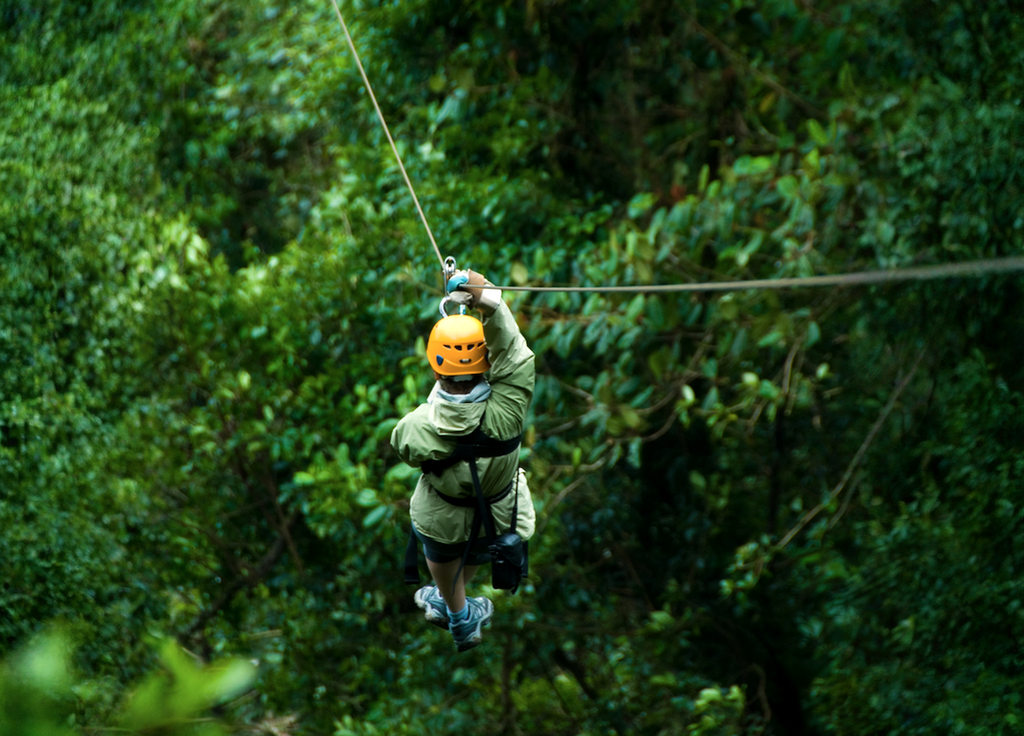
Discover the best geothermal, cultural and adventure experiences in Rotorua
Arriving by cruise ship in Tauranga?
Choose a tour that actually collects from the Tauranga cruise port. The local Rotorua tickets above don’t include that journey.
Hell’s Gate park and mud spa shore excursion includes the geothermal walk, mud bath, sulphur pools, and return port transport. Allow around 5–6 hours. Its customer cancellation policy is non-refundable, although the listing provides a refund if your ship doesn’t make port; check those terms before booking.
Waimangu and Lake Rotomahana shore excursion combines a guided valley walk with the 45-minute cruise and return port transport. Allow about seven hours and check the departure and return schedule against your ship’s call.


Other geothermal stops if you’re continuing to Taupō
I’d save these for the Rotorua to Taupō drive or a stay in Taupō, rather than adding a long detour to a packed Rotorua day.
Craters of the Moon has a roughly 40-minute loop through a landscape of steam vents and craters, with a longer option up to a lookout. It charges admission and honestly to me it didn’t feel worth it after seeing the parks in Rotorua. I’d treat it as an extra stop to kill time near Taupō; Wai-O-Tapu would still be my first choice for color and variety.
Wairakei Terraces is a different attraction again, with hot-pool bathing and a separate terraces walkway. The pools are for ages 14 and over, and pool admission does not include the walkway. Check which experience you’re buying rather than assuming both come together.

Practical tips for visiting Rotorua’s geothermal parks
Book the experience, not just the attraction name. At Hell’s Gate, walking and bathing are different tickets. At Waimangu, the cruise is an upgrade. At Te Puia, Te Pō and Te Pō Combo are different visits. These are the choices I’d settle before traveling.
Give yourself some flexibility. Steam and weather can change how much of a pool you can see, and natural geysers don’t work to your itinerary. I’d avoid promising myself one exact photograph or an eruption at a particular minute.
Wear comfortable shoes and carry a layer. You’ll be outside for much of the visit, and some parks involve gravel, slopes, and steps. Bring water, sun protection, and a rain jacket as appropriate. Add older swimwear and a towel if you’ve booked a spa.
Stay on the marked paths and behind the barriers. Geothermal ground can be unstable, and water can be scalding even where it looks calm. Only bathe in designated pools and follow the staff’s instructions. Waimangu’s visitor guidance explains why this matters.
Keep track of the start point. A park entry ticket may be listed under Rotorua while still requiring you to drive 30–45 minutes. A bus included at Waimangu is the internal valley bus. Auckland day tours and Tauranga shore excursions start in those cities, not at your Rotorua hotel.
The geothermal day I’d start with
Book Wai-O-Tapu for the color and Champagne Pool, then add the experience you most want: Te Puia’s full cultural evening combo or Hell’s Gate’s mud bath and geothermal walk. Leave a little room for free Kuirau Park too.
Rotorua geothermal parks FAQ
Which Rotorua geothermal park is the best?
My favorite is Wai-O-Tapu Thermal Wonderland for its color, variety, and concentration of interesting features. Choose Te Puia’s Te Pō Combo to add a cultural evening, or Hell’s Gate’s full experience for the walk and mud spa together.
Wai-O-Tapu or Te Puia, which should you choose?
I’d choose Wai-O-Tapu for colorful geothermal scenery, especially Champagne Pool. I’d choose Te Puia for naturally erupting geysers and the chance to combine the valley with Māori arts, a performance, and dinner. If you can do both, they offer enough different experiences to make that worthwhile.
Wai-O-Tapu or Waimangu, which should you choose?
Wai-O-Tapu is my choice for a shorter visit with lots of visual variety. I’d choose Waimangu for a longer valley walk with the Lake Rotomahana cruise or guided kayaking. The morning tour from Rotorua combines both parks, but only the walking portion at Waimangu.
Can you visit without a car?
Yes. Kuirau Park is central, Te Puia is a short trip from town, and the Wai-O-Tapu and Waimangu tour or three-park full-day tour handles the out-of-town driving. Hell’s Gate’s operator shuttle requires an advance arrangement. Check pickup details for your exact booking.

🚘 MY GO-TO RENTAL COMPANY: DISCOVER CARS
I always book my rental car through Discover Cars. They compare local and international agencies to get the best deals. No hidden fees, free cancellation, 24/7 support, and optional full coverage for peace of mind.
Can you see geothermal activity in Rotorua for free?
Yes. Kuirau Park is free and easy to reach on foot from central Rotorua. I’d absolutely visit, even if you have paid park visits planned. It’s compact enough to fit into a gap in your day, and I really enjoyed the variety.


Planning a trip to Rotorua?
Rotorua is one of those places where a short list of things to do can quietly turn into several very full days. I’d choose your geothermal park and cultural evening first, then build in time for the lakes, forest walks, and a proper soak without rushing between bookings.
My Rotorua itinerary brings those experiences together, while the Rotorua to Taupō guide helps you carry on south without missing the worthwhile stops. For the wider trip, my New Zealand travel guides cover the routes, places to stay, and experiences I’d recommend from my years living and traveling here.
Read next:
Rotorua
Rotorua itinerary: 1, 2, 3 & 5 days
Best things to do in Rotorua
Where to stay in Rotorua
Rotorua to Taupō scenic drive & best stops
Rotorua in winter
Best day trips from Rotorua
Best Rotorua Maori Experiences
Coromandel Peninsula
Things to do on the Coromandel Peninsula
Auckland to Coromandel
Where to stay on the Coromandel
Your guide to Cathedral Cove
Kayaking to Donut Island, Whangamatā
Auckland
Auckland itinerary
Where to stay in Auckland
Best day trips from Auckland
North Island itineraries & driving
7-day North Island itineraries
North Island road trip: 2 & 3 weeks
Renting a car in New Zealand
More North Island adventures
Tongariro Alpine Crossing guide
Lord of the Rings filming locations
Paihia & Bay of Islands itinerary
Things to do in Paihia & the Bay of Islands
