This site uses affiliates. Thank you for buying through our links and supporting this blog.


15 Best Things to Do in Venice, Italy: First-Timer’s Guide (2026)

Venice is one of those cities that somehow manages to be exactly as famous, crowded and touristy as you expect, while still feeling completely unlike anywhere else.
I have been visiting Venice since I was a child and have returned in different seasons, from busy summer trips to cold, misty winter days. I still find new streets, churches, viewpoints and tiny places to stop for cicchetti every time I go.
This guide covers the best things to do in Venice for a first visit, but I have grouped related sights together rather than padding it into a list of 30 separate attractions. You will find the obvious essentials, worthwhile tours, quieter neighborhoods, lagoon islands, unusual corners and a few excellent day trips when you have more time.

Venice Must-Do’s
Short on time? These are the Venice experiences I would prioritise first.
1. St Mark’s Basilica, Doge’s Palace and Venice by gondola
2. Visit St Mark’s Basilica and Doge’s Palace
3. Eat cicchetti around Venice’s bacari
4. Explore Murano and Burano by boat
5. Take a Dolomites and Cortina day trip
If you only book one thing, make it the Venice in a Day tour. It combines a guided walking tour with St Mark’s Basilica, Doge’s Palace and a gondola ride, covering the main first-time experiences without forcing you to organise every ticket separately.
Where to stay in Venice
For a first visit, I’d stay somewhere central enough to walk to the main sights, but I would not automatically choose the busiest streets around St Mark’s Square. Rialto is extremely convenient, Dorsoduro is calmer and more atmospheric, while the luxury hotels on the Grand Canal turn the accommodation itself into part of the Venice experience.
Wherever you stay, check the exact route from the nearest vaporetto stop. A hotel that looks close on the map can still involve several stepped bridges and an irritating amount of suitcase hauling. Also, never assume that a canal-side hotel automatically gives you a canal-view room. You need to book a room category that explicitly states the view.

ULTIMATE VENICE SPLURGE
A lavish historic palace directly on the Grand Canal, with views towards Santa Maria della Salute and one of the city’s best waterfront terraces.

BEST CENTRAL LOCATION
A practical four-star hotel directly beside Rialto Bridge, with the vaporetto outside and most major sights within easy walking distance.

QUIETER DORSODURO BASE
A romantic canal-side hotel near the Guggenheim and Accademia Bridge, central enough for sightseeing but much calmer than Rialto or San Marco.
Choosing Your Venice Accommodation?
In Venice, a hotel that looks close on the map can still involve bridges, stairs, boats and dragging luggage through crowded lanes. Choose your area first, then decide whether the canal view is worth the splurge.
These two guides cover both decisions:

Best areas and accommodation for your trip

Venice Hotels with Canal Views
Canal-view stays for different budgets

15 Best Things to Do in Venice
Venice can feel overwhelming at first. The historic centre is compact, but there are churches, palaces, museums, canals and photogenic streets in every direction. Add crowds, queues and a transport system made almost entirely of boats, and it becomes very easy to spend half the day wandering without seeing what you actually came for.
The good news is that you do not need to visit every museum or tick off every famous building. For a first trip, I would focus on St Mark’s Square, St Mark’s Basilica, Doge’s Palace, a gondola ride, the Grand Canal and Rialto. Those are the obvious Venice experiences, but they are obvious for a reason.
After that, Venice gets more interesting when you move away from the busiest route. Eat cicchetti in Cannaregio, walk through Castello, spend a few hours in Dorsoduro, choose one good museum and stay out after the day-trippers have left.
Venice is also much better when you stop trying to navigate it perfectly. Google Maps will occasionally send you toward a canal with no bridge, street signs seem to disappear exactly when you need them, and the quickest route is rarely the prettiest one. Getting mildly lost is not a travel failure here. It is basically part of the itinerary.
I have grouped related sights and activities together below, so each numbered item may include several places worth visiting. That gives you 15 genuinely useful Venice experiences rather than a bloated checklist where every bridge and gelato shop gets its own number.
Short on time?
With one day in Venice, prioritise St Mark’s Square, St Mark’s Basilica, Doge’s Palace, a gondola ride, Rialto Bridge and a wander through the quieter backstreets between them. The easiest option is this Venice in a Day tour, which combines a central walking tour, the Basilica, Doge’s Palace and a gondola ride.
With two days, add Dorsoduro, Cannaregio, a Grand Canal vaporetto ride and one museum or viewpoint. Save Murano and Burano for a third day unless the islands are one of your main reasons for visiting.
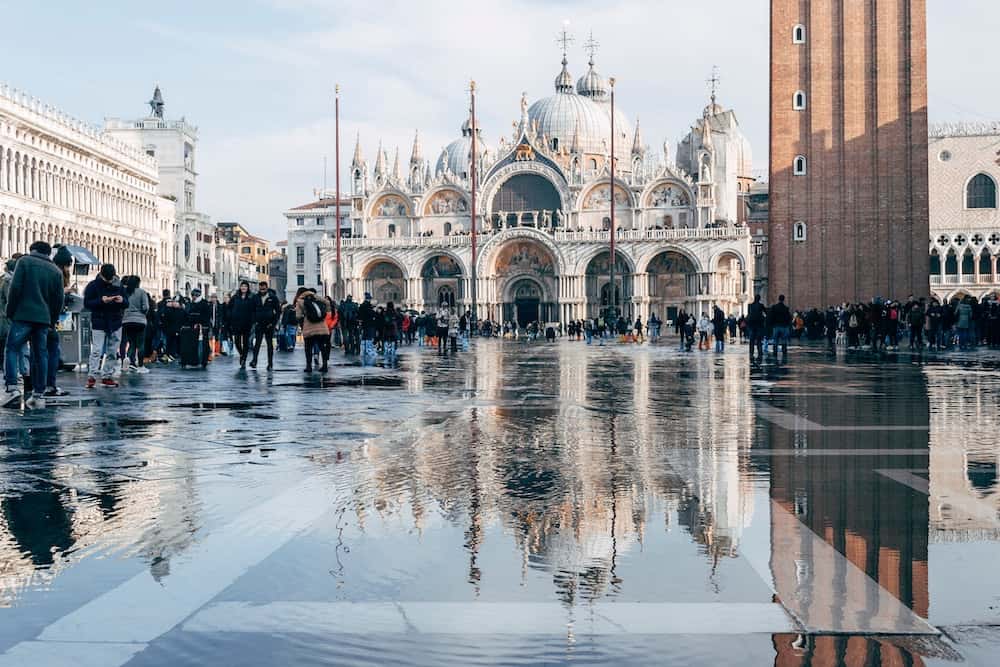

1. Soak up the atmosphere in St Mark’s Square
St Mark’s Square is the obvious place to begin your first visit to Venice. Piazza San Marco has been the city’s ceremonial and political heart for centuries, and most of Venice’s headline attractions are packed into the square and the adjoining Piazzetta.
It is busy, expensive and unapologetically touristy, but it is also one of the most impressive public spaces in Italy. Come early in the morning for the clearest views, then return after dark when the tour groups thin out and the arcades are illuminated.
The main attractions around St Mark’s Square include:
- The waterfront and San Marco Basin: Walk past Doge’s Palace towards the lagoon for views of gondolas, San Giorgio Maggiore and the entrance to the Grand Canal.
- St Mark’s Basilica: Venice’s lavish Byzantine cathedral, famous for its golden mosaics, domes, Pala d’Oro and terrace overlooking the square.
- Doge’s Palace: The former seat of Venice’s government and residence of the Doge, filled with monumental council chambers, artworks, armouries, prisons and access to the Bridge of Sighs.
- St Mark’s Campanile: The tall brick bell tower beside the Basilica, with a lift to one of the best panoramic viewpoints in Venice. Book tickets in advance.
- St Mark’s Clock Tower: The Renaissance tower topped by two bronze figures striking the bell, with an elaborate astronomical clock showing the time, lunar phases and zodiac.
- Museo Correr: A museum covering Venetian history, art and civic life, housed in the Napoleonic Wing at the opposite end of the square.
- National Archaeological Museum: A compact collection of Greek and Roman sculpture, coins and antiquities connected to Museo Correr.
- Monumental Rooms of the Biblioteca Marciana: The richly decorated historic halls of the Marciana Library, with ceilings and paintings by major Venetian Renaissance artists.
- The Procuratie: The long arcaded buildings surrounding the square, originally constructed as offices and residences for senior officials of the Venetian Republic.
- Caffè Florian: One of Europe’s oldest cafés, operating since 1720 and known for its lavish interiors, live music and eye-watering Piazza San Marco prices.
- Gran Caffè Quadri: Another historic café overlooking the square, best approached as a special-occasion experience rather than somewhere to grab a cheap espresso.
- The Piazzetta: The open space between the Basilica, Doge’s Palace and lagoon, once used for official ceremonies and public executions.
- The Columns of St Mark and St Theodore: Two granite columns marking the historic ceremonial entrance to Venice from the water, topped by the city’s patron saints.
I would not spend a fortune sitting at one of the historic cafés unless that specific experience matters to you. You are paying for the setting, live music and front-row people-watching rather than the coffee itself. A slow lap around the square, followed by the Basilica and Doge’s Palace, gives you the full effect without requiring a financially irresponsible cappuccino.
The best way to understand what you are looking at is through a guided walk. This Venice in a Day tour begins with a walking tour through central Venice before visiting St Mark’s Basilica and Doge’s Palace and finishing with a gondola ride. It is the most efficient option for first-time visitors who want the major Venice attractions covered in one organised experience.
Best St Mark’s Square tours:
Best all-in-one option: Venice in a Day with Basilica, Doge’s Palace and gondola ride
Best for first-time visitors who want a walking tour of central Venice together with the city’s two biggest landmarks and a classic gondola ride.
Best shorter landmark tour: St Mark’s Basilica and Doge’s Palace with terrace access
Best if you want to focus on the main attractions around the square and arrange your gondola ride separately.
Best compact three-in-one option: Basilica, Doge’s Palace and gondola combination
Best if you want the three headline Venice experiences in a shorter package that leaves more of the day free.
Do not treat Piazza San Marco as something to photograph once and leave behind. Walk through in the morning, look back at it from the waterfront, and return in the evening if you are staying overnight. It is touristy, expensive and often chaotic, but it is still one of the most impressive public squares in Italy.

2. Step inside St Mark’s Basilica
St Mark’s Basilica is one of the most important things to see in Venice, and the interior is far more impressive than a quick look from the square suggests. The basilica was built as the private chapel of the Doge and as a shrine for the relics of St Mark, which Venetian merchants brought to the city from Alexandria in the ninth century.
From outside, the building is a dense mix of domes, arches, columns, mosaics and marble gathered from across the former Venetian trading world. Inside, more than 8,000 square metres of mosaics cover the domes, vaults and walls, creating the dark gold glow that gives the basilica its nickname, the Church of Gold.
`Things you should not miss in St. Mark’s Basilica:
- The golden mosaics: More than 8,000 square metres of mosaics cover the domes, arches and vaults, illustrating biblical scenes against a glowing gold background.
- The Pala d’Oro: The elaborate Byzantine altarpiece behind the high altar is covered in enamel panels, pearls and roughly 2,000 precious stones.
- The Horses of St Mark: The four bronze horses displayed inside the museum are the originals brought to Venice from Constantinople; the figures above the façade are replicas.
- The museum and terrace: The upper level brings you closer to the mosaics and opens onto a terrace overlooking Piazza San Marco.
- The Treasury: A compact collection of reliquaries, chalices and religious objects accumulated through Venice’s trading empire and the Fourth Crusade.
- The tomb of St Mark: The high altar stands above the crypt containing the relics traditionally believed to belong to St Mark the Evangelist.

The standard visit takes you through the main church, but the most worthwhile extras are the Pala d’Oro and the museum and terrace. The Pala d’Oro is the extraordinary gold altarpiece behind the high altar, decorated with roughly 2,000 precious stones, pearls and enamel panels. The museum gives you a much closer view of the original bronze Horses of St Mark, while the terrace overlooks Piazza San Marco.
The visit can feel rushed when the basilica is busy, which is why I would book ahead rather than relying on the general entrance queue. The Legendary Venice tour is especially good if you want the Basilica terraces as well as Doge’s Palace. For a full first-time overview, the Venice in a Day tour also includes the Basilica together with a walking tour, Doge’s Palace and a gondola ride.
Best St Mark’s Basilica tours:
Best Basilica and Palace tour: St Mark’s Basilica, Doge’s Palace and VIP terrace access
Best if you want to see both major landmarks around Piazza San Marco and include the Basilica terrace.
Best first-time Venice package: Venice in a Day with Basilica, Palace, walking tour and gondola
Best if you have limited time and want to cover the Basilica as part of a complete introduction to Venice.
Best shorter option: Skip-the-line Basilica and Doge’s Palace tour
Best if you want a straightforward guided visit to both buildings without adding a gondola ride or longer city tour.
St Mark’s Basilica has a strict dress code, so cover your shoulders and knees. Large bags are not allowed inside, and photography rules can change, so follow the signs rather than assuming everyone waving a phone around knows what they are doing.


3. Explore Doge’s Palace and cross the Bridge of Sighs
Doge’s Palace is the best place in Venice to understand how powerful, wealthy and deeply political the Venetian Republic once was. The pink-and-white Gothic palace beside St Mark’s Basilica was both the official residence of the Doge and the centre of government, justice and administration.
The standard route takes you through the palace courtyard, the ornate Scala d’Oro, the Doge’s Apartments, government chambers, armoury and prisons. The scale of the institutional rooms is hard to appreciate until you are standing inside them, surrounded by gilded ceilings, enormous paintings and walls designed to project Venetian power.
`Things you should not miss in the Palazzo Ducale:
- The Doge’s Apartments: The former private and ceremonial rooms of Venice’s elected ruler, decorated with carved ceilings, fireplaces and artworks.
- The institutional chambers: Elaborate rooms where Venice’s councils, magistrates and powerful Council of Ten governed the Republic.
- The Great Council Chamber: One of Europe’s largest halls, dominated by Tintoretto’s enormous Paradise and rows of portraits of the Venetian doges.
- The Armoury: A surprisingly extensive collection of swords, crossbows, firearms, armour and unusual weapons used by the Venetian state.
- The Bridge of Sighs: The enclosed bridge connecting the palace courts to the New Prisons, crossed as part of the standard palace route.
- The prisons: A sharp contrast to the gilded palace rooms, with narrow corridors, cells and stories associated with prisoners including Casanova.

The most famous room is the vast Great Council Chamber, home to Tintoretto’s monumental Paradise. From there, the route continues across the enclosed Bridge of Sighs into the New Prisons. The bridge gets its romantic name from the supposed sighs of prisoners catching their final glimpse of Venice before entering their cells, although the reality was probably rather less theatrical.
You can see the Bridge of Sighs from outside at Ponte della Paglia, but the only way to walk through it is by visiting Doge’s Palace. That is why I would not treat the bridge as a separate Venice attraction. It is part of the palace experience and makes far more sense in context.
Doge’s Palace is one of the busiest attractions in Venice, and the rooms are much more meaningful with a guide explaining how the Republic worked. The Venice in a Day tour combines the palace with St Mark’s Basilica, a central walking tour and a gondola ride, which makes it the strongest all-round choice for a first visit.
Best Doge’s Palace tours:
Best all-in-one Venice tour: Venice in a Day with Doge’s Palace, Basilica and gondola
Best for first-time visitors who want Doge’s Palace as part of a complete Venice sightseeing day.
Best Palace and Basilica option: Doge’s Palace, St Mark’s Basilica and terrace tour
Best if your priority is exploring the two major buildings around St Mark’s Square in more depth.
Best compact combination: Doge’s Palace, Basilica and gondola tour
Best if you want all three headline experiences without committing most of the day.
Allow at least two hours for the standard visit and longer if you enjoy history, art or staring at ceilings until your neck files a formal complaint.


4. Take a gondola ride through Venice
A gondola ride is one of the most iconic things to do in Venice, and yes, it is touristy. It is also the only way to glide through some of the narrow canals at water level, beneath low bridges and past the back entrances of palaces that look completely different from the street.
The experience depends heavily on the route. Gondolas departing around St Mark’s Square and the Rialto area may spend more time on busy waterways, while routes beginning deeper in San Marco, Dorsoduro or Cannaregio can feel quieter and more intimate. No normal gondola ride covers the full Grand Canal, so do not book one expecting a complete waterborne tour of Venice.
A standard gondola is hired for the boat rather than strictly per person, which can make a private ride better value when you are travelling as a couple, family or small group. Shared gondola tours are cheaper for solo travellers, but you will usually share the boat with strangers and have less control over seating and route.
For first-time visitors, I would combine the gondola ride with the major sights rather than treat it as an isolated thirty-minute activity. The Venice in a Day tour includes a central walking tour, St Mark’s Basilica, Doge’s Palace and a gondola ride. It removes the hassle of coordinating separate time slots and is the option I would choose when trying to fit the Venice essentials into one day.
Best Venice gondola rides:
Best first-time combination: Venice in a Day with gondola, Basilica and Doge’s Palace
Best if you want a gondola ride bundled with the main Venice attractions and a guided walk through the city centre.
Best private introduction: Private Venice walking tour and gondola ride
Best if you prefer a more personal city tour and want the gondola experience without joining a large sightseeing group.
Best affordable shared ride: Shared Grand Canal gondola ride
Best for solo travellers or anyone mainly interested in getting onto a gondola at a lower price.
Will a gondola ride completely transform your understanding of Venice? Probably not. Is it a memorable, unmistakably Venetian experience that many people would regret skipping? Also yes.

5. Cross Rialto Bridge and explore the market district
Rialto Bridge is the oldest of the four bridges crossing the Grand Canal and one of the most recognisable landmarks in Venice. The current stone bridge dates from the late sixteenth century and replaced earlier wooden crossings that had repeatedly collapsed, burned or become structurally questionable in the way only medieval infrastructure can.
The bridge is lined with small shops, but the main reason to climb it is the view from the central openings. From here, you can watch vaporetti, gondolas, delivery boats and water taxis squeeze past one another on the busiest stretch of the Grand Canal.
Come early if you want space for photos. By late morning, the bridge can become a human traffic jam of tour groups, selfie sticks and people stopping dead in the narrowest possible place.
Do not cross the bridge and immediately turn back. Continue into San Polo and the historic Rialto Market district, once the commercial heart of the Venetian Republic. The produce and fish markets are most active in the morning, and the surrounding streets are packed with bacari, small squares and quieter canals.
This is one of the best parts of Venice for combining sightseeing with food. The Rialto Market street-food tour is the most affordable guided option we found and combines the market area with local tastings. For a fuller Venetian food experience, the bacaro and cicchetti tour focuses more heavily on eating and drinking like a local.
Rialto also appears on many Venice walking tours because it connects San Marco with San Polo and gives you a clear sense of how the city developed around trade and the Grand Canal. The Venice in a Day tour includes a guided walk through central Venice alongside the Basilica, Doge’s Palace and gondola ride, making it the strongest choice when you want context rather than just a quick photo stop.
Best Rialto and market tours:
Best budget food tour: Rialto Market and Venice street-food tour
Best if you want a shorter, more affordable introduction to the market and Venetian street food.
Best bacaro experience: Venice bacaro, wine and cicchetti tour
Best if eating and drinking around traditional Venetian bars is one of your priorities.
Best hands-on option: Rialto Market tour and cooking class with a Venetian chef
Best if you want to shop at the market and turn the ingredients into a proper meal rather than simply tasting your way through the district.
For the best experience, visit Rialto in the morning, cross the bridge before it becomes painfully busy, wander through the market and finish with cicchetti and a glass of wine somewhere in San Polo.

6. Eat and drink your way through Venice
Eating cicchetti in a traditional bacaro is one of the best things to do in Venice, and it is far more useful than blindly choosing a restaurant beside a major landmark. Cicchetti are small Venetian snacks served at informal wine bars, usually eaten standing at the counter with a small glass of local wine known as an ombra.
The experience is closer to a casual bar crawl than a formal meal. Order one or two cicchetti, have a drink, then move on to the next bacaro. Prices and quality vary, but it is normally cheaper, more sociable and much more Venetian than committing to the first laminated tourist menu you see.
Typical Venetian food and drinks to look for include:
- Baccalà mantecato: Creamy whipped salt cod, commonly served on bread or grilled polenta.
- Sarde in saor: Sardines marinated with onions, vinegar, raisins and pine nuts, originally prepared to preserve fish on long journeys.
- Polpette: Small fried meatballs, fish balls or vegetable croquettes served as quick bar snacks.
- Tramezzini: Soft triangular sandwiches generously filled with tuna, eggs, ham, artichokes or seafood.
- Risotto al nero di seppia: A rich Venetian risotto coloured and flavoured with cuttlefish ink.
- Spritz or ombra: Order the famous aperitivo or do as Venetians traditionally do and have a small glass of local wine.
You can do your own cicchetti crawl around San Polo, Cannaregio or Dorsoduro, but a food tour is useful on a first visit because it removes the guesswork and explains what you are eating. The Venice bacaro and cicchetti tour is the best fit if you specifically want the traditional bar-hopping experience.
For a broader introduction, the highly rated Eat Like a Local food-tasting tour combines several tastings with local food culture. The cheaper street-food and Rialto Market tour is better if you want a shorter introduction without spending close to €100.
Best Venice food experiences:
Best cicchetti crawl: Venice bacaro, wine and cicchetti tour
Best if you want to understand how Venetian bacari work while tasting cicchetti and local drinks at several stops.
Best established food tour: Eat Like a Local Venice food tour
Best for a broader tasting experience backed by thousands of strong reviews.
Best budget option: Venice street-food and Rialto Market tour
Best if you want local tastings and market context without paying for a longer evening food tour.
Best hands-on experience: Market tour and cooking class with a Venetian chef
Best if you want to shop for ingredients and prepare a meal rather than simply tasting food around the city.
Skip restaurants with aggressive hosts, giant photo menus or suspiciously broad lists covering every Italian speciality from carbonara to lasagne. Venice is expensive enough without paying extra for food that tastes like it lost the will to live three tourist groups ago.

7. Escape the crowds in Cannaregio and Castello
One of the easiest ways to enjoy Venice is to walk away from the direct route between Rialto Bridge and St Mark’s Square. Cannaregio and Castello are still central, but both districts contain quieter canals, residential streets, neighbourhood bars and churches that receive a fraction of the crowds found around San Marco.
Cannaregio stretches across northern Venice and works especially well in the late afternoon and evening. The busy route between the railway station and Rialto is only one small part of the district; move north towards the canals around Fondamenta della Misericordia and the atmosphere changes quickly.
Highlights in Cannaregio include:
- The Venetian Ghetto: Established in 1516, this was Europe’s first officially designated Jewish ghetto and remains home to historic synagogues and Jewish cultural institutions.
- Campo del Ghetto Nuovo: The main square of the historic ghetto, surrounded by unusually tall buildings created when residents were forced to build upwards.
- Fondamenta della Misericordia: A lively canal-side stretch lined with bacari and restaurants, particularly enjoyable around aperitivo time.
- Madonna dell’Orto: A quieter Gothic church containing several major works by Tintoretto, who lived nearby and was buried here.
- Ca’ d’Oro: An ornate fifteenth-century palace on the Grand Canal housing the Galleria Giorgio Franchetti.
Castello begins immediately east of St Mark’s Square but becomes increasingly local as you continue towards the Arsenale and the eastern edge of Venice.
Highlights in Castello include:
- Riva degli Schiavoni: The broad lagoon-facing promenade east of Doge’s Palace, with views across the San Marco Basin.
- San Zaccaria: A beautiful church combining Gothic and Renaissance architecture, with works by Bellini and a frequently flooded crypt below.
- Via Garibaldi: One of Venice’s widest streets and a useful place for cafés, restaurants and a more everyday neighbourhood atmosphere.
- Venetian Arsenal: The monumental gateway of the shipyard complex that once powered Venice’s naval and commercial empire.
- Giardini della Biennale: Leafy gardens housing many of the national pavilions used during the Venice Art and Architecture Biennales.
You do not need a rigid sightseeing route here. Pick a few landmarks, then leave space to wander. This is the part of Venice where getting lost becomes enjoyable rather than an inconvenient detour between two ticketed attractions.
A central walking tour can help you understand Venice’s layout before you explore farther independently. The Venice in a Day tour covers the historic centre on foot alongside the Basilica, Doge’s Palace and a gondola ride, leaving you free to explore quieter neighbourhoods later without spending the entire day consulting Google Maps.

8. Explore Dorsoduro and Santa Maria della Salute
Dorsoduro is one of the best areas in Venice for combining major art museums, beautiful churches, quiet canals and waterfront walks. It lies directly across the Grand Canal from San Marco but generally feels calmer, particularly once you move away from Accademia Bridge.
You could rush through Dorsoduro in an hour, but it works much better as a relaxed half-day route from Accademia Bridge towards Santa Maria della Salute and Punta della Dogana, followed by a walk along the Zattere.
The main things to see in Dorsoduro include:
- Gallerie dell’Accademia: Venice’s most important collection of historic Venetian art, with works by Bellini, Giorgione, Titian, Tintoretto and Veronese.
- Peggy Guggenheim Collection: A modern-art museum inside Peggy Guggenheim’s former Grand Canal home, featuring Picasso, Pollock, Dalí, Magritte and other major twentieth-century artists.
- Santa Maria della Salute: The vast domed basilica built after the devastating seventeenth-century plague, positioned dramatically at the entrance to the Grand Canal.
- The Salute cupola: Climb into the dome and upper terrace areas for a less familiar elevated view over Dorsoduro, the Grand Canal and the San Marco Basin.
- Punta della Dogana: The pointed former customs-house complex where the Grand Canal meets the Giudecca Canal, now used as a contemporary-art venue.
- Zattere waterfront: A long south-facing promenade with wide lagoon views, cafés and much more breathing room than the streets around San Marco.
- Squero di San Trovaso: One of Venice’s oldest surviving gondola workshops, best viewed from the canal-side bars opposite.
The interior of Santa Maria della Salute is free to enter, while the sacristy and cupola require separate tickets. The cupola access is particularly worthwhile if you want a viewpoint that most first-time Venice itineraries completely ignore.
Dorsoduro is also one of the best places to stop for cicchetti. Finish around Campo Santa Margherita or the canals near San Trovaso rather than immediately marching back towards San Marco.

9. See Venice from above
Venice looks completely different from above. At street level, the city is a maze of narrow alleys and canals; from a bell tower or dome, you can finally see how the islands, rooftops, lagoon and church towers fit together.
The main Venice viewpoints offer very different experiences:
- St Mark’s Campanile: The easiest and most famous viewpoint, reached by lift and offering wide views over St Mark’s Square, the lagoon and Venice’s rooftops.
- San Giorgio Maggiore bell tower: The best place to look back towards Doge’s Palace, St Mark’s Campanile and the entire San Marco waterfront.
- Scala Contarini del Bovolo: A spiral staircase hidden inside San Marco, combining unusual Renaissance architecture with a smaller rooftop panorama.
- Santa Maria della Salute cupola: A less obvious viewpoint above Dorsoduro, with close views over the Grand Canal entrance and San Marco Basin.
- St Mark’s Basilica terrace: Lower than the bell towers but ideal for looking directly over Piazza San Marco and examining the Basilica’s façade and horses up close.
If you only choose one, I would pick San Giorgio Maggiore for the classic view back towards Venice. St Mark’s Campanile gives you the most central panorama, but the city’s most recognisable skyline is directly beneath you rather than in front of you.
The Basilica terrace is included in the Legendary Venice Basilica and Doge’s Palace tour, making it the strongest option if you want a viewpoint without adding a completely separate attraction to your schedule.
Which Venice viewpoint should you choose?
Best classic panorama: St Mark’s Campanile – Book tickets in advance
Best view of the Venice skyline: San Giorgio Maggiore
Best architectural experience: Scala Contarini del Bovolo
Best underrated viewpoint: Santa Maria della Salute cupola
Best viewpoint combined with a major attraction: St Mark’s Basilica terrace
Best guided option: Basilica terrace and Doge’s Palace tour
Best if you want an elevated view over Piazza San Marco together with guided visits to Venice’s two headline attractions.
Visibility is best on a clear morning or late afternoon. On hazy summer days, you may still get beautiful rooftop and lagoon views, but perhaps not the dramatic distant Alps promised by every suspiciously perfect stock photo.

10. Admire Venice’s art, palaces and theatre
Venice has far more museums than most visitors can sensibly fit into one trip. Unless you are visiting specifically for art, do not attempt to collect them all. Choose one or two based on what genuinely interests you and spend the rest of your time enjoying the city itself.
For most first-time visitors, I would choose the Accademia for historic Venetian art or the Peggy Guggenheim Collection for something more modern and easier to digest. Ca’ Rezzonico is the better choice if you care as much about historic interiors and Venetian life as individual paintings.
The best museums and cultural attractions in Venice include:
- Gallerie dell’Accademia: Best for Venetian Renaissance masters and understanding how Venice developed its distinctive artistic style.
- Peggy Guggenheim Collection: Best for modern art and a manageable collection inside an atmospheric Grand Canal palace.
- Ca’ Rezzonico: Best for eighteenth-century Venice, with frescoed rooms, period furniture and artworks inside a grand Baroque palace.
- Ca’ Pesaro: Best for modern art in a monumental Grand Canal palace, with works from the nineteenth and twentieth centuries.
- Museo Correr: Best for the history, institutions, maps and material culture of Venice, conveniently located in St Mark’s Square.
- Teatro La Fenice: Best for opera, architecture and theatrical interiors, either during a daytime visit or an evening performance.
- Venice Biennale: Best for contemporary art or architecture, with exhibitions spread through the Giardini, Arsenale and temporary venues across the city.
La Fenice is also worth considering even if you are not attending a performance. The theatre has burned down and been rebuilt several times, most recently reopening in 2003 after the devastating 1996 fire. Its name means “the phoenix,” which is either excellent branding or Venice repeatedly tempting fate.
If you visit during the Biennale, check whether the Art Biennale or Architecture Biennale is running that year. A full Biennale visit can easily consume an entire day, especially if you explore both the Giardini and Arsenale, so do not squeeze it between Doge’s Palace and a gondola ride and expect that plan to remain emotionally stable.
Which Venice museum should you choose?
Venetian masters: Gallerie dell’Accademia
Modern art: Peggy Guggenheim Collection
Historic palace interiors: Ca’ Rezzonico
Modern art in a palace: Ca’ Pesaro
Venetian history: Museo Correr
Opera and theatre: Teatro La Fenice
Contemporary art and architecture: Venice Biennale
On a short trip, one museum is enough. Venice is already a vast open-air museum, and spending three consecutive days indoors studying Tintoretto is only sensible if that is genuinely why you came.

11. Hunt down Venice’s unusual corners
Venice becomes much more interesting once you look beyond the Basilica, gondolas and Grand Canal views. Behind the major landmarks is a city full of flooded crypts, eccentric bookshops, hidden courtyards, artisan workshops, strange legends and buildings that are easy to walk past without understanding what you are seeing.
You do not need to visit every obscure attraction in Venice. Pick a few that fit naturally into the neighbourhoods you are already exploring.
Some of the best unusual things to do in Venice include:
- Browse Libreria Acqua Alta: This famously chaotic bookshop stores books inside gondolas, bathtubs and waterproof containers to protect them from flooding, with a staircase made from damaged books in the courtyard.
- Descend into the crypt of San Zaccaria: The partly flooded Romanesque crypt beneath the church creates eerie reflections around the tombs of early Venetian doges.
- Climb Scala Contarini del Bovolo: Hidden behind the streets of San Marco, this fifteenth-century spiral staircase combines Gothic and Renaissance architecture with rooftop views across Venice.
- Explore the Venetian Ghetto: The world’s first officially designated Jewish ghetto contains historic synagogues, unusually tall buildings, memorials and centuries of Jewish history.
- See where gondolas are made: Look across the canal towards Squero di San Trovaso, one of the oldest surviving workshops still repairing and building traditional Venetian boats.
- Make your own Venetian mask: Rather than buying a mass-produced souvenir, join a workshop and learn how traditional Carnival masks are shaped and decorated.
- Walk through Venice’s darker history: Evening tours explore stories of murders, executions, plague outbreaks, prisons and legends hidden behind the city’s polished façade.
A guided tour makes the most sense here because many unusual Venice sights are visually modest unless you understand their history. The highly rated Real Hidden Venice tour is the strongest broad option we found, with thousands of excellent reviews and a route focused on the less obvious side of the city.
If you are particularly interested in the city’s Jewish history, this small-group Jewish Ghetto tour has exceptional ratings and offers more historical depth than a quick independent walk. A second option includes a guided ghetto walk with synagogue visits.
For something hands-on, the Venetian Carnival mask-making class has hundreds of strong reviews and works year-round, not only during Carnival.
Best unusual Venice experiences:
Best hidden-gems tour: The Real Hidden Venice tour
Best for finding overlooked architecture, local corners and stories beyond the main tourist circuit.
Best historical deep dive: Small-group Venetian Ghetto tour
Best for understanding the history, architecture and community of Cannaregio’s Jewish Ghetto.
Best hands-on activity: Venetian mask-making workshop
Best if you want to create a meaningful souvenir instead of buying another questionable plastic mask.
Best evening option: Venice ghosts and murders walking tour
Best if you prefer darker stories, mysteries and a night-time route through the San Marco area.
Libreria Acqua Alta and several other “hidden gems” are now firmly on the tourist trail, so do not expect to have them to yourself. The trick is not finding a Venice nobody has ever photographed. It is understanding the places most people rush through without really seeing.

12. Explore Murano, Burano and the Venetian Lagoon
The lagoon islands are among the most popular places to visit from Venice, but trying to squeeze Murano, Burano and Torcello into a few rushed hours can turn the experience into boat-based speed dating.
Murano and Burano are the two islands most first-time visitors prioritise:
- Murano: Best known for its centuries-old glassmaking tradition, with furnaces, workshops, galleries and the Glass Museum spread across several connected islands.
- Burano: Famous for brightly painted houses, lace-making traditions, leaning church tower and a slower village atmosphere.
- Torcello: A much quieter island with archaeological remains, wetlands and the ancient Cathedral of Santa Maria Assunta.
- San Michele: Venice’s cemetery island, visible between the city and Murano and worth visiting for its architecture and peaceful atmosphere.
- San Francesco del Deserto: A tiny island monastery usually accessible only through private arrangements or specialised lagoon trips.
You can reach Murano and Burano independently by vaporetto, which gives you more flexibility but takes longer and requires a little planning. An organised boat tour is easier if you want to cover both islands in half a day without navigating several transport connections.
The best-established option is this Murano and Burano guided small-group tour by private boat, which has thousands of reviews and concentrates on the two islands most visitors actually care about.
This cheaper half-day Murano and Burano tour is a strong budget alternative. For groups or couples who want more control, the private luxury island tour provides a boat and guide without the fixed pace of a large excursion.
Best Murano and Burano tours:
Best overall island tour: Murano and Burano guided small-group boat tour
Best for first-time visitors who want a well-reviewed tour of both islands without adding Torcello and rushing through all three.
Best budget option: Half-day Murano and Burano boat tour
Best if you want straightforward transport and guided stops at a relatively low price.
Best private option: Private Murano and Burano boat tour
Best for couples, families or small groups who want a flexible itinerary and more time at each stop.
Best three-island private trip: Private boat tour to Murano, Burano and Torcello
Best if Torcello matters to you and you want to avoid the rushed schedule of the cheapest large-group tours.
If you only have one day in Venice, I would stay in the historic centre. Add Murano and Burano once you have at least two full days, or sooner if glassmaking and colourful island villages are among your main reasons for visiting.
13. See Venice after the day-trippers leave
Venice is at its best early in the morning and after dark, when the cruise groups and day visitors have left. The city does not become empty, but it becomes quieter, more atmospheric and considerably easier to enjoy without constantly negotiating around a tour leader holding an umbrella.
Some of the best things to do in Venice at night include:
- Return to St Mark’s Square: The illuminated Basilica, arcades and Campanile feel far more theatrical after the daytime crowds thin out.
- Walk the Riva degli Schiavoni: Follow the lagoon waterfront for reflections, moored gondolas and views towards San Giorgio Maggiore.
- Take an evening vaporetto ride: Travel along the Grand Canal after sunset to see illuminated palaces reflected in the water.
- Have cicchetti in Cannaregio: The bacari around Fondamenta della Misericordia are much livelier and more local-feeling than the bars beside San Marco.
- Attend an opera or classical concert: Choose between a major performance at La Fenice or a smaller, more intimate production inside a historic palace or church.
- Join a ghost or legends tour: Venice’s narrow alleys, prison stories and plague history become significantly more convincing once the sun disappears.
One of the most distinctive evening experiences is the Musica a Palazzo travelling opera. Rather than watching from a conventional theatre seat, the audience moves between different rooms of a historic palace as the performance unfolds.
For something darker, this ghosts and murders tour around San Marco combines an evening walk with stories of the city’s less polished history. The more expensive private after-dark tour and gondola ride is better suited to couples or small groups looking for a more atmospheric experience.
Best Venice evening experiences:
Best cultural evening: Musica a Palazzo travelling opera
Best for an intimate opera performance staged across the rooms of a Venetian palace.
Best evening walking tour: Venice ghosts and murders tour
Best for exploring central Venice after dark while hearing stories of crimes, legends and mysterious events.
Best private evening experience: Private after-dark tour and gondola ride
Best for couples or small groups combining a private night walk with a gondola ride.
Best simple evening ride: Grand Canal gondola ride
Best if you mainly want an easy-to-book gondola experience around sunset or after dark.
This is also why I strongly recommend staying in Venice rather than treating it only as a day trip. The city you experience at 10 pm or 7 am is dramatically better than the one competing for oxygen around Rialto at midday.

14. Experience Venice during Carnival or another major event
Venice’s major events can completely change the atmosphere of the city. They also bring higher hotel prices, crowds and logistical complications, so check the calendar before booking rather than accidentally arriving during a festival and wondering why every reasonably priced room has vanished.
The main annual events include:
- Venice Carnival: The city’s most famous celebration, known for elaborate masks, costumes, parades, performances and private masquerade events in the weeks before Lent.
- Venice Biennale: Major international art and architecture exhibitions alternating between editions, centred around the Giardini and Arsenale.
- Venice Film Festival: One of the world’s oldest major film festivals, held on the Lido with screenings, premieres and international stars.
- Festa del Redentore: A major July celebration featuring a temporary bridge to Giudecca, communal dinners and fireworks over the lagoon.
- Regata Storica: A September procession of decorated historical boats followed by competitive rowing races on the Grand Canal.
- Festa della Salute: A November pilgrimage to Santa Maria della Salute, marking Venice’s deliverance from the plague of 1630.
Carnival is the easiest event to build into a visitor itinerary because many related experiences can be booked even outside the official festival dates. A traditional Carnival mask-making class gives you a much better souvenir than buying one from a tourist shop, while this smaller mask-making workshop is a shorter alternative with excellent early reviews.
If you want the full dramatic version, this Venetian Carnival dress-up experience lets you wear a historical costume for photos, while the private Carnival costume photoshoot is the significantly more polished and expensive option.
Best Venice Carnival experiences:
Best traditional activity: Venetian Carnival mask-making class
Best for learning about mask traditions and creating a souvenir you can actually take home.
Best shorter workshop: Create-your-own-mask workshop
Best if you want a compact hands-on activity that fits easily into a sightseeing day.
Best costume experience: Venetian Carnival dress-up experience
Best for trying on elaborate historical costumes without booking a full professional shoot.
Best premium option: Private Carnival costume photoshoot
Best for travellers who want professional photographs rather than a quick costume session.
Event dates and programmes change each year, so always check the official schedule before promising yourself a specific parade, ceremony or performance. Venice enjoys changing the details just enough to punish anyone who copied last year’s itinerary without checking.

15. Take a day trip from Venice
Venice is connected to some of northern Italy’s best cities, wine regions and mountain landscapes. Easy train trips work well for places such as Padua and Verona, while organised tours make much more sense for the Dolomites and Prosecco Hills, where public transport is slower and fragmented.
The best day trips from Venice include:
- The Dolomites and Cortina d’Ampezzo: Best for dramatic mountain scenery, alpine lakes and a complete change from Venice’s canals and palaces.
- Prosecco Hills: Best for vineyard landscapes, winery visits and tastings around the UNESCO-listed hills between Conegliano and Valdobbiadene.
- Padua: An easy train trip with Giotto’s Scrovegni Chapel, arcaded streets, university history and one of Italy’s largest public squares.
- Verona: A straightforward train journey for Roman ruins, Piazza delle Erbe, river views and the Arena di Verona.
- Vicenza: Best for Palladian architecture, elegant streets and a quieter alternative to the most obvious Veneto destinations.
- Brenta Riviera: Historic Venetian villas lining the route between Venice and Padua, best explored by boat tour or car.
The Dolomites are the strongest organised day trip because reaching the best viewpoints independently from Venice in one day is awkward. This Dolomites, Cortina and Lake Braies day trip has an excellent rating and a clearly defined itinerary, although stops can vary with weather, traffic and seasonal access.
The more established Dolomites and Cortina small-group tour has a much larger review base, while this lower-priced Dolomites tour is useful for travellers who want the mountain scenery without paying close to €200.
For wine rather than mountains, the Sparkling Day in the Prosecco Hills has a near-perfect rating across hundreds of reviews. This two-winery Prosecco Hills tour offers a more explicit winery-and-lunch itinerary.
Best day tours from Venice:
Best Dolomites tour: Dolomites, Cortina and Lake Braies day trip
Best for combining major mountain scenery with two of the region’s most recognisable destinations.
Alternative Dolomites option: Best of the Dolomites day trip
Best if price matters more than choosing the tour with the longest review history.
Best wine day trip: A Sparkling Day in the Prosecco Hills
Best for vineyard scenery, tastings and a polished full-day experience with consistently excellent reviews.
Best winery-focused option: Prosecco Hills tour with two wineries and lunch
Best if you want the itinerary to revolve around winery visits rather than general sightseeing.
I would not sacrifice one of only two days in Venice for a day trip. With three or four days, Murano and Burano are the obvious addition. Once you have five days or more, the Dolomites, Prosecco Hills, Padua or Verona become much easier to justify.

How many days do you need in Venice?
Two full days is the sweet spot for a first visit to Venice. That gives you enough time for St Mark’s Square, the Basilica, Doge’s Palace, Rialto, a gondola ride and a couple of quieter neighbourhoods without turning the entire trip into a race between timed tickets.
- One day in Venice: Focus on St Mark’s Square, St Mark’s Basilica, Doge’s Palace, Rialto Bridge and a gondola ride. The easiest option is this Venice in a Day tour, which combines the main sights with a central walking tour.
- Two days in Venice: Add Dorsoduro, Cannaregio, cicchetti, a museum or viewpoint and an evening walk after the day-trippers leave.
- Three days in Venice: Add Murano and Burano, Castello, more museums or a slower neighbourhood day.
- Four or five days: Explore the lagoon more deeply or take a day trip to the Dolomites, Prosecco Hills, Padua or Verona.
Venice is compact, but it is slower to navigate than it looks. Bridges, dead ends, vaporetto waits and crowds all add time, and trying to optimise every minute is an excellent way to spend your trip angrily staring at Google Maps beside a canal.
Read next: Use my Venice itinerary for one, two, three or five days to turn these attractions into a realistic route.
Best time to visit Venice
Spring and autumn offer the best balance of comfortable weather and long sightseeing days, but they are not secret low seasons. Venice can be extremely busy in April, May, September and October, particularly around weekends, cruise arrivals and major events.
| Season | What to expect | Best for |
| Spring | Mild weather, longer days and heavy sightseeing crowds | First visits, walking and lagoon trips |
| Summer | Heat, humidity, crowds and high accommodation prices | Long evenings, Biennale and combining Venice with the coast |
| Autumn | Comfortable early season, cooler and wetter later | Food, art, walking and atmospheric evenings |
| Winter | Cold, mist, shorter days and fewer visitors outside Carnival | Photography, lower-season trips and quieter Venice |
I am particularly fond of Venice in winter. It can be damp and bitterly cold, but the mist, quiet canals and empty early mornings suit the city. Carnival is a different story: spectacular, expensive and extremely busy.
Flooding known as acqua alta is most common during the cooler months, although it can occur at other times. Check the forecast, bring suitable shoes and do not assume the presence of temporary walkways means white trainers are about to have a good day.

Getting to Venice
Venice is easy to reach by train, plane, bus or car, but the final part of the journey changes once you reach the lagoon.
- By train: Venezia Santa Lucia station opens directly onto the Grand Canal and is the simplest arrival point for most visitors. Do not confuse it with Venezia Mestre on the mainland.
- By plane: Venice Marco Polo Airport is the main airport. From there, continue by airport bus, water bus, shared transfer, private car transfer to Piazzale Roma or private water taxi.
- From Treviso Airport: Budget airlines frequently use Treviso, which is farther from Venice and normally requires a bus transfer.
- By car: You cannot drive into historic Venice. Leave the car at Piazzale Roma, Tronchetto or in Mestre, then continue on foot or by vaporetto.
- By bus: Long-distance and airport buses terminate around Piazzale Roma, at the edge of the historic centre.
Before booking accommodation, check the route from your arrival point to the hotel. A short distance on the map can involve multiple stepped bridges, narrow alleys and enough suitcase dragging to make you deeply reconsider every item you packed.
Getting around Venice
Venice is best explored through a combination of walking and vaporetti. Most of the historic centre is pedestrianised, while public water buses connect the main districts, railway station, parking areas and lagoon islands.
- Walking: The best way to explore individual neighbourhoods, although routes often take longer than expected.
- Vaporetto: Venice’s public water bus and the most practical way to travel along the Grand Canal or reach Murano, Burano, Giudecca and the Lido.
- Vaporetto Line 1: The slow route along the Grand Canal and one of the cheapest ways to enjoy a complete water-level view of its palaces.
- Traghetto: A simple standing gondola crossing used at selected points along the Grand Canal where there is no nearby bridge.
- Water taxi: The fastest and most expensive option, useful for airport transfers, heavy luggage or groups splitting the fare.
- Gondola: A sightseeing experience rather than practical transport between distant parts of the city.
If you expect to use several vaporetti or visit the islands, compare the price of a multi-day transport pass with individual tickets. Validate tickets correctly before boarding.

Venice access fee and visitor registration
Venice operates a day-visitor access system on selected busy dates. Overnight guests are generally exempt from paying the day fee but may still need to register their exemption and carry the resulting confirmation.
The dates, prices, exemptions and registration procedures can change, so check the official Venice Access Fee portal shortly before your visit rather than relying on an old screenshot or a travel article last updated when dinosaurs still controlled the Grand Canal.
Is Venice worth visiting?
Yes, Venice is worth visiting at least once. It is crowded, expensive and occasionally frustrating, and overtourism is a real problem. None of that changes the fact that there is nowhere else built quite like it.
The mistake is expecting Venice to feel like a deserted film set at midday around Rialto Bridge. Visit the famous places because they genuinely are extraordinary, but stay overnight, walk into Cannaregio and Castello, eat away from the main squares and give the city time to become more than a checklist.
For a first trip, prioritise St Mark’s Square, the Basilica, Doge’s Palace, a gondola ride, Rialto and at least one quieter neighbourhood. Anything beyond that is a bonus, not another requirement Venice has invented to punish your feet.

Planning a trip to Italy?
Venice is only one part of northern Italy, and it combines easily with Verona, Milan, Bologna, the Dolomites and the wider Veneto region. Use the guides below to plan your route, choose accommodation and work out how much time each destination genuinely needs.
Read next:
Italy travel insurance
Good travel insurance is essential when travelling abroad, and I learned that the hard way.
I now get insured before I leave, and Travel Insurance Masters is my go-to platform for comparing insurance options for a specific trip.
The platform works as a search engine and suggests insurance companies and plans based on your criteria, so you do not end up paying for cover you do not need. It also takes your age, nationality, destination and trip details into account, all of which can affect the final price.
You can get your quote and provider recommendations here.

Really great information, Thanks for sharing!