This site uses affiliates. Thank you for buying through our links and supporting this blog.


Best Things to Do in Milan, Italy: 13 Must-See Sights & Experiences (2026)

I have visited Milan several times, and honestly, it took me a few trips to fully get it. After high school, I even considered studying at the Polytechnic University in Milan, so I came here more than once trying to figure out if the city felt right for me.
Milan is where old Italy and modern Italy crash into each other in the best possible way. You have the Duomo, Leonardo da Vinci, historic churches, grand galleries and old trams, but also fashion, rooftop bars, design spaces, excellent restaurants, modern architecture, nightlife and a proper big-city buzz.
The best things to do in Milan include going up to the Duomo rooftop, seeing The Last Supper, wandering Brera, eating properly, doing aperitivo, exploring the fashion and art scene, seeing modern Milan around Porta Nuova, finding a few weird hidden corners, and taking at least one brilliant day trip if you have extra time.
This guide focuses on the best things to do in Milan for a first or second visit. I’ll cover the big sights, my personal favourites, the food and aperitivo scene, fashion and museums, where to stay, how to get around, and the best day trips to consider if you have extra time.
Milan Must-Do’s
Short on time? These are the Milan experiences I’d prioritise first.
1. Go up to the Duomo rooftop
2. See the Duomo and The Last Supper in one day
3. See The Last Supper
4. Do aperitivo around Navigli
5. Take a Lake Como day trip from Milan
If you only book one thing, make it the Duomo rooftop. Even if you do not usually care about churches, this is the Milan experience that made me finally get the hype.
Where to stay in Milan
For this Milan itinerary, I’d stay either close to Milano Centrale or somewhere central and atmospheric like Brera. Centrale is the most practical base if you want to do day trips to Lake Como, Verona, Lake Garda, Bergamo, or the Bernina Express. Brera and the historic centre are better if you want Milan itself to feel prettier and more walkable.
Milan has excellent public transport, so you do not need to sleep right next to the Duomo. But I would avoid staying too far out unless you are trying to save money. Milan is much more enjoyable when you can wander, stop for coffee, stay out for aperitivo, and get back to your hotel without turning every evening into a metro mission.

BEST FOR TRAIN TRIPS
A grand five-star hotel right by Milano Centrale. Perfect if you want comfort, luxury, and the easiest possible base for early train day trips.

PRACTICAL & EASY
A clean, modern, practical hotel close to Milano Centrale. I’d look here if logistics matter more than romantic Milan street scenes.

STYLISH MILAN BASE
A polished central stay if you want Milan itself to feel special too. Better for atmosphere than pure train convenience.

13 Best Things to Do in Milan
Milan is not the kind of Italian city that throws all its charm at you in the first ten minutes. It is sharper than Florence, less theatrical than Venice, and less chaotic than Rome. It is also more modern, more stylish, and more layered than people give it credit for.
Yes, you should see the Duomo, The Last Supper, Brera, Castello Sforzesco and the Galleria. But Milan gets much better when you slow down a little.
Sit at a bar. Have aperitivo. People-watch. Ride a tram. Walk through a design district. Browse fashion spaces you have no intention of buying from. That is where the city starts to make sense.
I also found Milan surprisingly pleasant in August, which is not something I say lightly about Italian cities in peak summer. A lot of locals leave for Ferragosto, the metro and trams make it easy to move around, and there are enough indoor sights, churches, museums, bars and restaurants to escape the worst of the heat.
I still prefer spring or autumn, but Milan handled summer better than I expected.
Short on time?
For one day in Milan, I’d prioritise the Duomo rooftop, Galleria Vittorio Emanuele II, Brera, The Last Supper if you can get tickets, and aperitivo in Navigli. With two days, add Castello Sforzesco, Parco Sempione, a museum or fashion stop, and modern Milan around Porta Nuova.
1. Visit Piazza Duomo and go up to the rooftop
If you only do one thing in Milan, make it the Duomo rooftop. I know, I know. Everyone says to visit the Duomo. It is the obvious Milan thing to do, and usually that makes me suspicious. But this is one of those painfully predictable recommendations that is actually right.
The Duomo di Milano sits right in the heart of the city on Piazza Duomo, and it is one of the most iconic landmarks in Italy. This massive Gothic cathedral took almost six centuries to complete, and honestly, even if you have already seen a criminal number of churches in Italy, it still feels impressive.
Inside, you’ll find stained glass windows, frescoes, huge stone columns, a crypt, and an archaeological area underneath the cathedral with remains of early Christian baptisteries and the ancient city. But for me, the interior is not the main reason to visit.
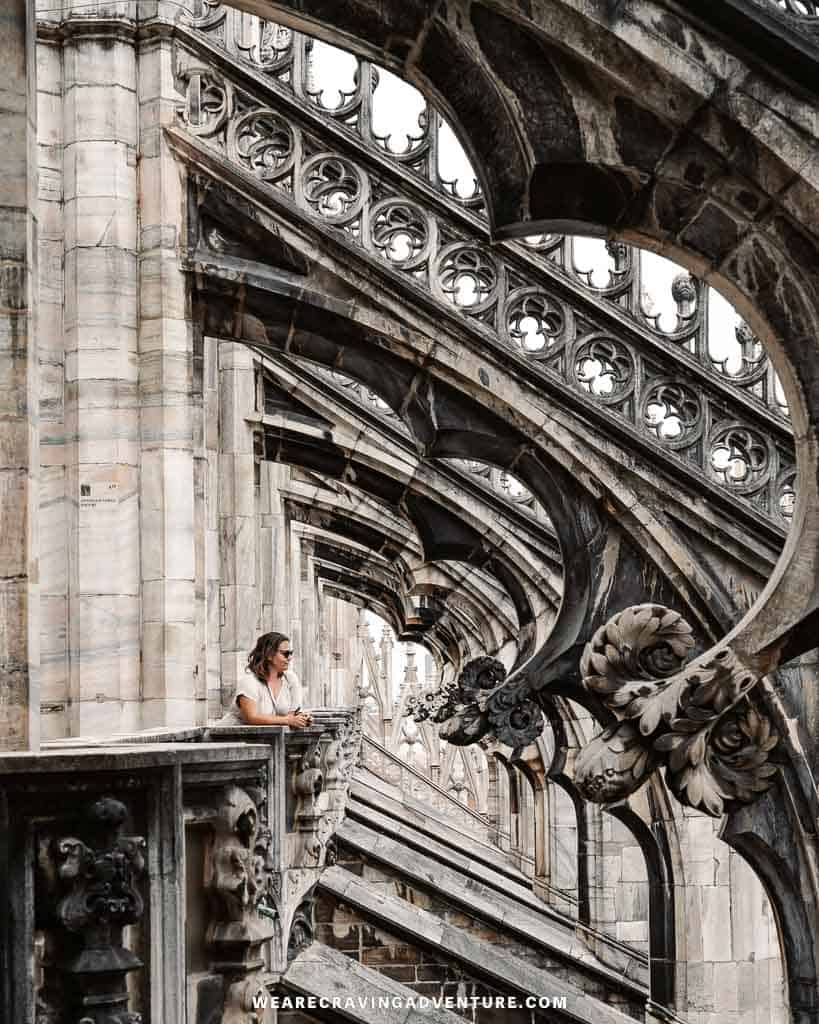
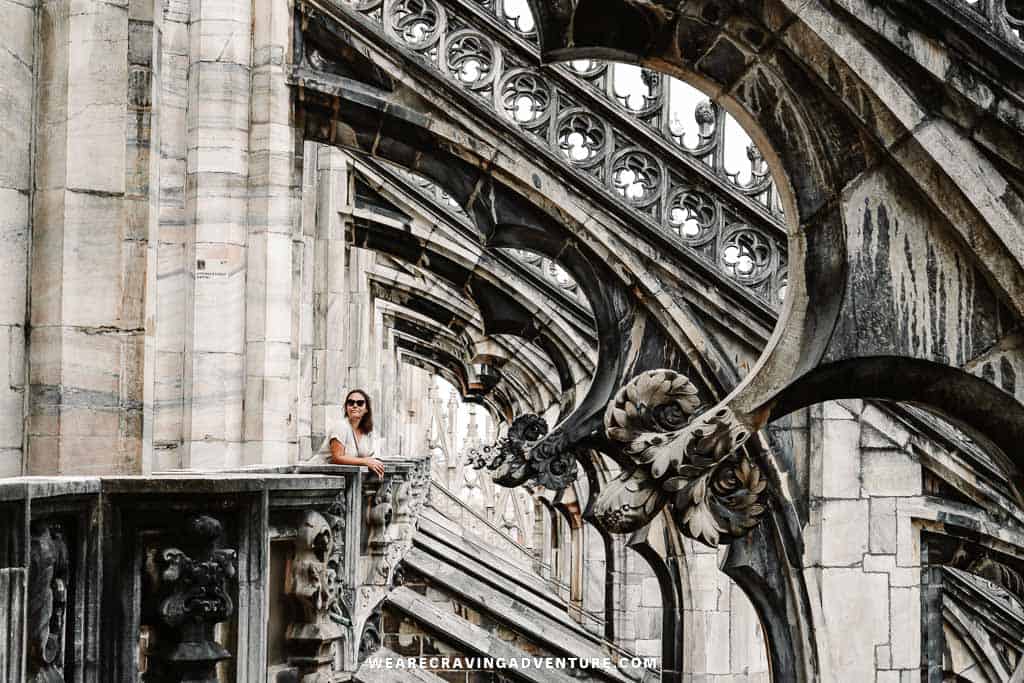
The rooftop is the magic bit. I actually skipped going inside the Duomo for far too long because I am not usually the person getting wildly excited about cathedrals. But once I realised you could walk across the roof, between the spires and marble details, with views over Milan and sometimes even the Alps in the distance, I finally got it. The rooftop makes the whole experience feel completely different.
You can visit the Duomo independently, but I’d book ahead, especially if you want rooftop access. The queues can be annoying, and this is not where I’d personally choose to improvise. Milan has better things to do than stand in a line questioning your life choices.
Best Duomo and rooftop options:
Best Duomo-only option: Duomo and rooftop guided tour
Best if your main goal is to visit the cathedral and get up to the rooftop without turning it into a full Milan walking tour.
Best shorter rooftop option: Milan Duomo rooftop terrace guided tour
Best if you care more about the rooftop views than spending ages inside the cathedral.
Best all-in-one option: Milan Duomo and Last Supper small-group tour
Best if you want to see the Duomo, walk through central Milan, and secure access to The Last Supper in one organised tour.
After visiting the Duomo, take a few minutes to just stand in Piazza Duomo and look back at it from different angles. The square is busy, chaotic, touristy and full of people taking the exact same photo, but it is still the centrepiece of Milan for a reason.

2. See The Last Supper
Leonardo da Vinci’s Last Supper is one of the hardest Milan sights to wing last minute. It is housed inside the refectory of Santa Maria delle Grazie, and because the painting is so fragile, visits are strictly limited. So no, this is not one of those “we’ll just see how we feel on the day” situations.
The fresco shows the moment Jesus tells his disciples that one of them will betray him, and Leonardo painted it in the late 15th century while working in Milan. Even if you are not usually a big art person, it is one of those works that is worth seeing because of the history, the fame, and the sheer drama around how delicate it is.
The catch is that tickets sell out quickly and a guided tour is often the easiest way still get in. It is usually more expensive, but in this case, paying extra can actually make sense because you get the ticket, the timing, and the explanation handled for you.
If you are short on time, I think this is also where a combined Milan tour becomes genuinely useful. The Last Supper is not right next to the Duomo, so trying to combine both independently can get fiddly if your timed entry is awkward. A good walking tour removes a lot of the logistics.
Best Last Supper and combo tours:
Best overall combo: Milan Duomo and Last Supper small-group tour
Best if you want the Duomo, a guided walk through Milan, and The Last Supper bundled into one strong first-time Milan experience.
Best classic one-day option: Milan in One Day with Duomo and Last Supper
Best if you only have one day in Milan and want someone else to connect the dots between the major sights.
Best Last Supper-only option: Last Supper guided visit with tickets
Best if you already have the rest of your Milan sightseeing planned and only need help securing access to The Last Supper.
Good backup option: Historic Milan tour with Last Supper ticket
Best if the most popular combo tours are sold out but you still want a proper guided visit rather than just assisted entry.
If you want more Leonardo after The Last Supper, the easier add-on is the Leonardo3 interactive exhibition near the Galleria, especially if you are interested in his machines and inventions rather than just the famous painting.
3. Explore Galleria Vittorio Emanuele II
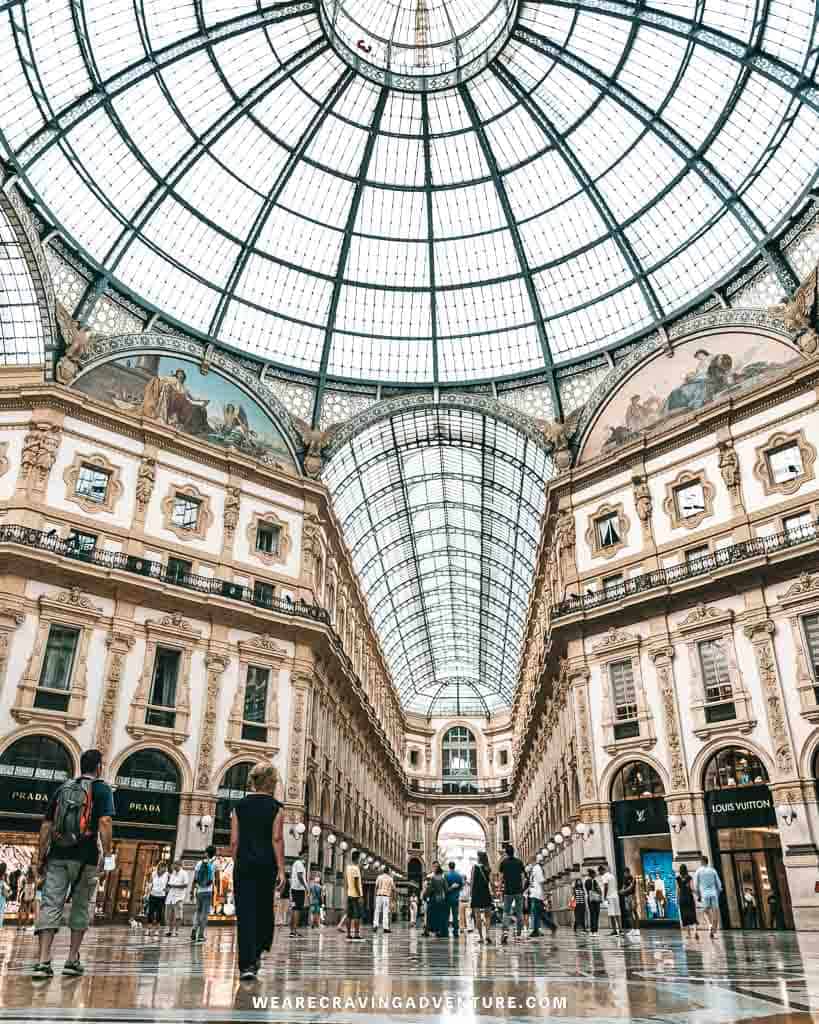
Galleria Vittorio Emanuele II is right next to the Duomo, so you will almost definitely end up here anyway. It is one of the oldest and most famous shopping arcades in Europe, built in the 19th century and named after Victor Emmanuel II, the first king of unified Italy.
Calling it a shopping mall feels technically correct but spiritually offensive. This is not a place you come for a quick panic-buy. It is all glass domes, ironwork, mosaics, polished floors, high-end shops, historic cafés and people casually spending more on handbags than I would like to think about.
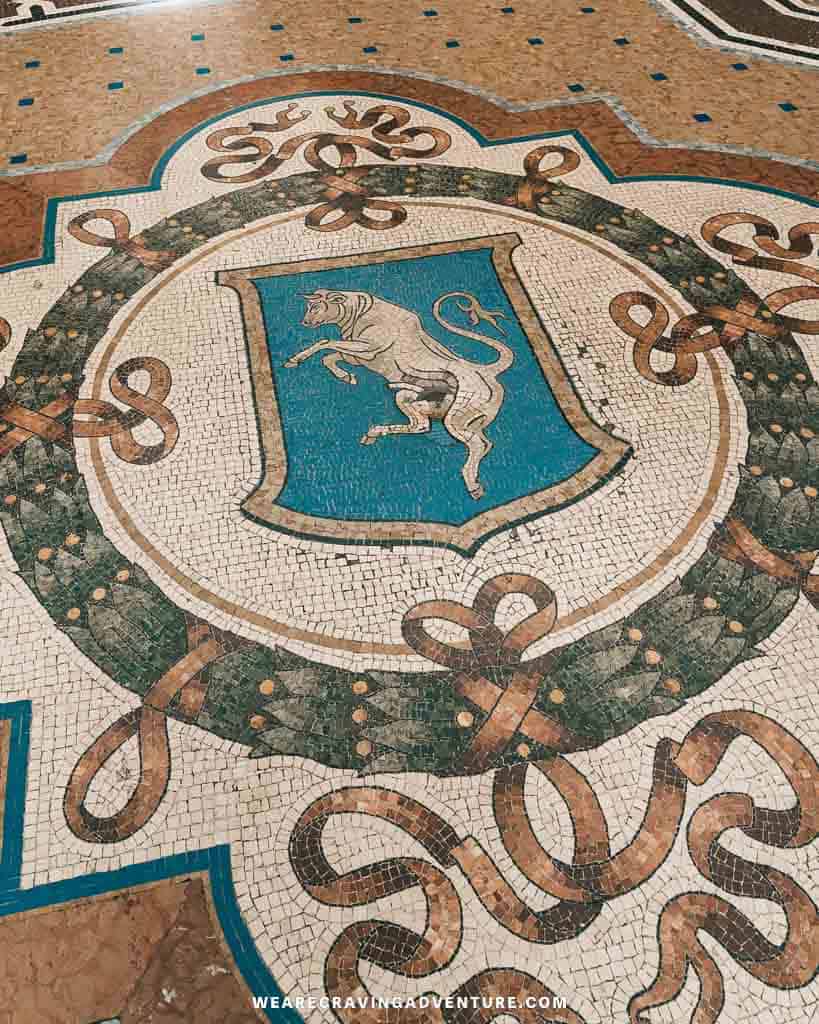
Look down while you are inside, because the mosaic floor is part of the fun. The most famous detail is the bull of Turin. You’ll probably notice a small crowd of people spinning around with one heel on a very specific part of the bull. According to tradition, spinning three times on the bull’s testicles brings good luck. Elegant? Not really. Memorable? Absolutely.
The Galleria is also where Milan’s fashion, history and architecture all start to blend together. You can pass through in ten minutes, but I’d slow down, look up, and use it as a bridge between the Duomo, La Scala, Brera and the fashion district.
If you are interested in Leonardo da Vinci, this is also a convenient place to add the Leonardo3 interactive exhibition. It is a good central indoor add-on, especially if you are interested in Leonardo’s machines and inventions.

4. Walk from Castello Sforzesco to Arco della Pace
One of the easiest free things to do in Milan is the walk from Castello Sforzesco through Parco Sempione to Arco della Pace. It gives you history, green space, a proper city break, and one of Milan’s prettiest monumental views without needing to plan much at all.
Castello Sforzesco has had a long and very Milanese identity crisis over the years. It has been a military fortress, a noble residence, a palace, and even a prison. Today, it is one of the city’s major landmarks, with huge courtyards you can walk through for free and several museums inside if you want to go deeper.
The outside alone is worth seeing. The red-brick walls, towers, gates and open courtyards feel completely different from the polished marble drama of the Duomo. This is a chunkier, moodier side of Milan, and I think it works especially well as a contrast after spending time around Piazza Duomo and the Galleria.
If you want more than a quick wander, go inside the castle museums. The most famous piece is Michelangelo’s unfinished Pietà Rondanini, but the castle also has collections covering ancient art, decorative arts, furniture, musical instruments, archaeology and more. It is one of those places where you can either spend 20 minutes passing through or accidentally lose half a day.
Behind the castle, Parco Sempione opens up into one of Milan’s largest green spaces, covering nearly 400,000 square metres. There are lawns, tree-lined paths, gardens, cafés, museums nearby, and enough space to sit down and recover from sightseeing like a functioning human.
Walk all the way across the park and you’ll reach Arco della Pace, the Arch of Peace. It sits at the far edge of Parco Sempione, directly opposite Castello Sforzesco, so the castle, park and arch naturally work as one route. The arch was originally commissioned by Napoleon Bonaparte after the French victory over the Austrian army at the Battle of Marengo, and it was designed by Luigi Cagnola in white marble.
I would not overcomplicate this part of Milan. Start at Castello Sforzesco, wander the courtyards, cross Parco Sempione, maybe stop for a drink, then end at Arco della Pace. If the weather is good, this is one of the easiest ways to enjoy Milan without spending money or queuing for another timed ticket.
If you want a view, add Torre Branca, the iron panoramic tower inside Parco Sempione. It stands 108.6 metres tall and gives you wide views across Milan, the skyline, and on clear days even toward the Alps, Apennines and Po Valley. It is not essential, but it is a fun extra if you like city viewpoints.
Best tours and tickets for Castello Sforzesco, Parco Sempione and Arco della Pace:
Best castle tour: Sforza Castle and Michelangelo’s Pietà Rondanini guided tour
Best if you want the castle history, museums and Michelangelo’s final sculpture explained properly instead of just wandering through the courtyards.
Best park viewpoint: Branca Tower entrance ticket
Best if you want a quick panoramic view from inside Parco Sempione without committing to a full guided tour.
Best combined Sempione option: Branca Tower and Sforza Castle guided tour
Best if you want the tower, park and castle bundled together with context.
Best active option: Milan hidden treasures bike tour
Best if you want to see Castello Sforzesco, Parco Sempione, Brera, Chinatown, Porta Garibaldi, Corso Como and more without walking yourself into the ground.

5. Slow down in Brera
Brera is one of the best areas in Milan for aimless wandering. This is where the city starts to feel softer, prettier and more lived-in. Think cobblestone streets, old buildings, cafés, restaurants, boutiques, galleries, courtyards and that slightly artsy Milan atmosphere that makes you want to order a coffee and pretend you have nowhere else to be.
I would not rush Brera. Come for a slow walk, a coffee, a glass of wine, lunch, dinner, or just to get away from the full tourist crush around the Duomo.
The main cultural stop here is the Pinacoteca di Brera, one of Milan’s most important art galleries. Founded in 1776, it has works by artists like Raphael, Tintoretto, Rembrandt, Titian, Rubens and others from the 13th to the 20th century. If you only want to visit one traditional art gallery in Milan, the Pinacoteca is one of the strongest choices.
That said, I would treat the Pinacoteca as an optional upgrade, not something everyone must do. If you like classic art, go. If you mostly want atmosphere, just enjoy Brera itself.
Brera is also home to La Scala theatre. Since 1778, La Scala has hosted some of the world’s most famous operas and performances, including works associated with Giuseppe Verdi, Arturo Toscanini and Maria Callas.
If you love opera, obviously check what is on. If not, the theatre museum is an easier way to see the inside without committing to a full evening performance.
Best Brera and La Scala options:
Pinacoteca di Brera ticket: Skip-the-line Brera Art Gallery ticket
Best if you want to visit the Pinacoteca di Brera independently without dealing with ticket lines.
Best guided Brera tour: Brera district and Pinacoteca guided tour
Best if you want the neighbourhood and the gallery explained together instead of just looking at paintings and hoping for enlightenment.
Best La Scala tour: La Scala theatre and museum guided tour
Best if you want to see one of the world’s most prestigious theatres without booking an opera ticket.

6. Eat your way through Milan
The food scene in Milan is much better than people give it credit for, especially if you lean into Milanese and Lombard dishes instead of expecting the same food you’d order in Rome, Naples or Sicily.
Milanese food is rich, buttery, rice-heavy, meat-heavy and very northern Italian. It is not always the lightest cuisine on earth, but it is comforting, elegant and exactly what you want after a long day of walking around the city.
These are the main Milanese dishes and food experiences I’d look for:
- Risotto alla Milanese: The classic Milan dish. It is made with rice cooked slowly in broth and flavoured with saffron, which gives it that bright golden colour. It is simple, rich, and much more Milan than ordering another plate of pasta just because you are in Italy.
- Ossobuco: A braised veal shank dish, usually slow-cooked until tender and often served with gremolata. It is one of the most traditional things to eat in Milan, and it pairs beautifully with risotto alla Milanese if you are hungry enough to commit.
- Cotoletta alla Milanese: Milan’s famous breaded veal cutlet. It is crispy, golden, buttery and often compared to schnitzel, although Milan will very much tell you theirs came first. Order this when you want something classic and satisfying.
- Mondeghili: Milanese meatballs, traditionally made as a way to use up leftover meat. They are usually fried and make a great starter or snack if you spot them on the menu.
- Panettone: Milan’s famous sweet bread, traditionally eaten around Christmas but available in various forms throughout the year. If you visit Milan in winter or December, this is the sweet thing to try.
- Panzerotti: Not strictly Milanese in origin, but wildly popular in Milan thanks to places like Luini near the Duomo. Think fried dough stuffed with tomato and mozzarella. Not refined. Very effective.
- Cheese, cured meats and Lombard wine: Milan is also a good place to try northern Italian cheeses, salumi and wine from Lombardy. This is especially good if you do a food tour or aperitivo rather than a formal restaurant meal.
If you want something casual and different, head to Via Paolo Sarpi in Milan’s Chinatown. This is one of the city’s best areas for street food, quick bites and fusion food. You’ll find everything from Chinese dumplings to Italian snacks, Asian bakeries, bubble tea, noodles and funny little crossover dishes that make no sense until you eat them. Sushi burrito? Apparently, yes.
For food with a view, head to the rooftop food hall at Rinascente by the Duomo. You can eat almost eye-to-eye with the cathedral’s marble spires, looking out over Piazza Duomo. It sounds fancy, but it is actually a food hall, so you can keep it simple with pizza or go more polished with a proper meal.
A food tour makes sense in Milan if you want to understand the city beyond the obvious sights. It is especially useful because Milanese food is less internationally obvious than pizza in Naples or pasta in Rome. A good guide can point you toward what is actually local, what is worth ordering, and which parts of the city are better for eating.
Best Milan food tours and cooking classes:
Best classic food tour: Milan gourmet food tour
Best if you want a broad introduction to Milan’s food culture, local dishes and neighbourhoods without turning the whole day into a cooking class.
Best street-food option: Milan street food walking tour
Best if you want something more casual, with local snacks and a less formal restaurant feel.
Best market and cooking combo: Milan cooking class and market tour
Best if you want to shop, cook, eat, and understand the ingredients behind Italian food instead of only tasting finished dishes.
Best hands-on class: Learn to cook with an Italian chef
Best if you want a proper cooking-class experience where you make several Italian dishes and leave with recipes you can actually recreate at home.
In the cooking class, you can learn to prepare three Italian dishes, usually choosing between starters like aubergine parmigiana or bruschetta, handmade gnocchi or tagliatelle, modern ragù or yellow risotto alla Milanese, and classic desserts like tiramisu or handmade cantucci. Recipe cards are usually provided, which is useful if you want to recreate the dishes later and pretend you casually became an Italian nonna over the weekend.

7. Do aperitivo the Milan way
If food is one half of Milan’s personality, aperitivo is the other. Italy is known for aperitivo culture, but Milan takes it very seriously. Traditionally, aperitivo is a pre-dinner drink served with small snacks like crackers, olives, meats, cheeses and bread. In Milan, it can easily turn into a full evening plan.
In Milan, you’ll also see the term apericena, which is basically aperitivo that has grown up and decided it is dinner now. Instead of just a few snacks with your drink, expect a much more generous spread of buffet-style bites, cheeses, cured meats, pasta, focaccia and other things that make ordering a full dinner afterwards feel wildly optimistic.
Navigli is the obvious place to go for the classic aperitivo experience. The canals are lively in the evening, the bars spill out onto the streets, and the whole area has that slightly chaotic but fun energy that makes Milan feel much warmer than it does at noon in the business district.
For a proper aperitivo or cocktail evening, these are the places I’d look at first:
- Camparino in Galleria: One of the most iconic places for a Milan drink. It sits right by the Galleria Vittorio Emanuele II and is the obvious choice if you want something classic, central and very Milan.
- Bar Basso: A Milan institution and the birthplace of the Negroni Sbagliato. This is one of the bars that shaped the city’s cocktail culture, and it is especially relevant now after being named Food & Wine’s top global bar in 2026. Order the Negroni Sbagliato if you want the obvious classic.
- Nottingham Forest: Best for experimental cocktails rather than a traditional aperitivo. It is small, famous, creative and often busy, so do not expect a quiet little drink. Go here if you want the weird, theatrical Milan cocktail experience served in all sorts of weird vessels.
- Mag Café: A Navigli favourite for cocktails and canal-side atmosphere. This is a good one if you want the Navigli experience but care about the drink being better than the average tourist-trap spritz.
- Ugo Cocktail Bar: Another strong Navigli-area option, especially if you want proper cocktails in a lively neighbourhood rather than just an aperitivo buffet situation.
- Rita: A well-known Navigli cocktail bar with a more polished feel. Good if you want the canal-area energy but a better-made drink.
- Bar Magenta: A historic, casual and very Milanese stop near Cadorna. This is more old-school and less sleek than the fashion-world bars, which is exactly the point.
- Terrazza Duomo 21: Best if you want aperitivo with a Duomo view. It is not the cheapest option, obviously, but sometimes you are paying for the view and pretending that was a financially responsible decision.
Do at least one proper aperitivo in Milan, even if you are not usually a bar person. It is less about the drink itself and more about how the city shifts in the evening. Milan loosens up, everyone gets chattier, and suddenly the city that felt a bit serious during the day becomes much more fun.
If you want the easiest version, book an aperitivo or food-and-drinks tour and let someone else choose the stops. This is especially useful in Navigli, where there are plenty of bars. A tour also makes sense if you are solo or just want a more social evening.
Best aperitivo, drinks and evening tours in Milan:
Best overall Navigli food and drinks tour: Navigli food and drinks tour with aperitivo
Best if you want a filling evening in Navigli with food, drinks, local context and a proper social atmosphere.
Best sunset aperitivo tour: Sunset Navigli food and drinks tour
Best if you want aperitivo, street food, drinks and an easy evening plan without researching every bar yourself.
Best active evening option: Milan sunset bike tour with aperitivo
Best if you want sightseeing, movement and an aperitivo stop bundled into one evening.

8. Experience the fashion capital
Milan is one of the fashion capitals of the world, but unless you are casually travelling with a spare handbag budget the size of a small mortgage, Milan’s fashion scene is just as much about people-watching, design history, window shopping, architecture, craftsmanship and understanding the city’s identity.
Fashion is part of the city’s economy, culture and visual language. Milan is home to major Italian fashion houses, global flagship stores, design showrooms, fashion schools, trade fairs, concept stores and some of the best-dressed people you will ever accidentally stand next to while feeling like a sock with legs.
The main fashion area is the Quadrilatero della Moda, or Fashion Quadrilateral, a compact luxury district formed around streets like Via Montenapoleone, Via della Spiga, Via Sant’Andrea and Via Manzoni. This is where you’ll find the big designer boutiques, polished window displays, discreet door staff and the kind of price tags that make you blink twice.
These are the main fashion and design stops I’d consider:
- Quadrilatero della Moda: Milan’s luxury fashion district and the best place to understand the city’s high-fashion identity. Walk Via Montenapoleone, Via della Spiga, Via Sant’Andrea and Via Manzoni for the full designer-window experience.
- Via Montenapoleone: The most famous street in the fashion district, lined with flagship stores, luxury boutiques and very serious-looking shoppers. Come here for window shopping, people-watching and the feeling of being financially humbled in several languages.
- Galleria Vittorio Emanuele II: You will already pass through it near the Duomo, but it also belongs in the fashion story. It is one of Europe’s oldest shopping arcades and blends architecture, luxury, history and Milan’s obsession with looking good in public.
- Corso Buenos Aires: A much more accessible shopping street with high-street brands, everyday shops and a completely different feel from the Quadrilatero. This is better if you actually want to buy something without needing emotional support afterwards.
- Via Torino: A busy, central shopping street between the Duomo and the Colonne di San Lorenzo area. It is younger, more casual and better for mainstream shops than luxury fashion.
- 10 Corso Como: A stylish concept store, gallery, bookshop and design space near Porta Garibaldi. It is one of those very Milan places where fashion, design, art and lifestyle all blur together.
- Armani/Silos: Giorgio Armani’s fashion museum, housed in a former industrial building. The permanent collection covers decades of Armani designs, and it is one of the best stops if you want fashion as culture rather than just shopping bags.
- Fondazione Prada: A contemporary art and culture space connected to Prada, set in a former distillery complex. It is not “fashion” in the boutique sense, but it fits Milan’s design, art and luxury-world ecosystem perfectly.
- Milan Fashion Week: Unless you are in the industry, you probably will not be attending the major shows, but the city feels different during fashion week. Hotels get pricier, restaurants get busier, and the people-watching becomes Olympic-level.
- Vintage shops: Milan is excellent for vintage and designer resale. If you want fashion without the flagship-store price shock, vintage shopping is much more fun and often much more interesting.
If you are interested in fashion history, I would prioritise either Armani/Silos or a guided fashion walk through the Quadrilatero. If you are more into browsing and hunting, a vintage shopping tour makes more sense. And if you are actually planning to shop seriously, Milan is one of the few cities where a personal shopper does not feel completely absurd.
Best Milan fashion and design experiences:
Best fashion museum: Armani/Silos Museum admission ticket
Best if you want to see Milan’s fashion legacy through Giorgio Armani’s archive, permanent collection and decades of Italian design.
Best fashion-history walk: Milan walking fashion tour
Best if you want the Quadrilatero della Moda explained properly instead of just walking past expensive windows and guessing who everyone is.
Best private fashion option: Private Milan fashion experience
Best if you want a more tailored fashion-focused tour with insider context, boutiques and a private guide.
Best vintage option: Milan vintage shopping tour
Best if you want to find vintage shops, designer resale pieces and more interesting fashion than another global flagship store.
Best shopping-focused option: Milan shopping tours and personal shopper experiences
Best if you actually want to shop and would rather have someone help you navigate boutiques, areas and style options.

9. Pick one or two museums and galleries
Milan has a lot of museums and galleries, but I would not try to see all of them. Pick one or two based on what you actually like, then spend the rest of your time eating, wandering, drinking and enjoying the city.
| If you like… | Go here |
| Leonardo da Vinci, old libraries and Renaissance art | Pinacoteca Ambrosiana |
| Classic Italian painting | Pinacoteca di Brera |
| Modern Italian art | Museo del Novecento |
| Science, inventions and engineering | Leonardo da Vinci Science and Technology Museum |
| Fashion history | Armani/Silos |
| Contemporary art and design-world Milan | Fondazione Prada |
| Opera and theatre history | La Scala Museum |
| Families or rainy-day backup plans | Science Museum, Natural History Museum or Mudec |
Pinacoteca Ambrosiana is one of the most interesting choices if you are already following the Leonardo thread through Milan. It is home to the Codex Atlanticus, the largest surviving collection of Leonardo da Vinci’s notes and drawings, with more than 1,000 pages covering inventions, studies, sketches, engineering ideas and observations. The museum also has works by artists like Caravaggio, Raphael, Titian and Botticelli.
Pinacoteca di Brera is the better pick if you want a traditional art gallery in one of Milan’s prettiest neighbourhoods. Founded in 1776, it has works by Raphael, Tintoretto, Rembrandt, Titian, Rubens and others. I mentioned it under Brera because it fits naturally there, but it also belongs in this museum roundup because it is one of Milan’s major art collections.
Museo del Novecento is the obvious pick for modern Italian art. It sits right by Piazza Duomo, so it is incredibly convenient, and it focuses on 20th-century art, including Futurism, Arte Povera and other major modern movements. It is a good choice if you want something central and cultural without committing to a full half-day museum expedition.
The Leonardo da Vinci National Museum of Science and Technology is great if you are more interested in inventions, machines, transport and science than paintings. It is much bigger than people expect and covers far more than just Leonardo, with exhibits on communication, energy, materials, transport and technology. This is also one of the better options for families or anyone who gets bored after twelve minutes in a traditional painting gallery.
La Scala Museum is worth considering if you are curious about Milan’s opera history but do not want to book a full performance. La Scala has been one of the world’s most prestigious theatres since 1778, with a history tied to names like Verdi, Toscanini and Maria Callas. The museum gives you the elegant version without needing to understand opera or own a dramatic cape.
Fondazione Prada is more contemporary, experimental and design-world Milan. It is set in a former distillery and has become one of the city’s major spaces for contemporary art, culture, cinema and temporary exhibitions. It is not for everyone, but if you like contemporary spaces, this is much more interesting than another generic museum stop.
Armani/Silos fits here too, even though I also included it under fashion. It is best if you want to understand Milan’s fashion culture through actual design archives rather than only boutiques and window displays.
Mudec, the Museum of Cultures, works well if you are staying near the Tortona/Navigli side of the city or if there is a temporary exhibition you are interested in. I would not make it a first-time Milan essential unless the exhibition calendar lines up with your taste, but it is a good repeat-visit or rainy-day option.
Best Milan museum tickets and tours:
Best Leonardo museum ticket: Pinacoteca Ambrosiana and Codex Atlanticus ticket
Best if you want Leonardo’s notes, the historic Ambrosiana library and major Renaissance artworks in one visit.
Best modern art ticket: Museo del Novecento fast-track ticket with audio guide
Best if you want a central, easy modern-art stop right by the Duomo.
Best science and family option: Leonardo da Vinci Science and Technology Museum ticket
Best if you want inventions, machines, engineering, transport and a break from paintings and churches.
Best Brera gallery ticket: Skip-the-line Brera Art Gallery ticket
Best if you want classic Italian and European art inside one of Milan’s most atmospheric districts.
Best La Scala option: La Scala theatre and museum guided tour
Best if you want the theatre history and museum without booking an evening performance.
Best fashion museum: Armani/Silos Museum admission ticket
Best if you want Milan’s fashion culture in museum form.

10. Ride an old tram through the city
Milan’s trams are one of the easiest ways to see the city as a real city, not just a collection of attractions. The orange vintage trams are especially charming, and they make Milan feel a little softer and more nostalgic.
Milan’s tram network dates back to the late 19th century, and the city still runs historic tram cars alongside modern public transport. The classic wooden-interior trams are not just tourist props either, they are part of the actual transport system.
You can ride the trams independently with a normal public transport ticket. I would not build a whole day around this, but I would absolutely hop on one when it fits your route. It is a simple, cheap way to see neighbourhoods roll by, especially if your feet are starting to hurt.
For an easy tram-based sightseeing route, look for lines that pass through or near central Milan, Brera, the castle area, Porta Venezia, Navigli or the historic centre. The exact route depends on current service, so check the local transport app before going full tram romantic.
If you want a guided version, there are tours that combine Milan sightseeing with a vintage tram ride:
Best tram and city sightseeing options:
Best tram + Last Supper option: Last Supper and vintage tram tour
Best if you want a guided visit to The Last Supper plus a vintage tram ride through central Milan.
Best tram-only city tour: Milan highlights by vintage tram guided tour
Best if you want the tram experience as the main point, with city highlights explained along the way.
Best semi-private option: Milan city tour by historic tram
Best if you want a smaller guided tram experience instead of navigating public transport yourself.
Best DIY-style option: Vintage tram hop-on hop-off with MilanoCard
Best if you want a flexible tram-based sightseeing option with public transport access included.


11. See Milan’s modern side at Porta Nuova
One of the reasons Milan feels different from other Italian cities is that it actually lets itself be modern. Rome, Florence and Venice often feel like they are preserved in amber, for better and worse. Milan still has history everywhere, but it also has glass towers, business districts, design spaces, concept stores and neighbourhoods that feel very much alive right now.
The best place to see this side of Milan is Porta Nuova, the city’s modern business and architecture district just north of the historic centre. This area was redeveloped in the 2000s and 2010s and completely changed the skyline of Milan.
The centrepiece is Piazza Gae Aulenti, a raised modern square surrounded by futuristic buildings, shops, cafés and office towers.
The most famous sight here is Bosco Verticale, the Vertical Forest. These two residential towers are covered in trees, shrubs and plants, and they have become one of the most recognisable examples of modern architecture in Milan.
Nearby, you also have Porta Garibaldi, Corso Como, and the Isola district, which is one of the cooler neighbourhoods around central Milan. Isola used to be more working-class and separated from the historic centre by railway lines, but today it has restaurants, bars, street art, design shops and a much more local feel than the Duomo area.
If you have already done the big historic sights, I think this is one of the best areas to add because it gives you a completely different version of Milan. It also pairs well with a drink at 10 Corso Como, a walk through Isola, or aperitivo around Porta Garibaldi.
Best Porta Nuova and modern Milan tours:
Best architecture option: Milan Porta Nuova walking tour with an architect
Best if you want the modern architecture, Bosco Verticale and the story behind the Porta Nuova redevelopment explained properly.
Best skyscraper-focused option: Milan skyscrapers guided walking tour
Best if you specifically want to focus on the Unicredit Tower, Bosco Verticale and Milan’s modern skyline.
Best quick city intro: Private Milan kickstart tour
Best if you want a short private overview that includes places like Porta Garibaldi, Bosco Verticale, Piazza Mercanti and Brera.
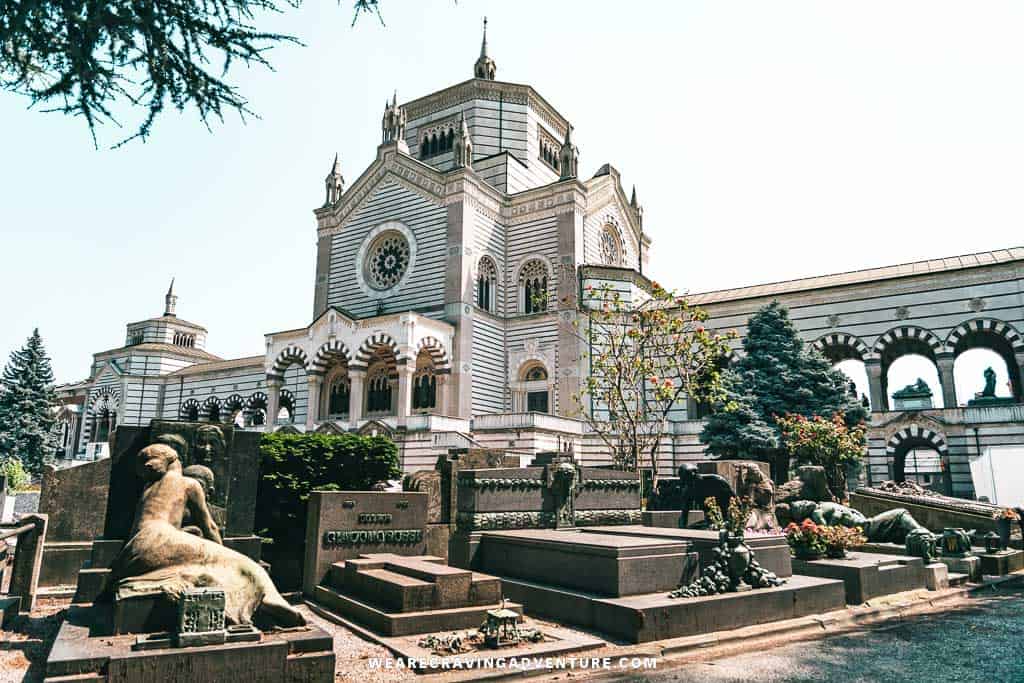
12. Find Milan’s strange and underrated corners
Milan has plenty of famous sights, but some of its most memorable places are the slightly strange ones. This is where the city gets more interesting than the usual Duomo, Galleria, Last Supper routine.
These are the hidden and underrated Milan stops I’d consider:
- San Bernardino alle Ossa: A small church near the Duomo with a bone chapel decorated with thousands of human bones. Weird, central and very memorable.
- Cimitero Monumentale: Milan’s monumental cemetery, full of elaborate tombs, sculptures and architecture. More open-air museum than ordinary cemetery.
- San Maurizio al Monastero Maggiore: A fresco-filled church that looks fairly modest from the outside but is beautiful inside.
- Villa Necchi Campiglio: A 1930s villa with gardens, elegant interiors and strong architecture/design appeal.
- Bagni Misteriosi: A historic outdoor swimming pool complex and good summer add-on if you need a break from sightseeing.
- Roman ruins around Corso Magenta: Not a huge attraction on their own, but interesting if you are already walking through the area between Santa Maria delle Grazie, San Maurizio and central Milan.
Best hidden gem tours and tickets in Milan:
Best cemetery tour: Cimitero Monumentale guided tour
Best if you want the stories behind Milan’s most dramatic cemetery monuments instead of just wandering around wondering who everyone was.
Best churches and hidden corners option: Milan churches tour with a local
Best if you want to understand Milan’s lesser-known churches and religious art beyond the Duomo.
Best flexible self-guided option: Milan walking tour with audio and written guide
Best if you want a flexible route that includes places like San Bernardino alle Ossa, San Maurizio al Monastero Maggiore, the Duomo and the Galleria.

13. Take a day trip from Milan
One of the best things about Milan is how easy it is to leave Milan. I do not mean that as an insult. The city has excellent train connections, and if you base yourself near Milano Centrale, you can reach lakes, mountains, Swiss scenery, medieval towns and even the Ligurian coast surprisingly easily.
If you only have one or two days in Milan, stay in the city. But if you have three or more days, I would seriously consider using one of them for a day trip.
Lake Como is the obvious one, and honestly, it is obvious for a reason. I think Lake Como is absolutely lovely and a fantastic place to escape the heat if you are visiting Milan in summer. That is also the busiest season, though.
| If you want… | Choose this day trip |
| The classic lake escape | Lake Como |
| The best lake + easy pretty-town combo | Verona, Sirmione and Lake Garda |
| Big mountain scenery | Bernina Express and St. Moritz |
| Italian Riviera vibes | Genoa and Portofino |
| An easy underrated historic town | Bergamo |
Best day trips from Milan:
Best Lake Como tour: Lake Como small-group day tour with cruise
Best if you want Bellagio, Varenna, lake views, a boat ride and less stress over ferry logistics.
Best classic Como option: Lake Como and Bellagio day trip from Milan
Best if you want the classic, high-demand Lake Como day trip from Milan with easy transport included.
Best mountain day: Swiss Alps Bernina Red Train and St. Moritz tour
Best if you want the big alpine scenery day with the famous red train route and Swiss mountain views.
Best Como + Alps combo: Bernina scenic train and Lake Como tour
Best if you want to combine Lake Como scenery with the Bernina train in one very full day.
Best Verona and Garda tour: Verona, Sirmione and Lake Garda with boat cruise
Best if you want a compact historic city, Lake Garda views and Sirmione in one efficient day trip.
Best Italian Riviera day: Genoa and Portofino day trip from Milan
Best if you want a big coastal day with Genoa, Portofino and Italian Riviera scenery without planning the transfers yourself.
Best underrated easy trip: Bergamo Upper Town day trip
Best if you want a beautiful historic town close to Milan without committing to a massive lake or mountain day.

How many days in Milan?
I’d spend at least 3 days in Milan if you want to see the city and take one proper day trip.
With 2 days in Milan, I’d focus on the city itself: the Duomo rooftop, Galleria Vittorio Emanuele II, Brera, Sforza Castle, Navigli, aperitivo, and maybe the Last Supper if you manage to get tickets.
With 3 days in Milan, you can spend two days in the city and take one easy day trip, probably Lake Como, Verona, or Bologna.
With 4–5 days in Milan, the city really starts to make sense as a base. You can enjoy Milan slowly and still add one or two bigger day trips like Lake Como, the Bernina Red Train, Venice, or Cinque Terre.
I wouldn’t pack every day with a day trip, though. Milan is one of those cities that gets better when you slow down. Some of my favorite moments there have been sitting at a bar, having aperitivo, people watching, finding quirky little cafés, and letting the city do its stylish little thing.

Best time to visit Milan, Italy
The best time to visit Milan for day trips is spring and autumn. The weather is usually better for walking, the lakes look beautiful, and places like Lake Como, Verona, Venice, and Cinque Terre are generally easier to enjoy than in peak summer.
Spring is my favorite time for Lake Como because of the flowers and gardens. It’s also great for Verona, Bologna, Venice, and the Bernina Red Train if you want milder weather without the full summer crowds.
Summer can be busy and hot, but I actually found Milan more pleasant in August than I expected. Because of Ferragosto, many locals leave the city, and Milan still has plenty of air-conditioned cafés, museums, shops, churches, trams, buses, and metro connections. It’s also the best time if you want to swim in Lake Como.
Autumn is gorgeous for Lake Como, city trips, food-focused days in Bologna, and wandering without melting. The fall colors around the lakes can be beautiful, and the whole mood feels a little softer and more romantic.
Winter works best for Milan itself, Bologna, Verona, Venice, and maybe the Bernina Red Train if you want snowy Alpine scenery. I wouldn’t choose winter for Cinque Terre unless you’re okay with limited services, less reliable weather, and a quieter coastal experience.

Planning a trip to Italy?
Italy is one of those countries where it’s dangerously easy to over-plan. Everything looks close enough, beautiful enough, and pasta-adjacent enough to justify adding “just one more stop.” And then suddenly your relaxing Italy trip is a train timetable with gelato.
To help you plan properly, I’ve put together practical Italy travel guides covering Milan, Venice, Verona, Bologna, where to stay, city itineraries, and seasonal travel tips.
Read next:
Italy travel insurance
Good travel insurance is an absolute must when traveling abroad, and we’ve learned that the hard way!
Now we always get insured before we leave and Travel Insurance Masters is our go-to platform to find the best insurance options for the specific trip.
The TIM platform works as a search engine and suggests the best insurance company and insurance plan for your criteria so you don’t end up paying more for things you don’t need! It also takes into account your age, nationality, destination etc. which can greatly impact the final price.
You can get your quote & provider recommendations here.

Thank you for such a thorough post about Milan. This gives me everything I’d need for a a wonderful trip there!
Wow! You have inspired me to want to go! Where next might you visit? I love Palma in Malloraca… have you ever been?