This site uses affiliates. Thank you for buying through our links and supporting this blog.


North Island Road Trip: 2 & 3-Week New Zealand Itinerary

Geothermal hot springs, glowworm caves, 2,000-year-old trees, white-sand beaches, enormous volcanoes and some properly strange landscapes: New Zealand’s North Island has it all and so much more.
The list of things you can see and do here is almost never-ending, and you could spend months or even years exploring without seeing everything. I know because I came fairly close to trying.
I travelled around the North Island several times, lived in Auckland for a while and spent about a year exploring this part of New Zealand in total. I have driven these roads, visited the stops in this guide and had enough time to work out which detours genuinely deserve a place in a packed itinerary.
If you only have a few weeks, choosing what to include can feel like a mind-boggling task. This New Zealand North Island road trip itinerary does that work for you, with detailed two-week and three-week routes designed to cover the major highlights without wasting days on unnecessary backtracking.
Both versions begin in Auckland and finish in Wellington. The two-week itinerary takes the most efficient route through Northland, the Coromandel, Rotorua, Taupō, Waitomo and Taranaki, while the three-week itinerary adds the Forgotten World Highway, Tongariro, Gisborne, Hawke’s Bay and the wild southeast coast.
Along the way, I have included the places I genuinely think are worth your time, the experiences I would book again and the stops I would cut first if your schedule starts falling apart. You will still drive most days, but the point is to experience the North Island—not simply complete a very scenic endurance test.

In a hurry?
Book these North Island road trip essentials first
These are the North Island bookings I would organise first, particularly during summer and New Zealand school holidays.
Choose your vehicle:
Compare New Zealand rental cars
Compare campervans and motorhomes
Best Northland experience:
Bay of Islands Island Hopper sailing cruise
Best movie location:
Hobbiton Movie Set tour
Best Māori cultural evening:
Te Pā Tū experience with dinner
Best Waitomo adventure:
Black Labyrinth black-water rafting
Essential for Tongariro:
Tongariro Alpine Crossing shuttle
How Many Days Do You Need on New Zealand’s North Island?
Two weeks is the best amount of time for a first North Island road trip, while three weeks allows you to cover the island much more completely. Ten days is the shortest version I would use for a continuous road trip from Auckland to Wellington without the route becoming ridiculous.
Seven days can still make an excellent North Island trip, but it is not enough for this entire route. You need to choose a focused section of the island rather than collecting destinations like Pokémon and spending the week inside your car.
Depending on how much time you have to spend on New Zealand’s North Island, you can shorten or lengthen this two-week itinerary as follows:
- With 7 days, follow my 7-day North Island itinerary instead, which includes three focused routes depending on whether you would rather prioritise Northland, Tongariro or Wellington.
- With 10–12 days, follow the two-week route but skip 2 to 4 days that interest you the least.
- With 14 days, follow the complete two-week North Island itinerary from Auckland to Wellington.
- With 15 days, add the Tongariro Alpine Crossing between Taupō and Waitomo instead of pretending an optional day somehow does not count.
- With 21 days, follow the three-week route below and add the central plateau, East Cape, Hawke’s Bay and the southeast coast.
| Time | Best for | What you can realistically cover |
|---|---|---|
| 7 days | A focused first taste | One shorter route prioritising Northland, Tongariro or Wellington rather than the complete island |
| 10–12 days | A faster Auckland-to-Wellington road trip | Auckland, Coromandel, Hobbiton, Rotorua, Taupō, Waitomo, Taranaki and Wellington; skip Northland |
| 14 days | Best first North Island road trip | The complete two-week route through Northland, Coromandel, Rotorua, Taupō, Waitomo and Taranaki |
| 15 days | The two-week route plus Tongariro | Complete 14-day itinerary with a dedicated day for the Tongariro Alpine Crossing |
| 21 days | A more complete and adventurous circuit | The three-week route with the Forgotten World Highway, Tongariro, Gisborne, Hawke’s Bay, Castlepoint and Cape Palliser |

North Island Road Trip Itinerary Overview: 2 and 3 Weeks
The two-week North Island itinerary is the best option for most first-time visitors. It heads north from Auckland to the Bay of Islands and Cape Reinga, returns through Waipoua Forest, then continues south through the Coromandel, Rotorua, Taupō, Waitomo and Taranaki before finishing in Wellington.
The three-week North Island itinerary keeps the first week but rearranges the centre of the route. After Hobbiton, it travels through Waitomo and Taranaki, crosses the Forgotten World Highway to Tongariro, returns through Taupō and Rotorua and then continues around the east coast to Wellington.
| Itinerary | Main route | Best for |
|---|---|---|
| 2-week North Island itinerary | Auckland → Bay of Islands → Cape Reinga → Waipoua Forest → Coromandel → Hobbiton → Rotorua → Taupō → Waitomo → Taranaki → Wellington | First-time visitors who want the major North Island highlights, varied scenery and a logical point-to-point route |
| 3-week North Island itinerary | Auckland → Bay of Islands → Cape Reinga → Waipoua Forest→ Coromandel → Hobbiton → Waitomo → Taranaki → Forgotten World Highway → Tongariro → Taupō → Rotorua → Gisborne → Hawke’s Bay → Castlepoint → Wellington | Travellers who want more hiking, remote roads, the east coast and several places most shorter itineraries completely ignore |
Who Is This North Island Itinerary For?
I designed these routes for travellers who like to make the most of their time without rushing through every stop. They combine famous places with remote beaches, short walks, longer hikes, geothermal landscapes, Māori cultural experiences and a few roads that are memorable enough to be part of the trip themselves.
This itinerary will suit you if you are comfortable driving most days, enjoy active sightseeing and would rather see a wide range of landscapes than spend a week beside one resort pool. It is less suitable if you want long lie-ins, several completely empty days or one accommodation base for the entire trip.

Should You Rent a Car or Campervan?
You need your own vehicle for both routes. Public transport can connect the major cities, but it will not get you efficiently between beaches, waterfalls, trailheads and the smaller overnight stops that make this itinerary worthwhile.
I loved the freedom of travelling around New Zealand by campervan, particularly being able to cook, change plans and wake up close to some ridiculous scenery. A rental car is faster, easier on winding roads and makes more sense if you prefer proper hotels and do not want your holiday to include dealing with water tanks and campsite kitchens.
Whichever you choose, arrange a one-way drop-off in Wellington so you do not waste an entire day returning to Auckland. Compare rental-car prices here, or compare campervans and motorhomes here.

🚘 MY GO-TO RENTAL COMPANY: DISCOVER CARS
I always book my rental car through Discover Cars. They compare local and international agencies to get the best deals. No hidden fees, free cancellation, 24/7 support, and optional full coverage for peace of mind.
2-Week North Island Road Trip Itinerary
Route: Auckland → Bay of Islands → Cape Reinga → Waipoua Forest → Coromandel Peninsula → Hobbiton → Rotorua → Taupō → Waitomo → Taranaki → Wellington
Start: Auckland
Finish: Wellington
Best for: A first North Island road trip combining the major highlights with beaches, geothermal landscapes, Māori culture, caves and hiking
Two weeks is the sweet spot for a first North Island road trip. It gives you enough time to travel from Auckland to Wellington through Northland, the Coromandel, Rotorua, Taupō, Waitomo and Taranaki without reducing the entire trip to petrol stations and photos taken through the windscreen.
I covered most of this route while travelling around New Zealand myself, although I had the luxury of spreading it over several months. This version keeps my favourite places and experiences while arranging them into the most efficient route I could create for someone working with exactly 14 days.
The itinerary begins in Auckland and finishes in Wellington, avoiding a completely unnecessary drive back north. I have kept the Tongariro Alpine Crossing as an optional extra day.
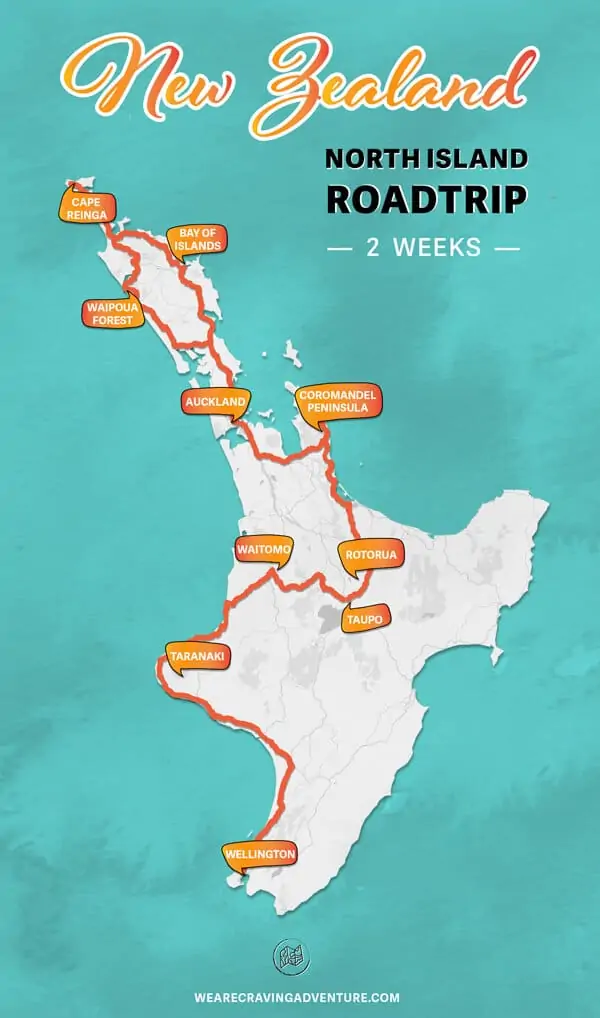
2 Week Itinerary Overview
DAY 1 – Auckland
DAY 2 – Waiheke Island or Piha
DAY 3 – Paihia
DAY 4 – Bay of Island
DAY 5 – Cape Reinga
DAY 6 – Waipoua Forest
DAY 7 – Cathedral Cove
DAY 8 – Donut Island
DAY 9 – Rotorua
DAY 10 – Taupo
OPTIONAL DAY – Tongariro Crossing
DAY 11 – Waitomo
DAY 12 – Taranaki Peninsula
DAY 13 – Drive to Wellington
DAY 14 – Wellington
14-Day North Island Itinerary at a Glance
| Day | Route and Main Plan | Sleep |
|---|---|---|
| 1 | Auckland city, Mount Eden and the waterfront. Visit the Sky Tower or Wētā Workshop Unleashed. | Auckland: Park Hyatt Auckland |
| 2 | Choose between Waiheke Island and Piha. For Waiheke, book the food and wine tour. | Auckland or Piha Park Hyatt Auckland Romantic Piha |
| 3 | Auckland/Piha → optional Muriwai stop → Paihia → Waitangi Treaty Grounds. | Paihia: Paihia Beach Resort & Spa |
| 4 | Spend the day sailing around the Bay of Islands on the Island Hopper sailing cruise. | Paihia: Paihia Beach Resort & Spa |
| 5 | Paihia → Cape Reinga → Te Paki Giant Sand Dunes → Kaitaia. Alternatively, take the Cape Reinga and Ninety Mile Beach tour. | Kaitaia: Orana Motor Inn |
| 6 | Kaitaia → Hokianga ferry → Waipoua Forest → Tokatoka Peak → Auckland. | Auckland: Park Hyatt Auckland |
| 7 | Auckland → Thames → Hahei → Cathedral Cove → Whangamatā. Walk to the cove or see it from the water on the Cathedral Cove boat tour. | Whangamatā: San Marco Luxury Tuscan Beachside Villa |
| 8 | Donut Island kayaking → Ōmanawa Falls → Hobbiton Movie Set → Rotorua Redwoods. | Rotorua: Pullman Rotorua |
| 9 | Rotorua adventure, geothermal spa and Māori cultural evening. My pick is Kaituna River rafting followed by the Te Pā Tū evening experience. | Rotorua: Pullman Rotorua |
| 10 | Rotorua → Wai-O-Tapu → Taupō → Māori Rock Carvings cruise → Otumuheke Stream → Huka Falls → Waitomo. | Waitomo: Waitomo Caves Guest Lodge |
| 11 | Black Labyrinth cave adventure → Mangapōhue Natural Bridge → Marokopa Falls → Kāwhia if the tide works → Three Sisters → New Plymouth. | New Plymouth: Novotel New Plymouth Taranaki |
| 12 | Hike to Pouākai Tarns or explore New Plymouth, Te Rewa Rewa Bridge, Lake Mangamahoe and Surf Highway 45. | New Plymouth: Novotel New Plymouth Taranaki |
| 13 | New Plymouth → Whanganui → Kāpiti Coast → Wellington. | Wellington: InterContinental Wellington |
| 14 | Wētā Workshop → Mount Victoria → Te Papa → Wellington waterfront and Cuba Street. | Wellington: InterContinental Wellington or onward travel |

Day 1 – Auckland
Route: Auckland Airport → Auckland Domain and Museum → Mount Eden → Sky Tower → Viaduct Harbour
Book ahead: Sky Tower admission, Wētā Workshop Unleashed and Auckland Museum entry
Getting around: There is no need to collect a rental car today. Stay centrally and explore on foot, by bus or by rideshare.
Sleep: Auckland
Kia Ora and welcome to Aotearoa! Auckland is the starting point for this North Island road trip and, although I would not sacrifice the beaches, forests and volcanic landscapes ahead for too many city days, Auckland deserves more than a dash from the arrivals hall to the rental-car desk.
From the airport head straight into central Auckland. SkyDrive coaches connect the airport with the city, while a taxi or rideshare is easier if two or more people are splitting the fare. I would leave the rental car until tomorrow; parking in central Auckland is expensive and you will barely use it today.
Auckland Museum
If you arrive early enough, start in Auckland Domain and spend around two hours at Auckland War Memorial Museum. The Māori and Pacific collections give this trip useful context before you start racing around the island, and the natural-history galleries explain the volcanic forces that shaped so much of the landscape you are about to drive through.
Do not try to read every label after a long flight. Pick the Māori galleries, the Volcanoes gallery and one or two sections that genuinely interest you, then move on while your brain still works.

Mount Eden
Mount Eden, or Maungawhau, is the highest volcano in Auckland’s volcanic field at 196 metres. The summit looks across the city, the harbour and the surrounding cones, and it is an easy way to understand just how spread out Auckland really is.
I personally prefer One Tree Hill when I have longer in Auckland, but Mount Eden is closer to the centre and fits this arrival day much better. The walk from the upper entrance is short, and the view-to-effort ratio is excellent.

Sky Tower and SkyJump
The 328-metre Sky Tower is Auckland’s most obvious landmark and the best place to get the whole city into one view. Standard admission takes you to the observation levels, but if looking through the glass floor feels a little too sensible, you can step off the tower on the 192-metre SkyJump.
A friend and I seem to have created a tradition of jumping off something whenever I meet her in New Zealand. I had already done the canyon swing in Queenstown, but the SkyJump somehow felt scarier. The buildings that look enormous from Queen Street appeared tiny from up there, the people below were dots, and stepping into open air took some convincing. Landing back on my own feet in the middle of the city was pretty damn cool.
Have Extra Time? Add Wētā Workshop Unleashed
Wētā Workshop Unleashed is next to the Sky Tower and makes a good 90-minute addition if you arrive early, the weather is miserable or museums are not your thing. Instead of focusing on a single film, it takes you through three original fantasy, horror and science-fiction worlds while showing how movie creatures, sets and effects are built.
Eat and Drink in Auckland
Finish around Britomart, Commercial Bay, Viaduct Harbour or Wynyard Quarter. These waterfront neighbourhoods are packed with restaurants and bars, so there is no need to cross half the city for dinner after a flight. Federal Delicatessen near SkyCity is a fun casual option, while 16 Tun is still a good call if craft beer is the priority.
Book Your Auckland Priorities
You will not fit everything into an arrival day, so choose according to your landing time and energy.
- Best first visit: Sky Tower admission
- Best rainy-day addition: Wētā Workshop Unleashed
- Best cultural introduction: Auckland Museum entry
Where to Stay in Auckland
Stay around the waterfront, Britomart or the eastern side of the CBD. A central base makes today easier and also puts you close to the Waiheke ferry if you choose the island tomorrow.

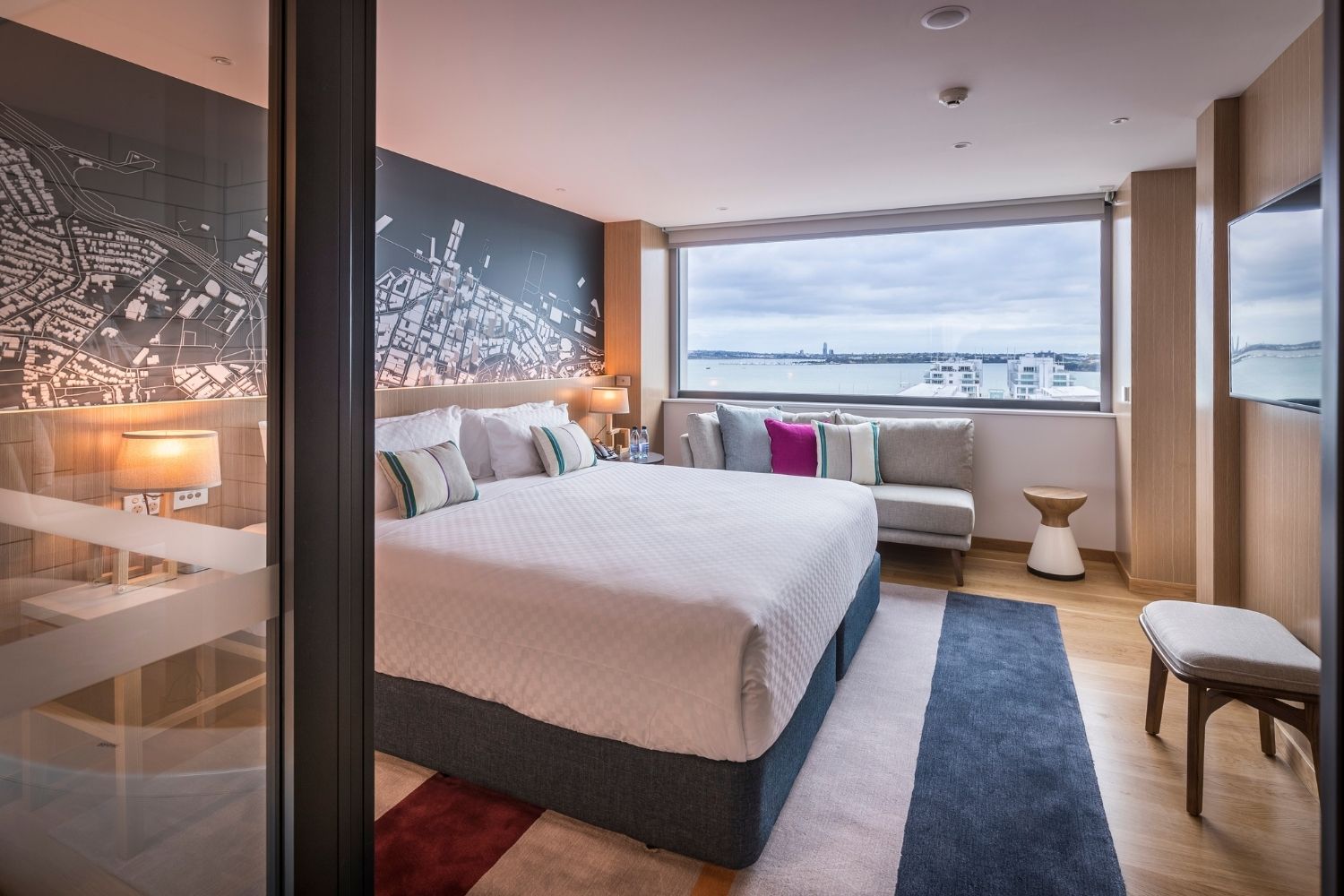
SPLURGE
A waterfront stay in Wynyard Quarter with spacious rooms and a pool. This is where I would spend more for a slower Auckland visit with time to enjoy the hotel.
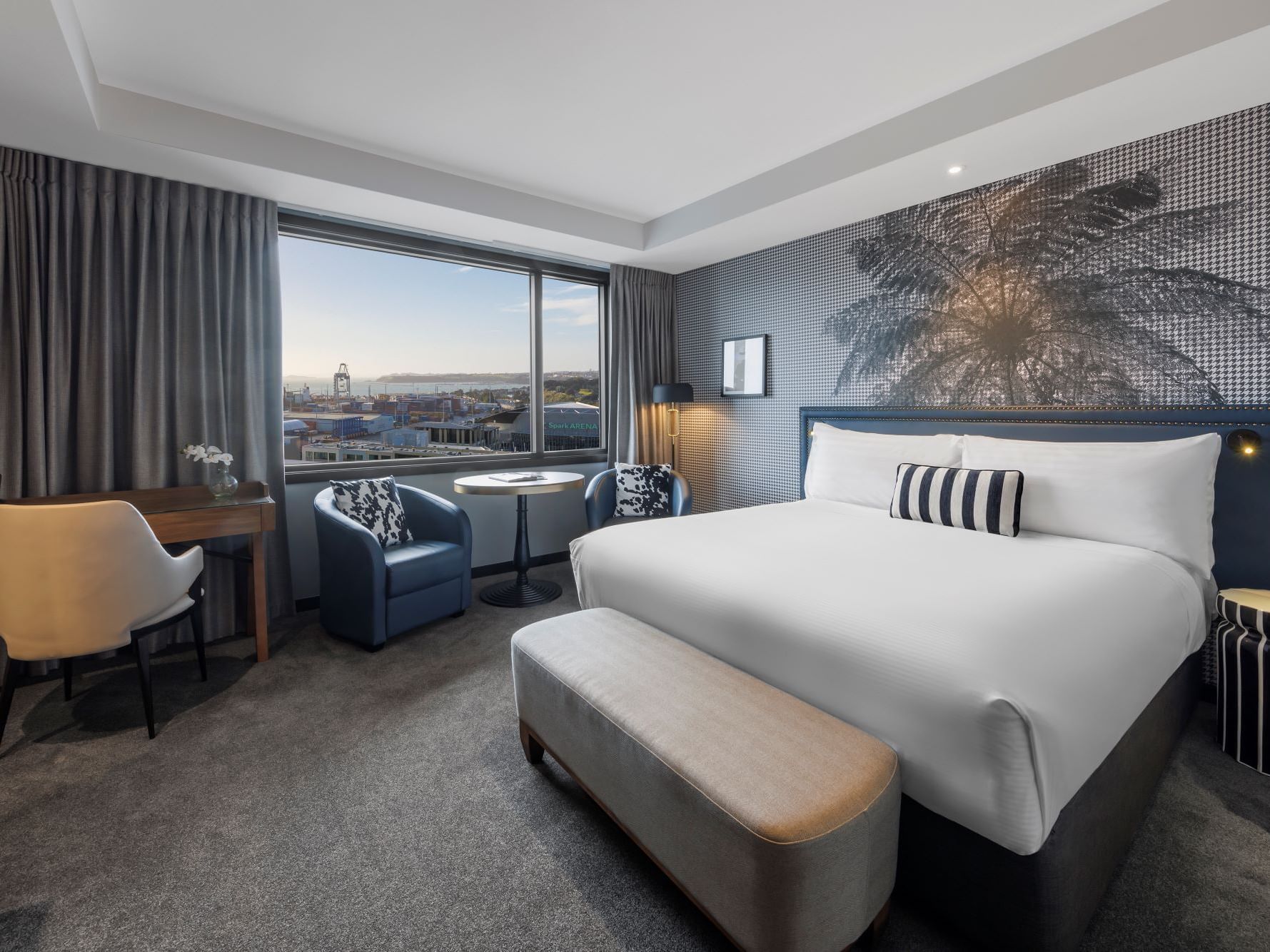
MID-RANGE / WATERFRONT
My practical pick for this route. Its Quay Street location puts the downtown ferries and waterfront close by, making a Waiheke start especially straightforward.
VALUE / CENTRAL
A comfortable base on the eastern side of downtown, convenient for Britomart without paying for facilities you may barely use on a fast road trip.

Read next: My complete Auckland itinerary has much more detail if you arrive a day or two before this road trip starts.
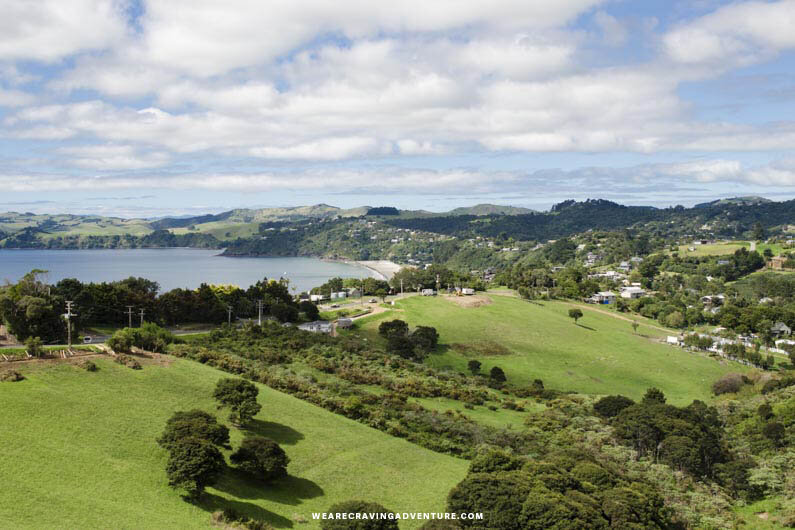
Day 2 – Waiheke Island or Piha
Option 1: Auckland → Waiheke Island by ferry | approximately 40–45 minutes each way
Option 2: Auckland → Karekare Falls → Piha | approximately 40 km and 45–60 minutes of driving, plus the Karekare detour
Book ahead: Waiheke food and wine tour or rental car for Piha and the road trip
Sleep: Waiheke Island, Piha or Auckland
Today comes with a genuinely difficult choice. Waiheke gives you wine, beaches and a long lunch without any driving. Piha gives you black sand, waterfalls and the first proper taste of New Zealand’s wild west coast. Both are excellent; they simply create very different days.
Option 1: Waiheke Island
Waiheke is the more expensive option, but it is the one I would choose if you are happy to splurge. I love wine, I love islands and I am very easily convinced by a vineyard with a sea view, so this day was never going to be a hard sell for me.
Take a morning ferry from downtown Auckland. The crossing usually takes around 40–45 minutes, and booking the Waiheke fast-ferry pass in advance removes one job from the morning.
Start around Oneroa, then choose between the beach and the vineyards. Onetangi is the island’s best-known long sandy beach, while Oneroa is easier if you want cafés, shops and a swim without moving far from the ferry route.
Let Somebody Else Handle the Wine Route
Waiheke has plenty of wineries, but they are scattered across a hilly island. A small-group tour makes much more sense than spending the day decoding bus timetables between tastings. The Waiheke food and wine tour is my first choice because it keeps the group small and combines several tastings with the island scenery.
If you prefer more freedom, use the Waiheke hop-on hop-off bus. I would include Tantalus Estate if it works with your route; it covers both very good wine and craft beer. Finish near Onetangi Beach with a drink and sunset before either staying on the island or catching the ferry back to Auckland.
Where to Stay on Waiheke
Staying overnight turns Waiheke into a much more relaxed day. Look around Oneroa for easy ferry access or Onetangi for the beach. Compare Waiheke Island accommodation.

Option 2: Piha
Have breakfast in Auckland, collect your vehicle and start the road trip properly. I use Discover Cars to compare rental-car prices, but I still check the mileage allowance, insurance excess and whether the company permits every road on my itinerary before paying.
Stop at Karekare Falls
Detour to Karekare Falls before Piha. The waterfall is only a short walk from the road, so it adds far more scenery than effort to the day. There is a pool below the falls, but I would check the current local water-quality notice before deciding to swim.
Piha Beach
Piha is a tiny coastal settlement known for its surf, black sand and spectacular sunsets. Lion Rock divides the beach and gives the whole place the moody, rugged look that New Zealand’s west coast does so well.
The surf here is powerful. If you go in, swim between the lifeguard flags and do not treat Piha as the place to teach yourself how rip currents work. Otherwise, walk the beach, watch the surfers and find a comfortable spot for sunset.
Where to Stay in Piha
Piha Domain Motor Camp is the practical campervan option near the beach. For a room, Piha Beachstay Accommodation is the value choice, while Romantic Piha is the one to check for more space and a sea view.
My pick: Choose the Waiheke food and wine tour if vineyards and a long lunch sound like a good use of a day. Choose Piha if beaches, waterfalls and getting behind the wheel immediately matter more.

Day 3 – Paihia
Route: Piha or Auckland → optional Muriwai stop → Paihia → Waitangi Treaty Grounds
Drive: Approximately 263 km and 3 hours 50 minutes from Piha before stops; allow around 3 hours from central Auckland
Book ahead: Waitangi Treaty Grounds day pass and, if you want the big arrival, an up-to-20,000-foot skydive
Sleep: Paihia
Today you drive to Paihia in the winterless north. This lively little town is the gateway to the Bay of Islands and the best base for the next two nights.
Optional: Muriwai
If you chose Waiheke and stayed in Auckland, Muriwai makes a scenic west-coast detour before turning north. The gannet colony is busiest from roughly August to March, when the cliffs fill with nesting birds. Outside the breeding season, the black-sand coast is still impressive, but I would not add the detour solely for an empty colony.
Track work and temporary closures do happen around Muriwai, so check the current access before driving out. If the viewpoint is closed, skip it and keep the time for Paihia.
Arrive by Falling Out of the Sky
If skydiving has been sitting on your list, the Bay of Islands is a ridiculous place to do it. Operators offer jumps from several heights, with the biggest option climbing to 20,000 feet and giving you views over the islands and the long curve of Northland’s coast before the door opens.
The 20,000-foot Bay of Islands skydive is the full-send option. Book it early enough in the day to leave room for a weather delay and Waitangi afterward.

Waitangi Treaty Grounds
Waitangi is one of the most important historical places in New Zealand. This is where representatives of the British Crown and many Māori rangatira first signed Te Tiriti o Waitangi in 1840, and it deserves more than a quick photo on the way to dinner.
A current day pass includes access to the two museums, the Treaty House, the carved meeting house and the ceremonial waka, along with a guided experience and cultural performance. Allow at least three hours if you want the visit to feel useful instead of rushed.
Book the Waitangi Treaty Grounds day pass and choose the guided-tour and performance times before filling the rest of the afternoon.

Dinner and Drinks in Paihia
Spend the evening around the waterfront or Kings Road. Paihia is compact, so after a long drive I would park once, find dinner and wander rather than build another checklist of bars that may have changed by the time you arrive.
Day 3 booking order:
1. Reserve your Bay of Islands skydive if that is a priority.
2. Choose times for the Waitangi day pass.
3. Keep Muriwai optional rather than arriving at Waitangi as the gates close.
Where to Stay in Paihia
Stay for two nights so you can leave the luggage alone during tomorrow’s cruise. Being within walking distance of the waterfront is worth paying a little more for when you have an early departure.
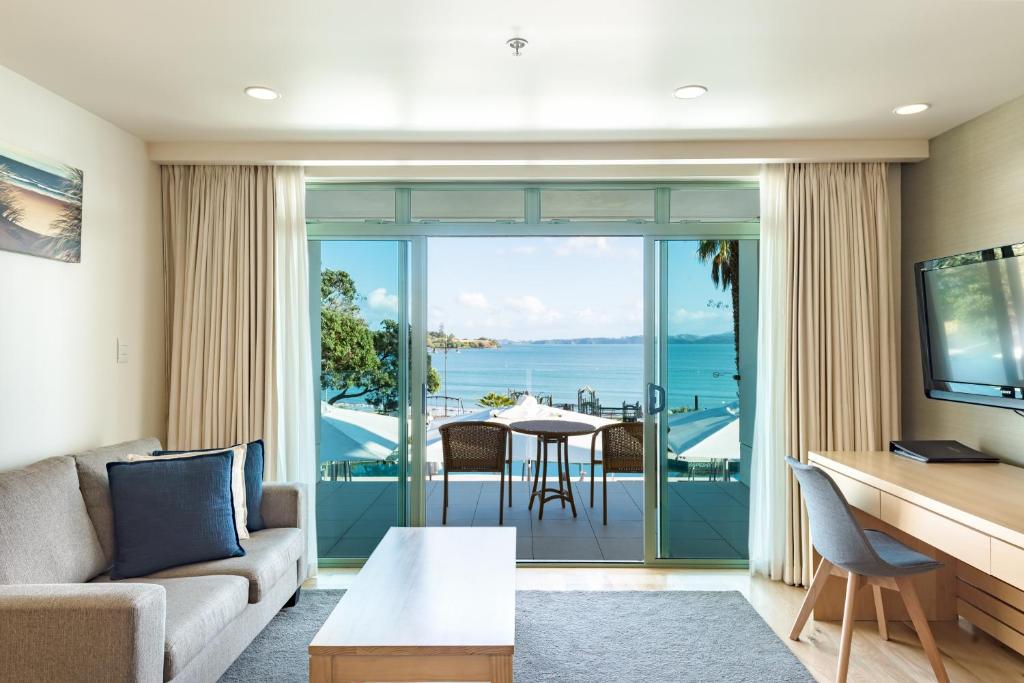
LUXURY
A waterfront splurge within easy reach of Paihia’s tour departures.
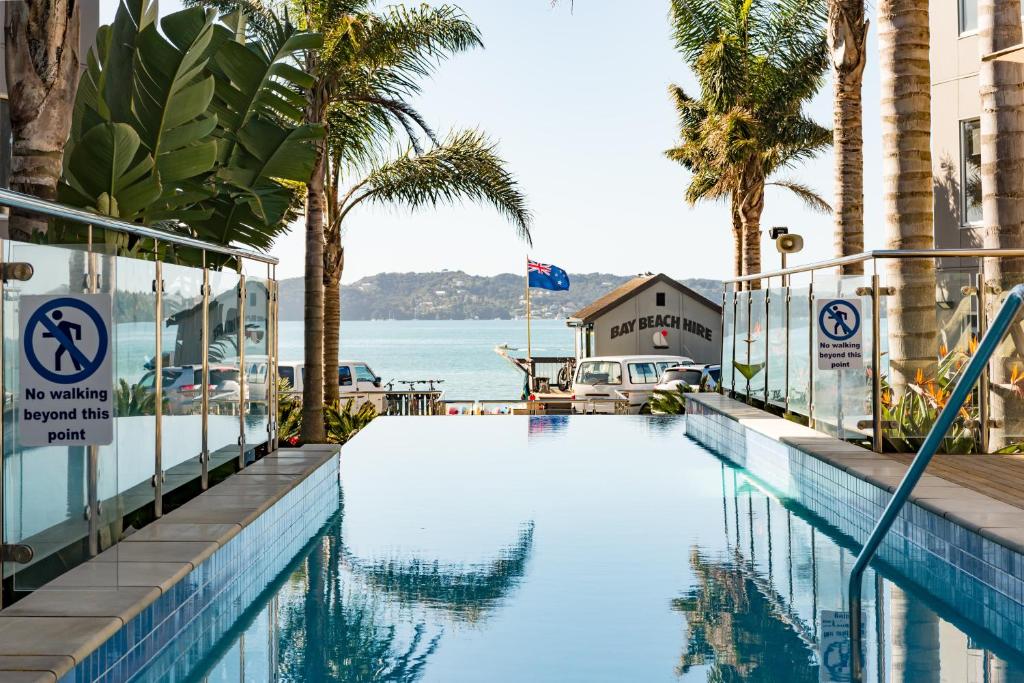
APARTMENT
Spacious waterfront apartments with useful self-catering facilities.
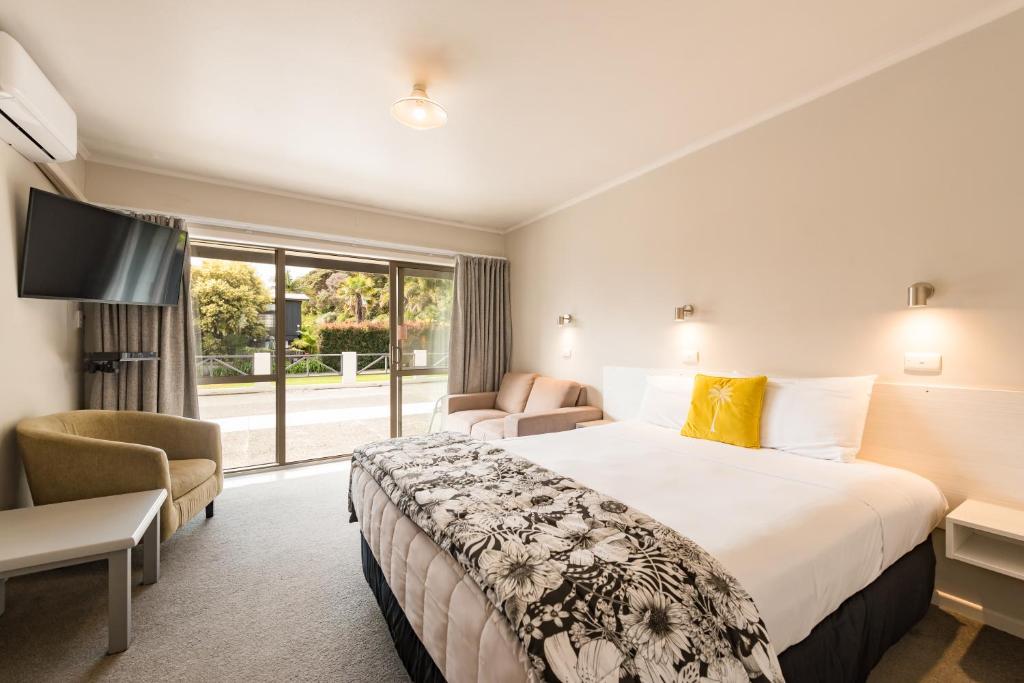
VALUE
A friendly, convenient option within walking distance of central Paihia.
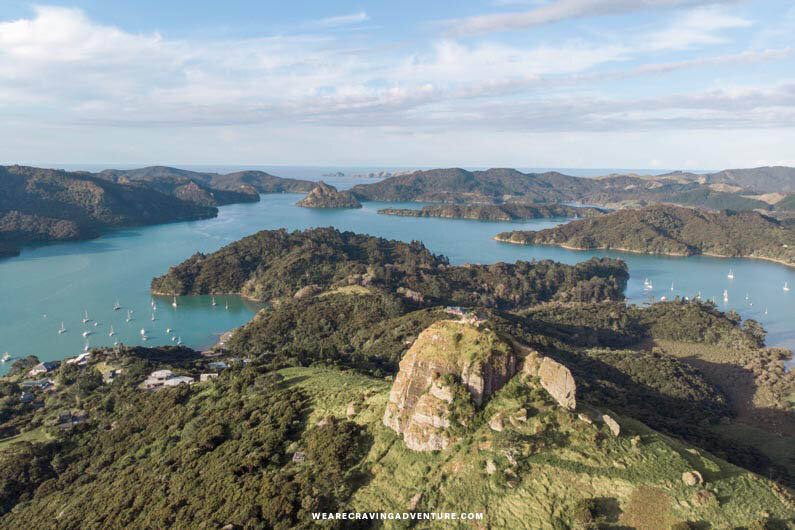
Day 4 – Bay of Islands
Route: Paihia → Bay of Islands sailing cruise → Paihia
Book ahead: Bay of Islands Island Hopper sailing cruise
Drive: None, apart from getting to your departure point
Sleep: Paihia
Leave the car parked today. The Bay of Islands has more than 140 subtropical islands, and staring at them from the Paihia waterfront would rather miss the point. Get on the water and make a full day of it.
I would choose a small sailing trip over a large sightseeing boat. The Island Hopper sailing cruise lasts around six hours and keeps the group small. It includes time to sail between the islands, stop at a wildlife sanctuary, swim, snorkel, paddleboard and get off the boat for a proper island break rather than simply photographing everything through a window.
Bring swimwear, a towel and something warm for the sail back. Even in summer, a wet swimsuit and sea breeze can make the return feel much cooler than the beach stop.
You may see dolphins, penguins, rays or other marine life, but no responsible operator can promise wildlife on cue. Swimming with bottlenose dolphins is no longer permitted in the Bay of Islands, so treat any sighting as a bonus rather than the purpose of the day.
Book This Before You Reach Paihia
The Bay of Islands Island Hopper sailing cruise is my clear first choice for Day 4. Barefoot Sailing keeps the experience intimate, combines active and relaxed stops, and avoids spending a beautiful day shoulder-to-shoulder on a huge boat.
Stay at the same Paihia accommodation tonight. Tomorrow starts early and involves much more driving.
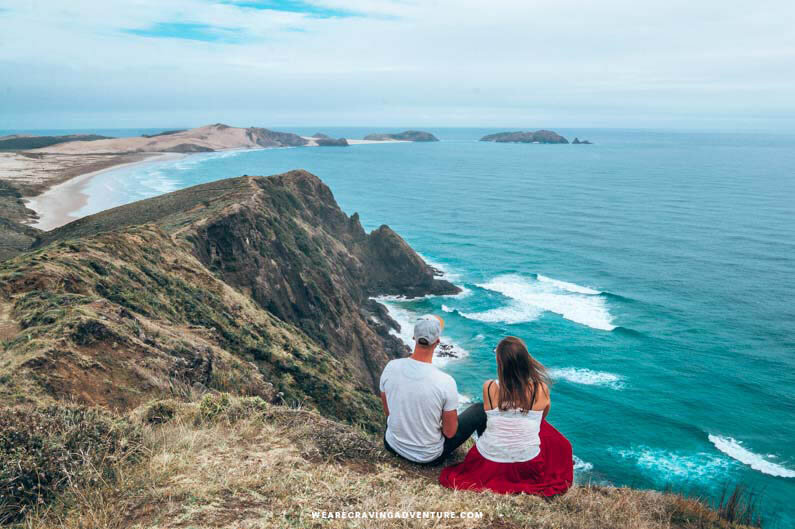
Day 5 – Cape Reinga
Route: Paihia → Cape Reinga → Te Paki Giant Sand Dunes → Kaitaia
Drive: Approximately 331 km and 4 hours 40 minutes on the sealed-road route, before stops
Book ahead: Cape Reinga and Ninety Mile Beach day tour if you want the beach-driving experience
Sleep: Kaitaia, or Tapotupotu if you have a campervan and do not mind extra driving tomorrow
Today you head to the top of New Zealand. Cape Reinga is not the island’s literal northernmost point, but it is the iconic public viewpoint at the end of the road and one of the most memorable landscapes in Northland.

Ninety Mile Beach
Ninety Mile Beach runs along the western side of the Aupōuri Peninsula. It is officially a highway, but that does not mean your rental company allows you to drive it. Many rental agreements specifically exclude the beach, and tides can strand vehicles surprisingly efficiently.
If driving along Ninety Mile Beach is part of the dream, book the Cape Reinga and Ninety Mile Beach day tour from Paihia. It is a long day, but somebody else handles the beach, tide and driving while still including Cape Reinga and Te Paki.
If you are self-driving, stick to the sealed route to Cape Reinga. You still get the lighthouse, dunes and long northern landscapes without arguing with an insurance company about how the car ended up full of saltwater.

Cape Reinga
From the car park, follow the paved path down to the lighthouse. On a clear day you can see the meeting of the Tasman Sea and the Pacific Ocean in the streaks, swells and changing colour offshore.
Te Rerenga Wairua is also deeply significant in Māori tradition as the place where spirits depart the land. Take your time, read the interpretation and let the headland be more than another pin on the map.
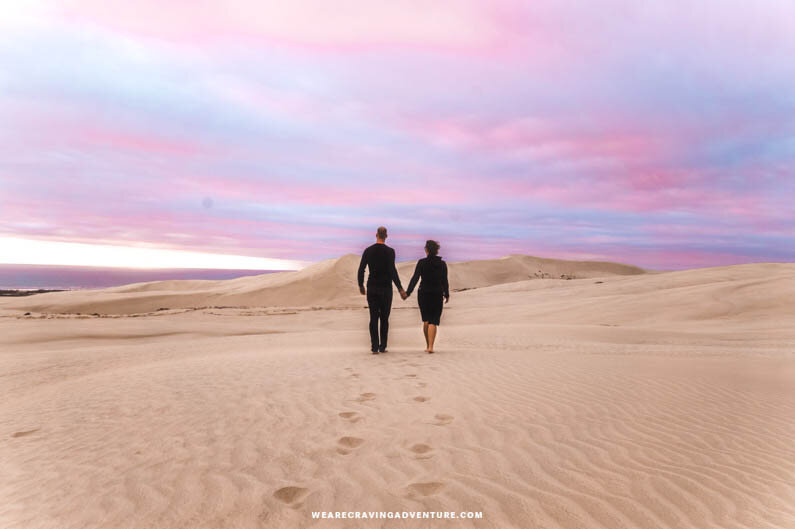
Te Paki Giant Sand Dunes
Stop at the Te Paki Giant Sand Dunes on the way back south. The dunes rise to around 150 metres, and sandboarding them is every bit as fun and undignified as it sounds. You can usually hire a board near the entrance; a bodyboard with a smooth plastic underside works far better than an inflatable beach toy.
The climb is the hard part. I made it almost all the way to the bottom on my best run, so Tom decided he had to beat me. He launched himself with far too much confidence and ended the attempt by diving face-first into the sand. Competitive dignity did not survive, but the video was excellent.
Tour or Self-Drive?
Self-drive if you want to linger at Cape Reinga and are happy to stay on sealed roads. Book the Cape Reinga and Ninety Mile Beach tour if the beach drive matters or you would rather not spend ten hours concentrating behind the wheel.
Where to Stay in Kaitaia
Kaitaia is the sensible overnight base because tomorrow is already a long driving day. Beachcomber Lodge & Backpacker is the better budget option, while Orana Motor Inn is a straightforward motel base with parking.
Campervan travellers can stay at the remote DOC campsite at Tapotupotu Bay. It is a beautiful place to wake up, but check the current campsite listing and booking requirements before setting off. Staying there also adds roughly another hour and a half to tomorrow’s drive compared with sleeping in Kaitaia.
Day 6 – Waipoua Forest and long drive
Route: Kaitaia → Hokianga ferry → Waipoua Forest → Tokatoka Peak → Auckland
Drive: Approximately 348 km and 5 hours 30 minutes, plus the ferry and stops
Check before leaving: Hokianga ferry timetable and current Waipoua walking-track access
Sleep: Auckland
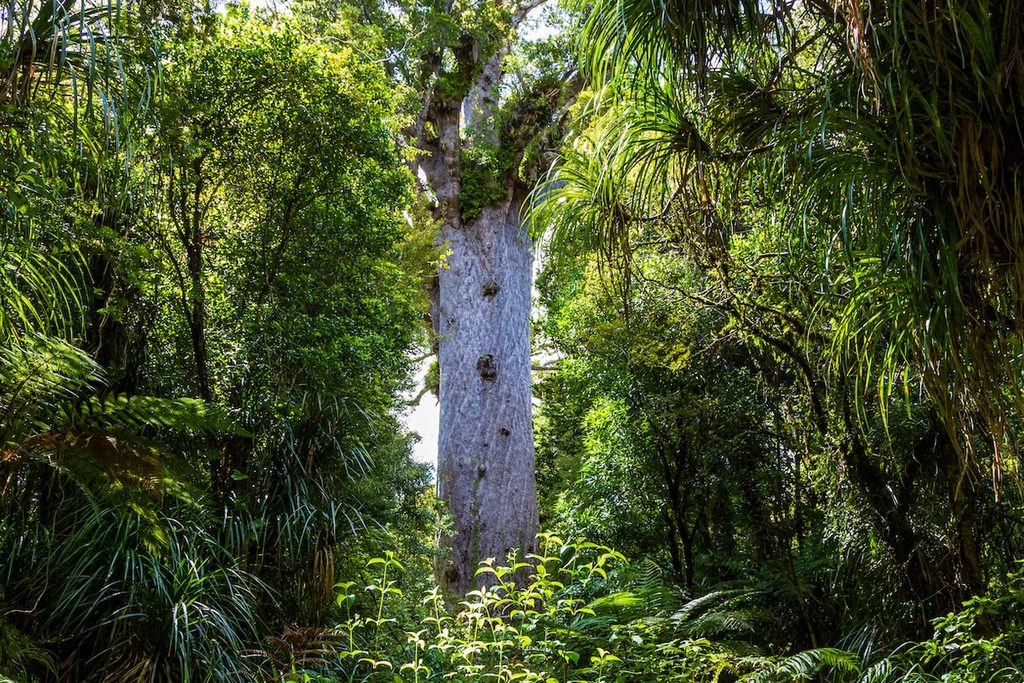
Today you walk among the ancients in Waipoua Forest. Some of these kauri were already enormous long before the first Europeans arrived in New Zealand, and even photographs do a poor job of explaining their scale.
Take the Hokianga Ferry
From Kaitaia, drive toward Kohukohu and take the vehicle ferry from The Narrows across the Hokianga Harbour to Rawene. The crossing takes around 15 minutes and saves a sizeable loop by road. It is a small ferry with a set timetable, so check the day’s schedule before leaving Kaitaia rather than arriving two minutes after it sails.
Waipoua Forest
Start with Tāne Mahuta, the largest known living kauri. It stands about 51.2 metres tall with a trunk girth of almost 14 metres, and the short approach through the forest makes the first glimpse feel even bigger. The walk is currently open daily from 9 am to 3 pm.
Te Matua Ngahere, the second-largest living kauri by volume and an extraordinarily broad tree thought to be more than 2,000 years old, would normally be the next stop. At my latest check in September 2026, however, the wider Kauri Walks area was closed for a major boardwalk upgrade.
DOC expects Te Matua Ngahere and Four Sisters to reopen in late October 2026, so check the current access before you arrive and add Te Matua Ngahere if the new walk is open.
For now, this route only relies on Tāne Mahuta. Use whichever formed tracks are officially open, clean your shoes at the kauri dieback stations and stay off the roots.
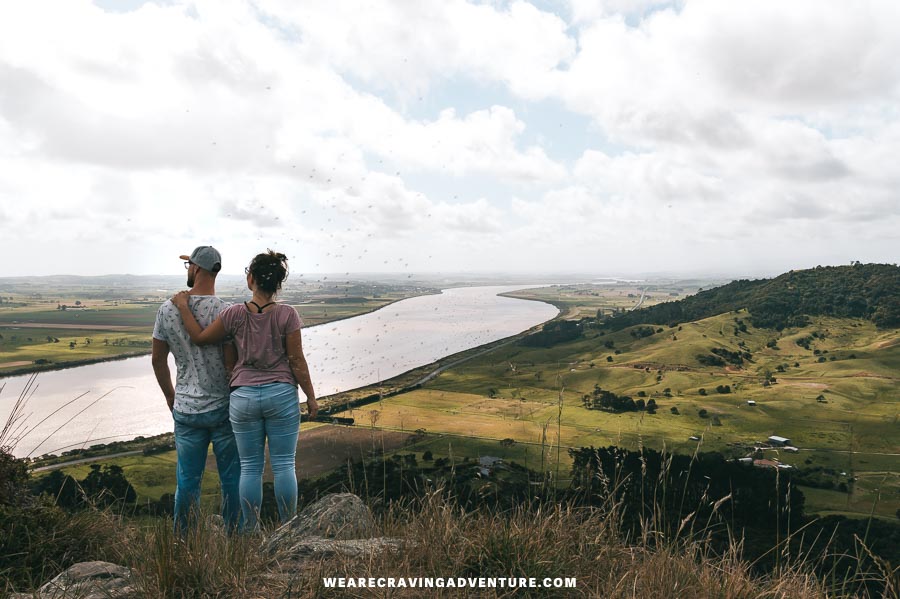
Tokatoka Peak
Continue south to Tokatoka Peak, an old volcanic plug rising abruptly above the farmland. The walk takes roughly 20 minutes each way. It is short and steep rather than strenuous for most reasonably fit people, although the final rocky section involves a little scrambling and is much nicer in shoes with decent grip.
The view across the Wairoa River and the patchwork of fields is fantastic. Bring lunch and eat near the top if the wind is not trying to steal it, then settle in for the drive back to Auckland.
Book tonight before the next leg: If you have not already reserved it, compare your remaining dates with New Zealand rental-car prices. For Auckland, stay at the same hotel as Day 1 rather than moving luggage across the city for one night.
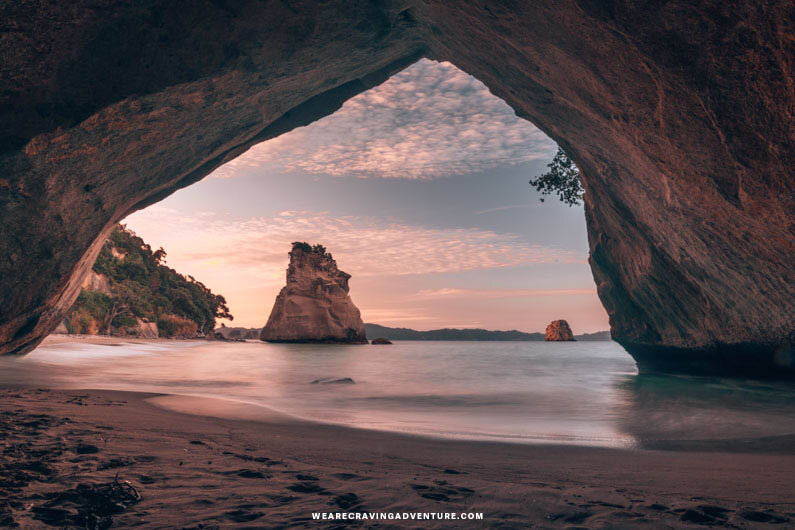
Day 7 – Cathedral Cove
Route: Auckland → Thames → Hahei → Cathedral Cove → Whangamatā
Drive: Approximately 237 km and 3 hours 25 minutes, before stops
Book ahead: Cathedral Cove boat tour if you prefer the water route
Sleep: Whangamatā
Today you get to sleep in—yay! With less than four hours of driving and one main sight on the schedule, this is a much calmer day. After breakfast, drive south through Thames and onto the Coromandel Peninsula.

READ NEXT:
Coromandel Peninsula New Zealand
Discover the best things to do on the Coromandel Peninsula
The Coromandel might be my favourite part of the North Island. It has forested hills, absurdly pretty beaches and roads that twist around the coast just enough to make every distance take longer than expected. Fortunately, today has room for that.
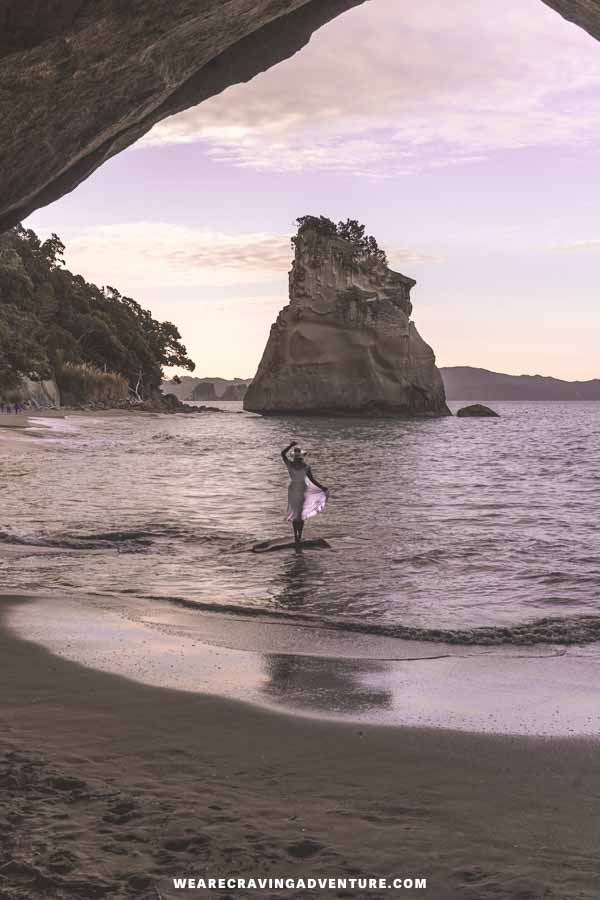

Cathedral Cove
The walking track to Cathedral Cove is open again, but access no longer works exactly as it did in older guides. There is no visitor parking at the Grange Road trailhead, and the old direct connection from Hahei Beach to that trailhead remains closed. Park at the Hahei Visitor Car Park and use the seasonal shuttle or walk uphill to the start. A paid access option from Lees Road may also be available.
Allow roughly 45–60 minutes each way from the trailhead, depending on your pace. The rebuilt route has plenty of steps and a few steep sections, but it is a normal coastal walk rather than some epic expedition. The side tracks to Gemstone and Stingray bays remain closed, so keep to the signed route.
The beach is prettiest around lower tide, when there is more room beneath the huge natural arch. Swim, picnic and take your time. Cathedral Cove is famous for a reason, even if summer midday is not the moment to expect solitude.
Prefer to See It From the Water?
The Hahei Explorer Cathedral Cove boat tour takes around an hour and explores the cliffs, caves and marine reserve from the water. It is a good alternative if you do not want the walk or a good addition if the coast itself interests you as much as the famous arch.
Stay for Sunset
I visited on a summer weekday and stayed until sunset. By the time the light turned soft, the day-trippers had disappeared and I had the cove almost entirely to myself. If you do the same, bring a torch for the walk back and continue to Whangamatā afterward.
Walk or boat? Walk if you want time on the beach and beneath the arch. Book the Cathedral Cove boat tour if you want sea caves, coastal geology and a completely different view of the marine reserve.
Where to Stay in Whangamatā
Sleep in Whangamatā tonight so you are ready for the next morning’s paddle to Whenuakura, better known as Donut Island.
San Marco Luxury Beachside Villa
SPLURGE NEAR THE BEACH
A full villa with sea views, generous living space and a private hot tub close to Whangamatā Beach.
UPPER-END & PEACEFUL
Elegant and set in a quieter location with wide Pacific views and beautiful gardens. This is my pick for somewhere special outside the centre of town.
PRACTICAL & CENTRAL
A comfortable motel close to the beach and town. The easy-value choice when you want a practical base before Donut Island.
Read next: Use my Coromandel road-trip itinerary if you have time to slow this section down, and read the complete Donut Island guide before tomorrow’s paddle.

Day 8 – Donut Island and Hobbiton
Route: Whangamatā → Whenuakura/Donut Island → Ōmanawa Falls → Hobbiton Movie Set → Redwoods – Whakarewarewa Forest → Rotorua
Driving: Approximately 250 km and 3 hours 45 minutes, plus the Ōmanawa Falls detour and local driving
Book ahead: Donut Island kayaking, Hobbiton Movie Set tour and, if you want the night experience, Redwoods Nightlights Treewalk
Sleep: Rotorua
This is one of the fullest days of the road trip, but it also strings together three completely different North Island experiences: paddling into a collapsed volcanic island, walking through the Shire and finishing beneath enormous redwoods. Start early and book Hobbiton before arranging the rest of the day, because that fixed departure time is the part you cannot shuffle around.
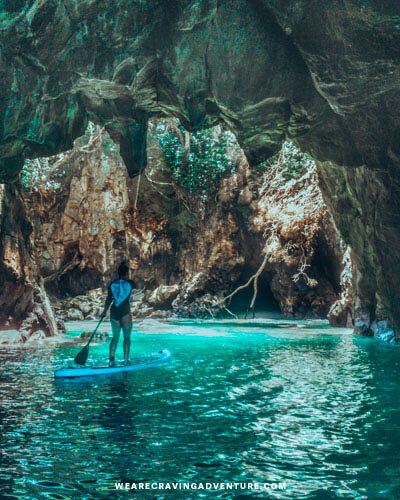

Paddle to Whenuakura/Donut Island
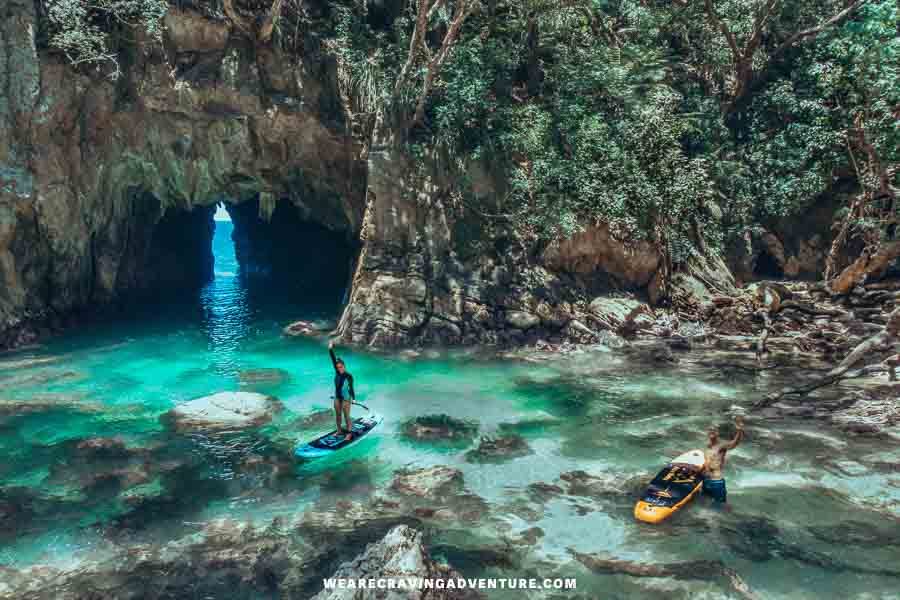
Whenuakura Island, better known as Donut Island, is an old volcanic blowhole that collapsed and filled with seawater. From the beach it looks like another bush-covered island, but a narrow cave on its southeastern side leads into an extraordinary enclosed cove with a tiny surf beach hidden inside.
I first spotted a poster for Donut Island while already driving towards Tauranga, immediately turned around and went back to Whangamatā. I paddled out on a stand-up paddleboard despite two people at the rental place warning me about the offshore wind.
Reaching the island took about half an hour; getting back took well over an hour. The cave entrance looked like the mouth of a beast, and emerging into that secret cove remains one of my favourite experiences in New Zealand. The beer and burger afterwards were equally deserved.
I did it independently then, but now I would book the guided Donut Island kayak trip. It takes care of the equipment and local conditions, and you still get the fun part: paddling through the cave into the cove. Trips depend on the sea and wind, which is normal for an ocean activity, so leave enough flexibility to accept a reschedule or refund if the operator cannot run.
Whenuakura is a protected wildlife sanctuary and culturally significant place. Stay in the water, do not land on the little beach, and take nothing but photos. Allow around two hours for the guided trip, then grab breakfast or an early lunch in Whangamatā before getting on the road.
Read next: My complete guide to paddling to Donut Island explains the launch point, cave entrance and what the experience is actually like.

Take the Detour to Ōmanawa Falls
Ōmanawa Falls was track closed when I was last in this part of the North Island, but the new public access has now opened. I would absolutely take the detour and have a look. The track leads down through native bush to three purpose-built viewing platforms, with the lowest looking across the vivid blue pool and waterfall.
This is no longer an improvised scramble to the water. There are several hundred stairs between the main lookouts and swimming is not permitted, so come for the view rather than packing your togs.
Budget 45–60 minutes if you want to reach the lower platform without rushing. If your Donut Island trip runs late, skip this detour and protect the Hobbiton booking.
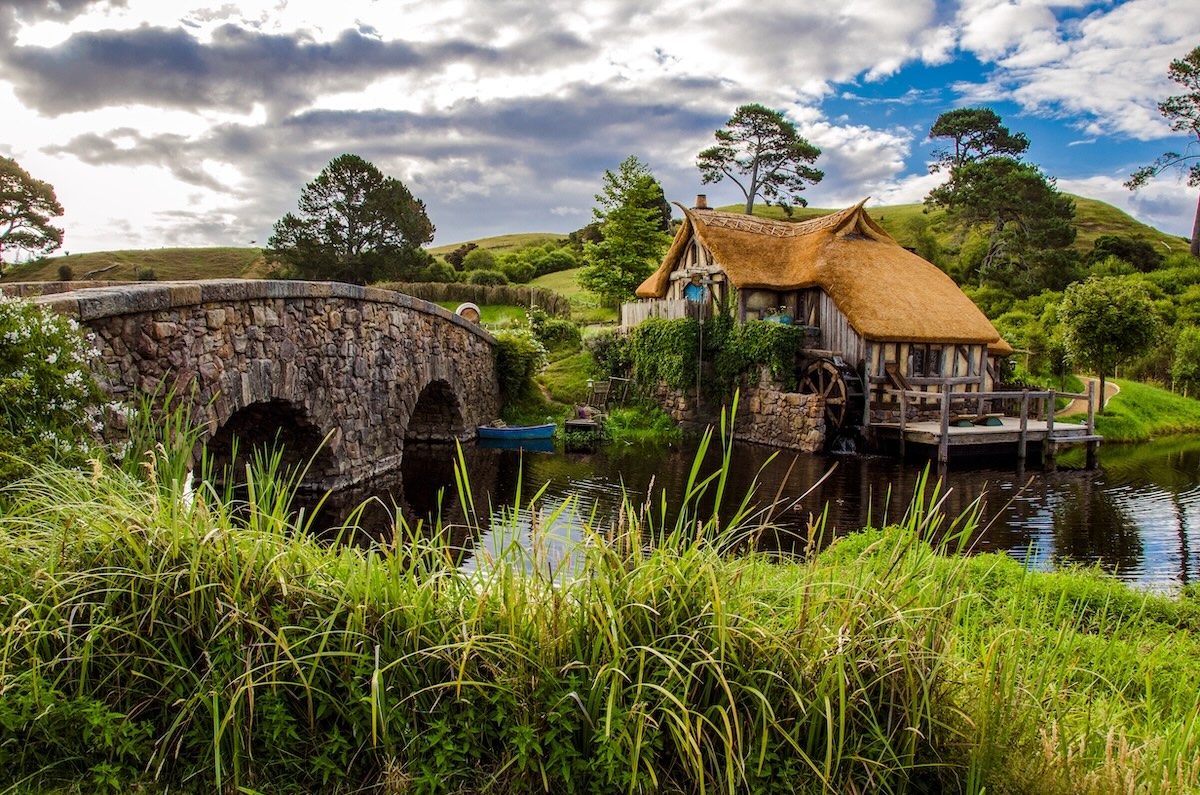
Visit the Hobbiton Movie Set
Continue to Matamata for the Hobbiton Movie Set. If you are a Lord of the Rings fan, this is probably already near the top of your New Zealand bucket list. If you have never cared about hobbits, there is no need to force it—spend longer at Donut Island and Ōmanawa Falls instead.
The guided experience now takes around 2.5 hours, including the bus from The Shire’s Rest. It passes 44 Hobbit Holes, Bag End and the Green Dragon Inn, and newer tours also enter a fully furnished Hobbit Hole interior. That last addition makes the set feel more complete than it did when I visited.
I will be honest: my tour felt rushed, and there were moments when I wanted everybody to stop herding and let me look around. But the landscape and details are brilliant, and I still think fans would regret driving past. Tickets are timed and regularly sell out, so book the Hobbiton tour before locking in Donut Island.
Read next: These Lord of the Rings filming locations will help if you want to find more Middle-earth scenery during the road trip.

Finish at the Rotorua Redwoods
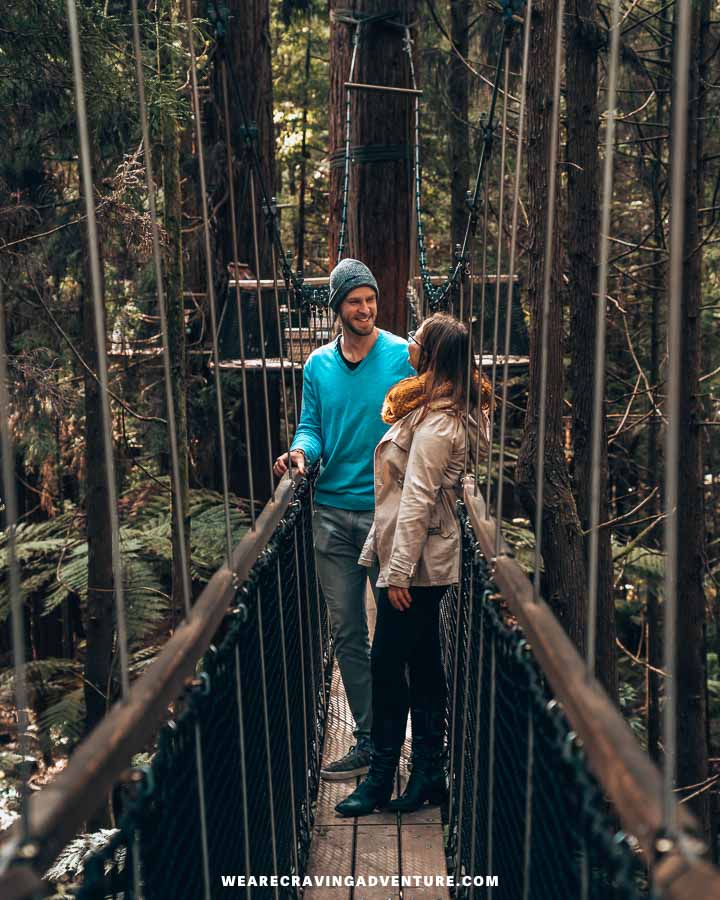
Drive to Rotorua and finish in Redwoods – Whakarewarewa Forest. The forest trails on the ground are free and beautiful, especially in the late afternoon. The paid Treewalk lifts you onto platforms and 28 suspension bridges among the trunks, while the Nightlights experience illuminates the forest with lanterns after dark.
On this itinerary I would check into the hotel, eat, then return for the Redwoods Nightlights Treewalk. If the day has already been long enough, stay at the hotel and move the Treewalk to tomorrow and do it during the day, before the Maori evening.
Book Day 8 in This Order
- Lock in first: Hobbiton Movie Set tour
- Best adventure: guided Donut Island kayaking
- Best evening add-on: Redwoods Nightlights Treewalk
Where to Stay in Rotorua

UPPER MID-RANGE
A polished central hotel close to the lakefront, Eat Streat and Kuirau Park. Choose it when location and an easy return after dinner matter most.

BOUTIQUE
A smaller design-led stay right in town, with a pool and easy access to restaurants. This is my pick for something with more personality.

VALUE / SELF-CATERING
A practical central motel with kitchen facilities and thermal-heated pools. It works particularly well when you want space and an easy breakfast.

Day 9 – Rotorua
Plan: Kaituna River rafting → lunch around Eat Streat → Kuirau Park → one geothermal spa → Te Pā Tū Māori cultural experience
Book ahead: Kaituna River rafting, Te Pā Tū evening experience and your chosen spa
Sleep: Rotorua
Rotorua is one of the most interesting places on the North Island: a city where steam escapes beside footpaths, Māori culture is part of everyday life and the air quite often smells like rotten eggs. You get used to the sulphur remarkably quickly, and I would not rush through. Today combines the best adventure I did here with a slower afternoon and an evening that became one of my Rotorua highlights.
Raft the Kaituna River
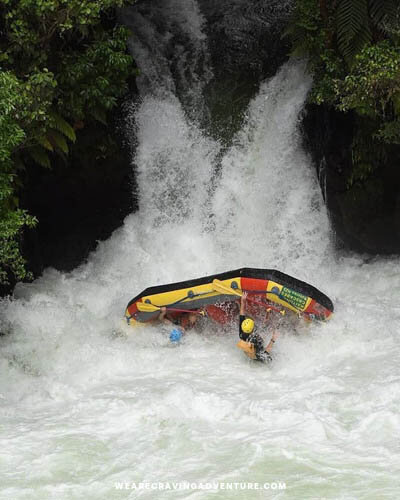
Start with the Kaituna River rafting trip. The headline is Tutea Falls, a seven-metre waterfall that you raft straight over, but the rapids, gorge and build-up are just as much fun as the drop itself.
The guides told me that roughly half the rafts flip on the waterfall. Mine did, and I would not change a thing. Tom flew out, everybody surfaced, the crew pulled the raft together and the whole ridiculous sequence became the funniest part of the morning. Expect to get very wet; that is rather the point.

The full activity takes around 2.5 hours once transport, equipment and the safety briefing are included. Wear swimwear, follow the guide’s instructions and leave cameras behind unless the operator provides a secure mount.

Lunch and Kuirau Park
Head back into Rotorua for lunch around Eat Streat, where it is easier to choose whichever menu and atmosphere appeal on the day than to over-plan another reservation. Then walk to Kuirau Park, a free geothermal park filled with steaming ground, bubbling mud and mineral-coloured water.
Kuirau is not a substitute for Wai-O-Tapu tomorrow—the scale and colours are completely different—but it is a great little reminder that Rotorua sits on a restless geothermal system. Stay on the paths and boardwalks; boiling mud is one of the few things that genuinely does not need testing.
Choose One Geothermal Spa
Do not try to visit three spas in one afternoon. Pick the experience that suits you:
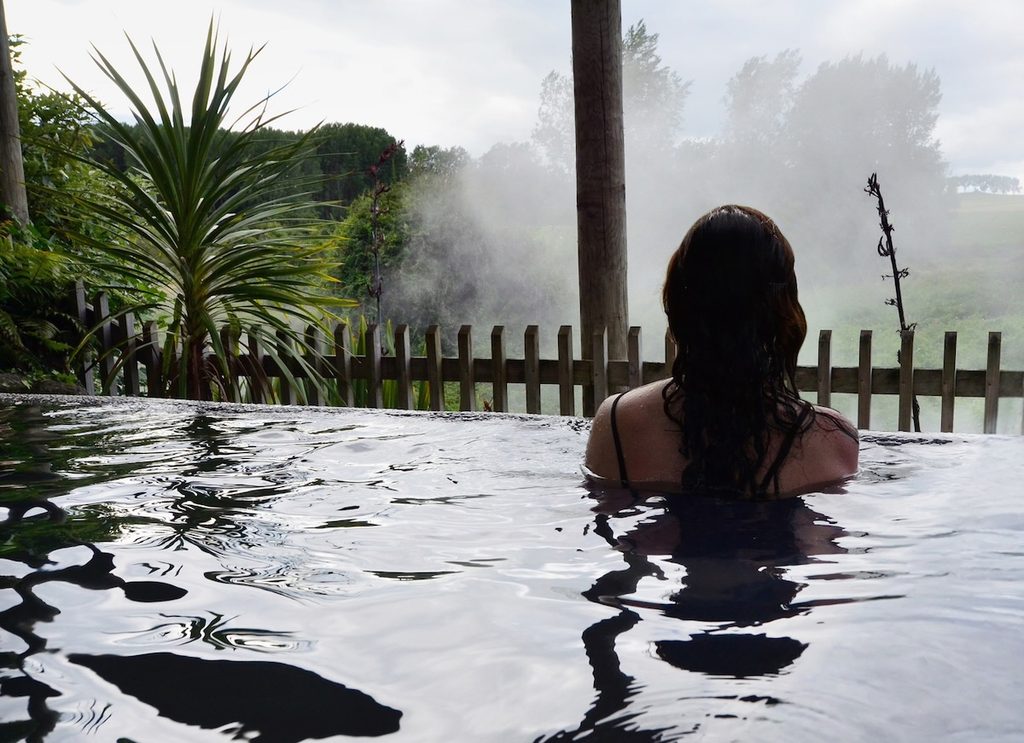
- Polynesian Spa: The easiest fit for this itinerary, with mineral pools overlooking Lake Rotorua. Book the Lake View Private Pool or Pavilion pools.
- Hell’s Gate: Choose this for the full mud-bath novelty and sulphur spa rather than lake views. It is outside central Rotorua, so allow extra driving. Book the Hell’s Gate mud bath and spa.


Spend the Evening at Te Pā Tū
I initially worried that a Māori cultural evening might feel overly touristy. Then I actually went to Te Pā Tū and loved it. The evening was interactive without being awkward, with storytelling, games on the bus, poi, haka, hands-on elements and far more context than a performance dropped into a restaurant. The food was excellent too.
My parents went to Mitai Māori Village and loved that experience as well, but Te Pā Tū is the one I can recommend from my own night there. It includes dinner and transport from selected Rotorua points, so it fits neatly after the spa.

READ NEXT:
Best Māori Villages & Cultural Experiences in Rotorua
Compare Rotorua’s Māori cultural experiences and choose the one that’s right for you
Book Your Rotorua Priorities
- Best adventure: Kaituna River rafting
- Best cultural experience: Te Pā Tū with dinner
- Best easy spa: Polynesian Spa
- Best mud-bath experience: Hell’s Gate
Stay in the same Rotorua accommodation as last night, so there is no packing or check-in to steal time from the day.
Read next: My Rotorua itinerary and guide to the best things to do in Rotorua cover more options if you add another night.

Day 10 – Wai-O-Tapu and Taupō
Route: Rotorua → Wai-O-Tapu → Taupō → Māori Rock Carvings cruise → Otumuheke Stream → Huka Falls → Waitomo
Driving: Approximately 235 km and 3 hours 15 minutes, plus local driving
Book ahead: Wai-O-Tapu admission and either the Māori Rock Carvings cruise or Huka Falls jet boat
Sleep: Waitomo for the standard 14-day route, or National Park if adding the optional Tongariro day below
Today follows the geothermal highway from Rotorua to Taupō before crossing to Waitomo. Leave Rotorua around 8 am if you want Wai-O-Tapu, a cruise and the hot stream without turning the final drive into a midnight mission.
Wai-O-Tapu Thermal Wonderland
Wai-O-Tapu is my first choice among Rotorua’s geothermal parks. It is compact enough for a road-trip morning but varied enough to deliver steaming craters, sulphur-yellow ground, vivid green water and the enormous orange-rimmed Champagne Pool. That pool alone is worth the stop.
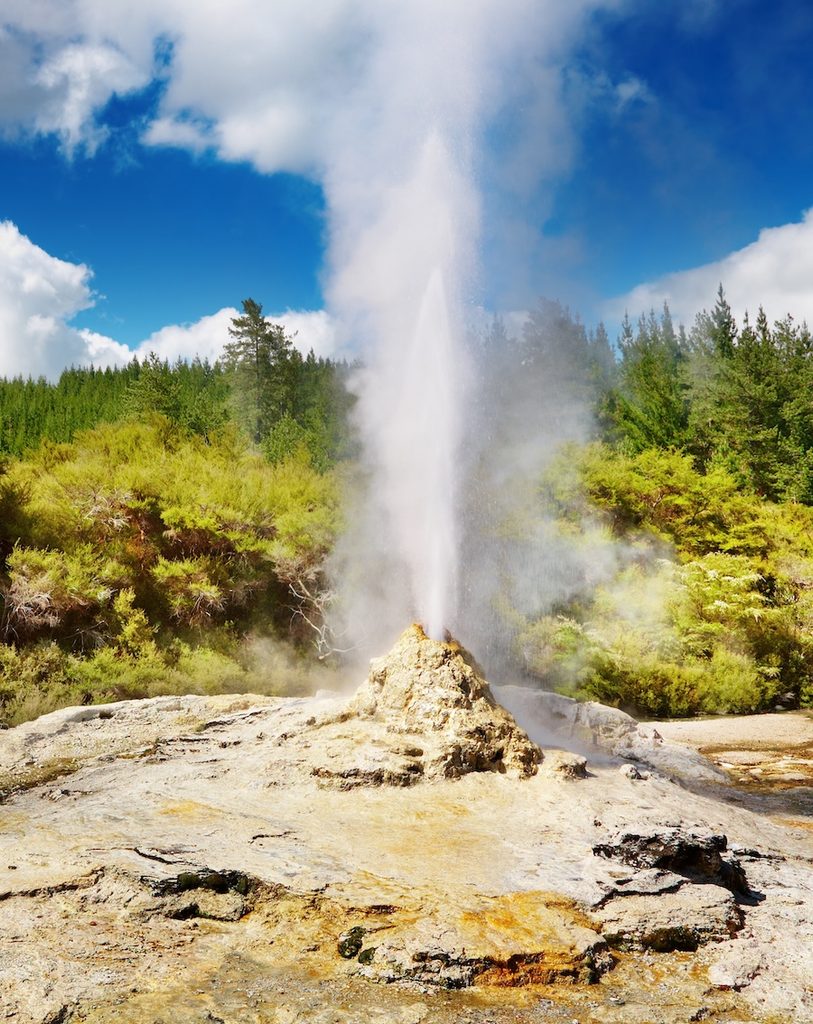
Allow roughly two hours for the main walking circuit. Lady Knox Geyser is presented separately at a set morning time and is triggered with soap. I found that part gimmicky, so I would not contort the entire morning to see it. The natural pools and craters are far more impressive.
If you want a quick wild soak on the way, Kerosene Creek is a short detour down Old Waiotapu Road. Keep your head above geothermal water and skip it if time is slipping; Otumuheke later provides another free hot-water stop with less route disruption.
READ NEXT:
Best Geothermal Parks in Rotorua
Compare Rotorua’s geothermal parks, from colourful pools and geysers to bubbling mud
Lunch in Taupō
Lake Taupō fills a vast volcanic caldera and covers around 616 square kilometres. Stop for lunch before the afternoon activity. Victoria’s is an easy central café, Huka Prawn Park has a riverside restaurant, and Lava Glass café works well if you also want to see the glass studio and sculpture garden.
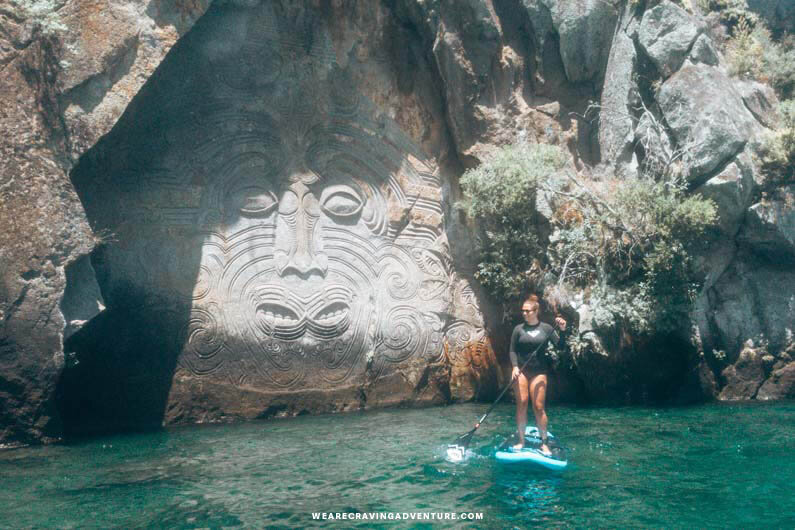
Cruise to the Māori Rock Carvings
The carvings at Mine Bay can only be reached from the water. The largest is a striking modern carving of Ngātoroirangi created by Matahi Brightwell and John Randall, surrounded by smaller figures in the cliff. A two-hour scenic cruise is the easiest way to see them and gives you a proper sense of the lake’s scale.
If speed sounds better than sitting on a boat, swap the cruise for the Huka Falls jet boat. It does not visit the carvings, but it races along the Waikato River to the base of Huka Falls. Choose one; fitting both into this day leaves no time to enjoy either.

Otumuheke Stream and Huka Falls
After the cruise, soak where the naturally hot Otumuheke Stream meets the Waikato River at Spa Thermal Park. It is free, easy to reach and far nicer than it sounds when described as sitting in a hot stream beside town. As with any geothermal water, keep your head above it.
Finish at Huka Falls, where the Waikato River is forced through a narrow channel before exploding into a churning blue pool. You do not need long here—the best viewpoints are close to the car park—but the power of the water is ridiculous.
For the standard two-week itinerary, continue to Waitomo and sleep there. This keeps tomorrow’s cave booking at the start of the day and avoids pretending that the Tongariro Alpine Crossing somehow fits into a 14-day route without costing a day elsewhere.
Book the Taupō Day
- My geothermal pick: Wai-O-Tapu admission
- Best relaxed option: Māori Rock Carvings cruise
- Best adrenaline alternative: Huka Falls jet boat
Where to Stay in Waitomo
BEST LOCATION
Simple chalets in Waitomo Village, convenient for an early cave tour and ideal when the only priority is making tomorrow effortless.
COUNTRYSIDE
A quieter rural option with more breathing room. Choose it if you would rather wake to countryside than stay directly in the village.
MOST UNUSUAL
Stay in a converted plane, boat, train carriage or Hobbit-style unit. It is quirky rather than luxurious, but nobody will forget where they slept.
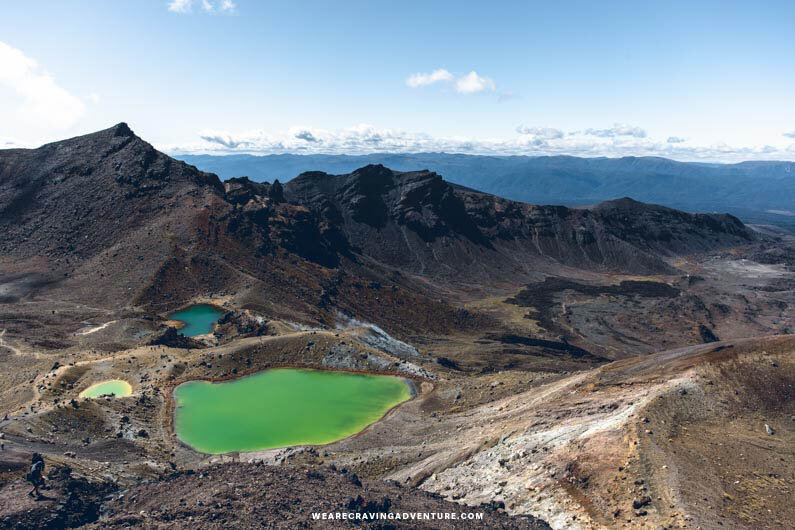
Optional Extra Day – Tongariro Alpine Crossing
Use this option if: You have 15 days, or you are willing to remove another full day from the route
Route: National Park → Tongariro Alpine Crossing → Waitomo
Walking: Roughly 20 km; allow a full day
Book ahead: Free DOC track booking plus a one-way Tongariro shuttle
Sleep: Waitomo after the hike

The Tongariro Alpine Crossing is one of New Zealand’s most famous day hikes, and rightly so. The route crosses old lava flows and exposed volcanic terrain beneath Mount Ngauruhoe before passing the intensely coloured Emerald Lakes and descending towards native forest.
It is roughly 20 kilometres and normally takes most people around 7–9 hours once photo stops and lunch are included. It is a long day with a sustained climb and a loose descent, but in normal summer conditions it is a straightforward hike for reasonably fit walkers rather than some heroic expedition.
The useful caveat is that it is an alpine route. Check the DOC status and forecast that morning, carry proper layers even if the valley is warm, and choose something else if DOC marks the crossing “Not Recommended Today.” Between May and October it becomes a winter alpine undertaking that needs the appropriate skills and equipment or a guide.
The walk is one-way. I would park near the finish and use the morning shuttle from Ketetahi to Mangatepopo. That leaves the car waiting when you finish, instead of making the entire hike about catching an afternoon bus. Complete the free DOC track booking as well.
The volcanic peaks and lakes are culturally significant to Ngāti Hikairo ki Tongariro. Stay on the marked track and do not touch or enter the lakes. After the hike, collect the car and drive to Waitomo, where you can use the accommodation options above.
Read next: My complete Tongariro Alpine Crossing guide covers the track, transport and what to pack.
Where to Stay Before the Tongariro Crossing
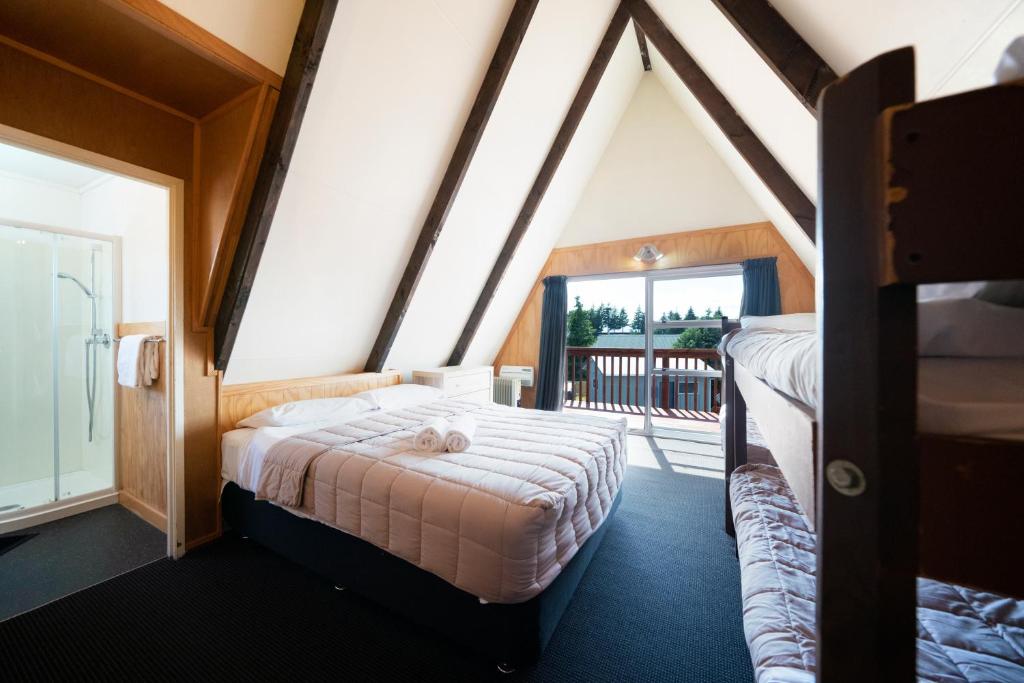
SOCIAL / GOOD VALUE
A relaxed hikers’ lodge in National Park village with shared spaces and an easy early start for the shuttle.

MOST PRACTICAL
Rooms and apartments close to the centre of National Park village. A dependable choice when location and a straightforward pre-hike night matter most.
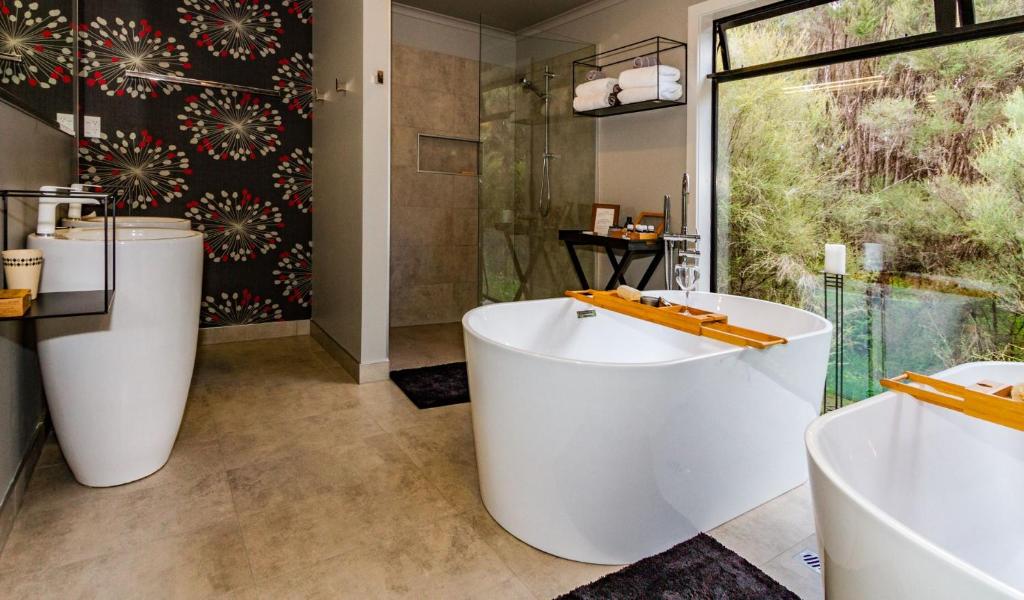
BOUTIQUE
A quieter, more private base near Ohakune with mountain views. It adds driving compared with National Park village, but makes the pre-hike night feel like a proper escape.

Day 11 – Waitomo to New Plymouth
Route: Waitomo → Mangapōhue Natural Bridge → Marokopa Falls → Kāwhia Hot Water Beach if the tide works → Three Sisters → New Plymouth
Driving: Approximately 330 km and 5 hours 15 minutes before stops
Book ahead: An early Black Labyrinth cave adventure or classic Waitomo Glowworm Cave tour
Tide: Check low tide at Kāwhia before setting the stop order.
Sleep: New Plymouth
This is the longest day of the route, but the stops are worth it: glowworms underground, a natural limestone arch, one of New Zealand’s most beautiful waterfalls, a hot-water beach and a coastline carved into sea stacks. Book the first sensible cave departure and keep moving afterwards.
Go Black-Water Rafting in Waitomo
Black-water rafting sounds as if somebody has put white-water rapids underground. In reality, much of the experience involves floating through dark cave passages in an inner tube, climbing over rocks and looking up at thousands of glowworms. When the lights go off, the ceiling looks like a sky packed with blue stars.
For this road trip I recommend the three-hour Black Labyrinth experience. The five-hour Black Abyss adds abseiling, a zipline and a waterfall climb, which sounds excellent, but it leaves very little daylight for the coast. Save that version for a slower trip.
If squeezing into a wetsuit and floating through a cave is not your idea of fun, take the classic Waitomo Glowworm Cave tour. It is shorter, gentler and includes the famous silent boat ride beneath the glowworms.
Mangapōhue Natural Bridge
Follow the Waitomo–Marokopa Road and stop at Mangapōhue Natural Bridge. A short boardwalk enters a limestone gorge beneath a 17-metre-high natural arch—the remnant of an ancient cave roof. The main viewpoint takes around 20 minutes return, so it delivers plenty of drama without derailing the day.
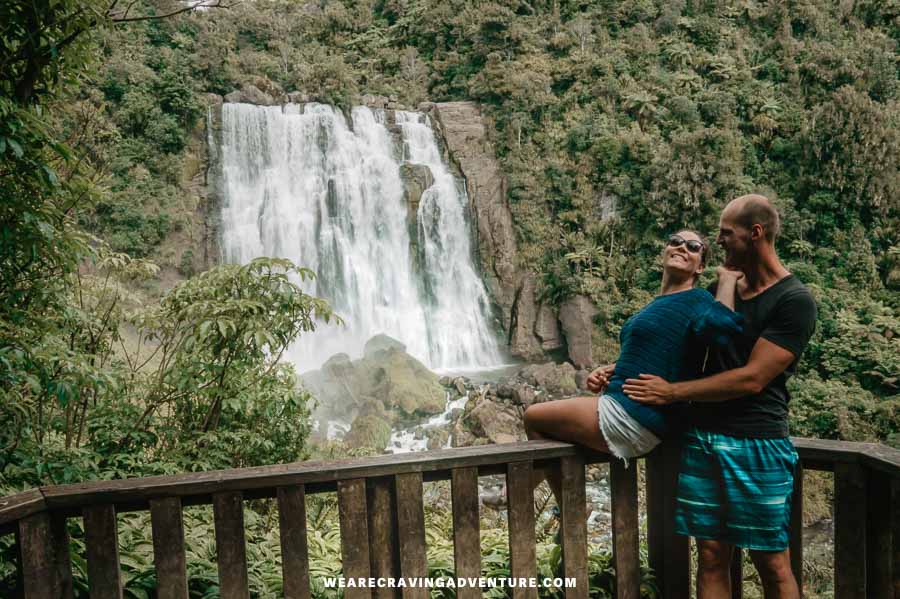
Marokopa Falls
Marokopa Falls drops 35 metres over a broad mossy cliff and is one of the most impressive easy-access waterfalls in New Zealand. The forest walk to the viewing platform takes around 15–20 minutes return. I would keep this stop even on a tight day; it is far too good for the tiny amount of effort involved.
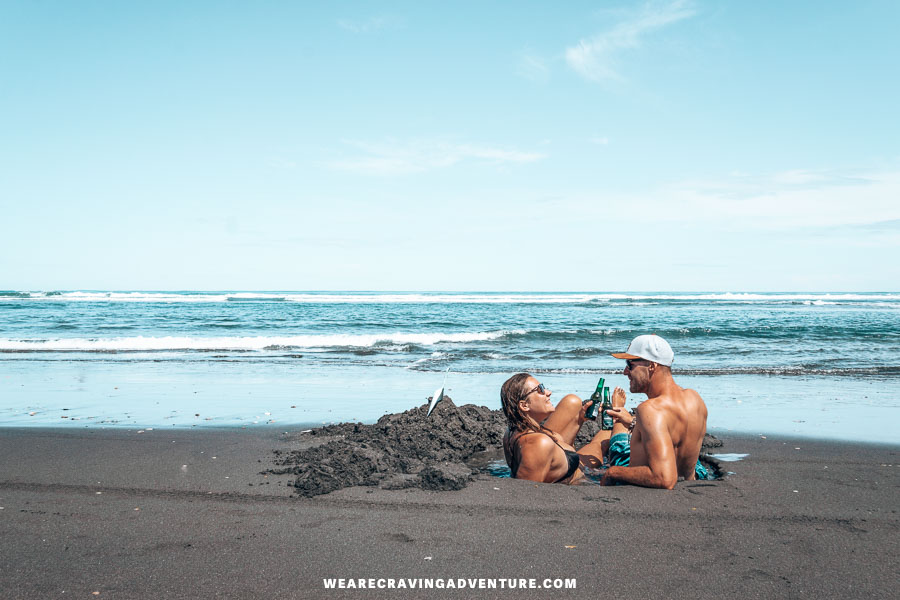
Kāwhia Hot Water Beach—If the Tide Works
Kāwhia has a much quieter version of the Coromandel’s famous Hot Water Beach. Around two hours either side of low tide, you can dig into the black sand at Ocean Beach and find geothermal water beneath it. Bring a spade, dig where other pools show the warm patch and mix in seawater if yours is too hot—the water can be properly scalding.
This stop is completely controlled by the tide. If the timing is wrong, do not hang around waiting for the ocean to cooperate. Get lunch in Kāwhia and continue south.
Choose Your Waitomo Cave
- My pick for this route: three-hour Black Labyrinth black-water rafting
- Best easy option: classic Waitomo Glowworm Cave tour
Where to Stay in New Plymouth
COMFORTABLE
A reliable modern hotel close to the CBD with parking and an on-site restaurant—useful after the longest driving day of the itinerary.
BOUTIQUE
A small characterful hotel near restaurants and the Coastal Walkway. Choose it when you prefer personality over chain-hotel facilities.
Millennium Hotel New Plymouth Waterfront
WATERFRONT
A central waterfront base with sea views and an on-site restaurant. It makes an easy start for tomorrow’s city and coastal options.
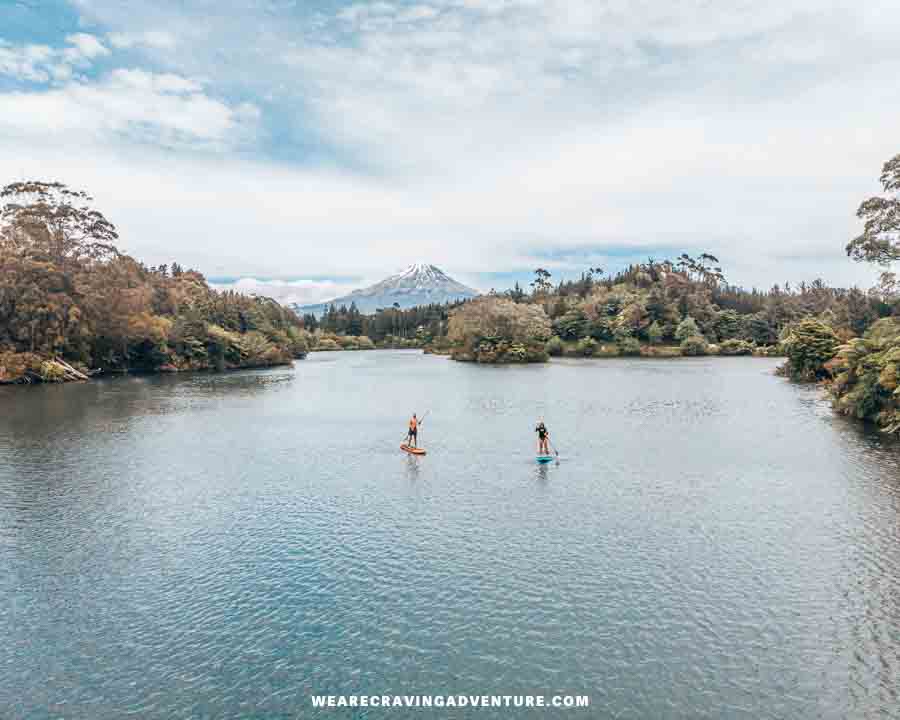
Day 12 – Taranaki Peninsula
Option 1: Pouākai Hut and Pouākai Tarns hike | approximately 5 hours return, plus stops
Option 2: New Plymouth → Te Rewa Rewa Bridge → Lake Mangamahoe → Surf Highway 45 → Cape Egmont Lighthouse
Driving: Around 105 km and 1 hour 30 minutes for the coastal option
Sleep: New Plymouth
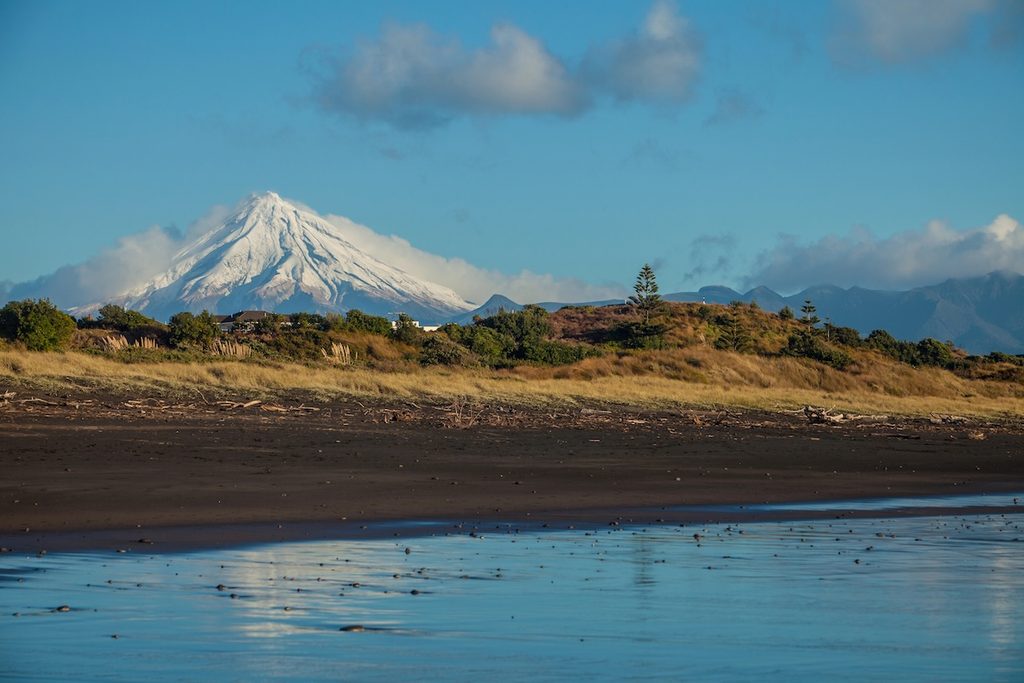
Taranaki Maunga dominates this entire region. It is so perfectly volcanic that it played Mount Fuji in The Last Samurai, yet the surrounding coast is equally good: black-sand beaches, surf towns, farmland and a lonely lighthouse with the mountain behind it. Choose between a proper hike and a much looser coastal day.
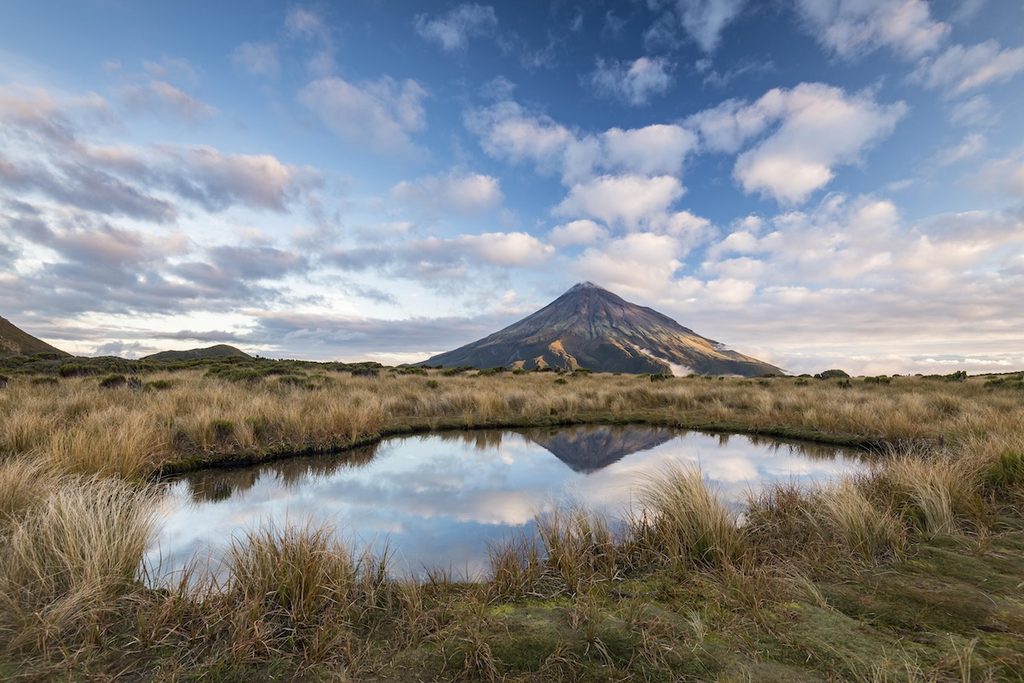
Option 1: Hike to Pouākai Tarns
The Mangorei Track climbs through forest to Pouākai Hut, then continues another 700 metres to the tarns. It is approximately five kilometres each way and takes around 2.5 hours uphill, with much of the climb on wooden steps and boardwalk. The route is a steady workout but not technically difficult in normal conditions.
On a clear, still day, the lower tarn reflects Taranaki Maunga and creates one of the North Island’s classic mountain views. The reflection is not guaranteed—wind can turn the tarn into an ordinary puddle remarkably quickly—but the forest and mountain scenery make the walk worthwhile anyway.
Start from Mangorei Road and allow around five hours return, longer if you stop for lunch. Check the forecast before leaving because the upper section is exposed, then pack the normal mountain basics: layers, water, food and sun protection.
Option 2: New Plymouth and Surf Highway 45
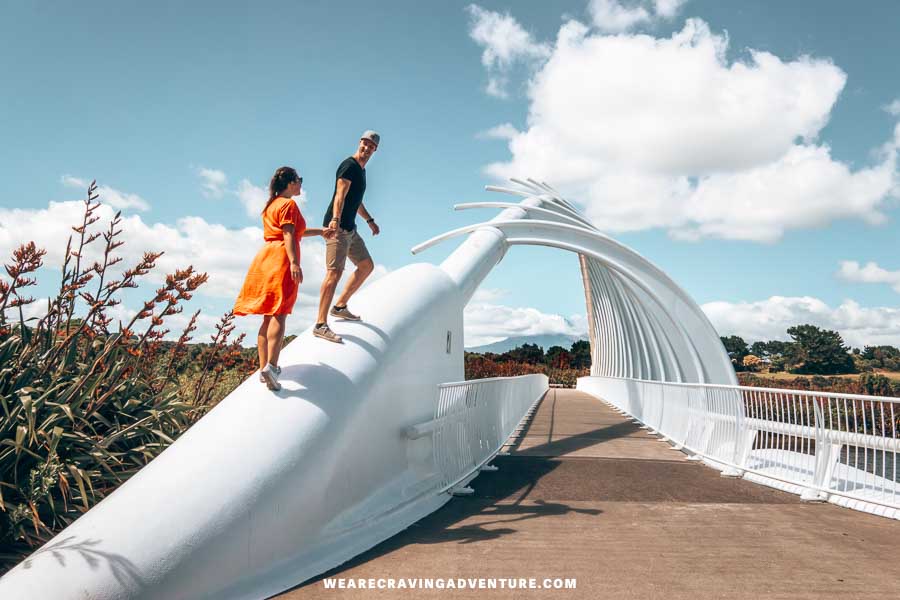
If the mountain is hidden or you simply do not feel like climbing stairs for half the day, have a slow morning in New Plymouth. Walk part of the Coastal Walkway, see Len Lye’s Wind Wand and stop at Te Rewa Rewa Bridge, whose white ribs frame the mountain on a clear day.
Drive to Lake Mangamahoe for another Taranaki viewpoint. I once took paddleboards onto the lake and was promptly collected by a ranger—whoops. It is part of New Plymouth’s water supply, so swimming and boating are not allowed. Stick to the walking and cycling trails and enjoy the reflection from shore.
Then follow Surf Highway 45 through Ōakura and Ōpunakē, stopping wherever the beach looks good. Finish around Cape Egmont Lighthouse, where the striped tower stands between farmland, the Tasman Sea and the mountain. This option is deliberately unstructured: after ten days of fixed bookings, it is nice to have one day that can follow the weather and appetite.
Option 3: Road-Trip Alternative: Forgotten World Highway
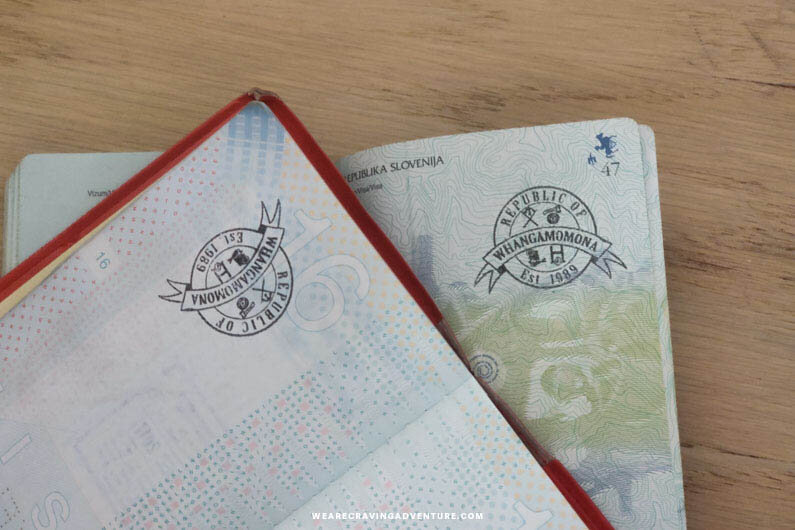
If an unusual road appeals more than a mountain hike, replace today with State Highway 43 from Stratford to Taumarunui and sleep in Taumarunui. The 150-kilometre Forgotten World Highway twists across saddles, through Tāngarākau Gorge and the single-lane Moki Tunnel, with a compulsory stop in the self-declared Republic of Whangamōmona.
I had the privilege of driving it when the final section through Tāngarākau Gorge was still gravel and the route felt like a proper little adventure. That last 12-kilometre section was sealed in 2025, so it is friendlier to rental cars and campervans now, but the highway has not suddenly become boring. It is still narrow, winding, remote and full of character. Fill up in Stratford and give the drive most of the day rather than trusting the bare three-hour map estimate.
From Taumarunui, follow the Whanganui River Road or the main highways towards Whanganui tomorrow, then rejoin the Kāpiti Coast route to Wellington.
On the main Taranaki plan, stay in the same New Plymouth accommodation tonight. If you chose the Forgotten World Highway swap, stay in Taumarunui instead.
Day 13 – New Plymouth to Wellington
Route: New Plymouth → Whanganui → Kāpiti Coast → Wellington
After the Forgotten World Highway swap: Taumarunui → Whanganui → Kāpiti Coast → Wellington
Driving: Approximately 355 km and 4 hours 45 minutes before stops
Choose in Whanganui: Whanganui Regional Museum or Te Whare o Rehua Sarjeant Gallery
Sleep: Wellington
Today is primarily a relocation day, but it does not need to be a dull one. Break the drive in Whanganui, follow the Kāpiti Coast south and reach Wellington with enough time for dinner rather than treating State Highway 1 like an endurance test.
Stop in Whanganui
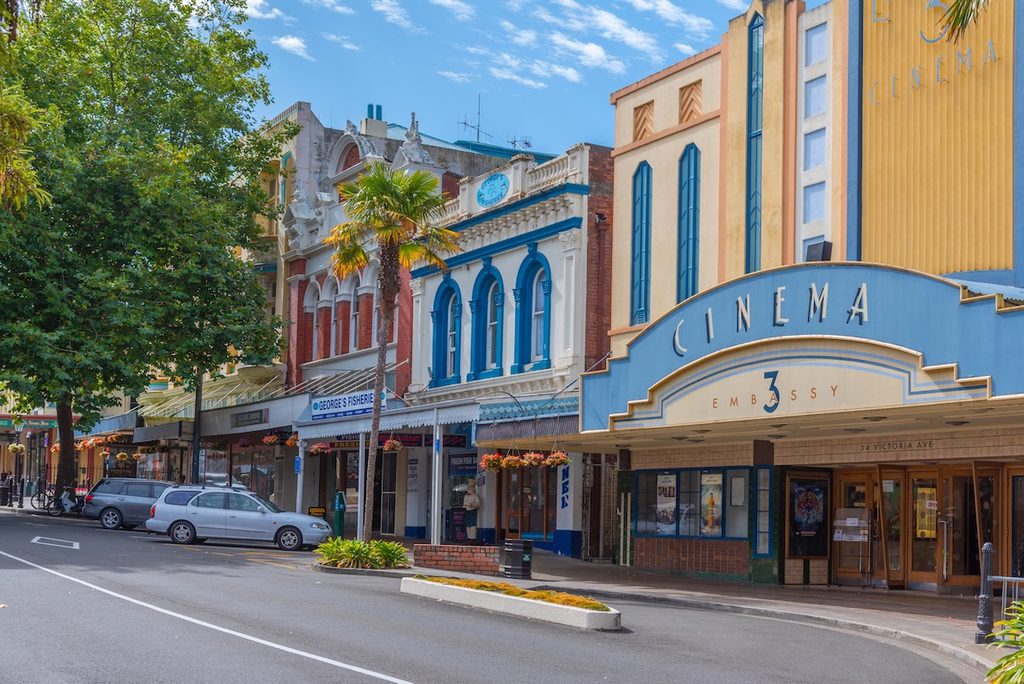
Whanganui deserves more than the dismissive fuel-and-coffee stop it sometimes gets. The Whanganui Regional Museum is compact, free to enter and strong on local Māori taonga and the natural and social history of the river region.
Have you ever heard of the Moa? A massive ostrich-like bird that reached almost four meters in height and was hunted to extinction by the Māori people. Well, they show loads about the Moa here. There’s a giant waka in the center of the museum, and something that can only be described as a mad scientist’s lab.
Art lovers should choose Te Whare o Rehua Sarjeant Gallery instead. Its redeveloped gallery reopened in late 2024, combining the restored heritage building with a substantial new wing. That gives Whanganui a genuinely good contemporary-art stop that did not exist in this form on my earlier road trips.
Both are central and normally open during the day. Pick one, have lunch near the river and continue south. The historic Durie Hill Elevator has had an extended closure, so check its official status if that is the one attraction you specifically want to see.
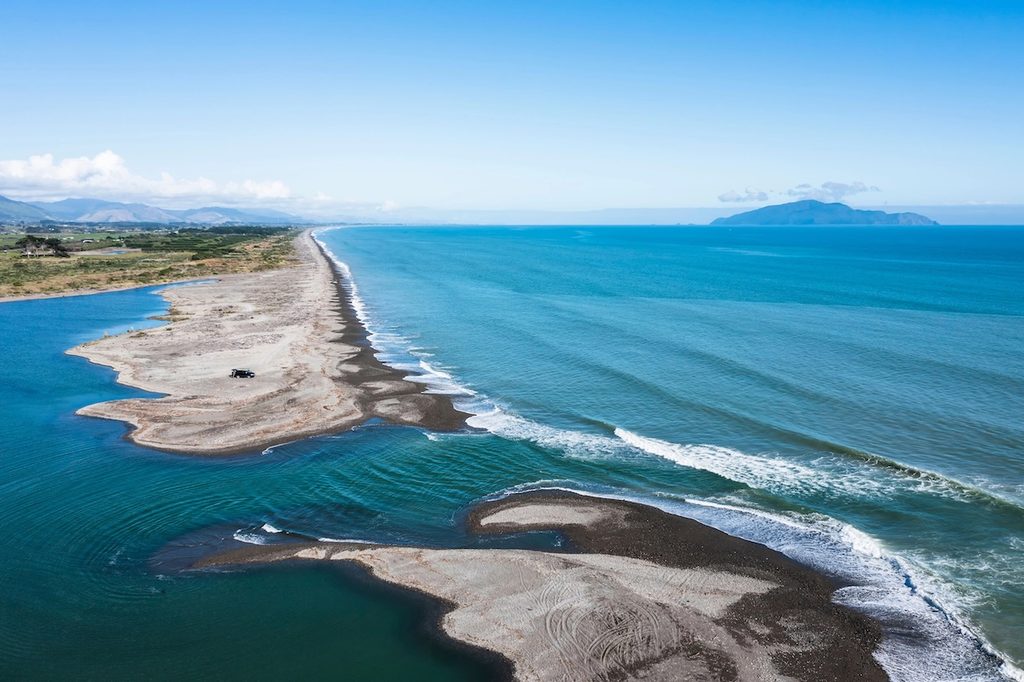
Follow the Kāpiti Coast
Pause at Ōtaki, Peka Peka or Waikanae for a beach walk and views towards Kāpiti Island. These are easy, low-commitment stops that break up the final approach to Wellington.
Kāpiti Island itself is a protected nature reserve and one of New Zealand’s best bird sanctuaries, but it is not a spontaneous roadside detour. Boats leave in the morning, visitor numbers are controlled and a permit is required; approved tour operators normally arrange the permit with the ferry. If seeing kākā, kōkako and takahē there is a priority, add a separate day and book well ahead.
Where to Stay in Wellington
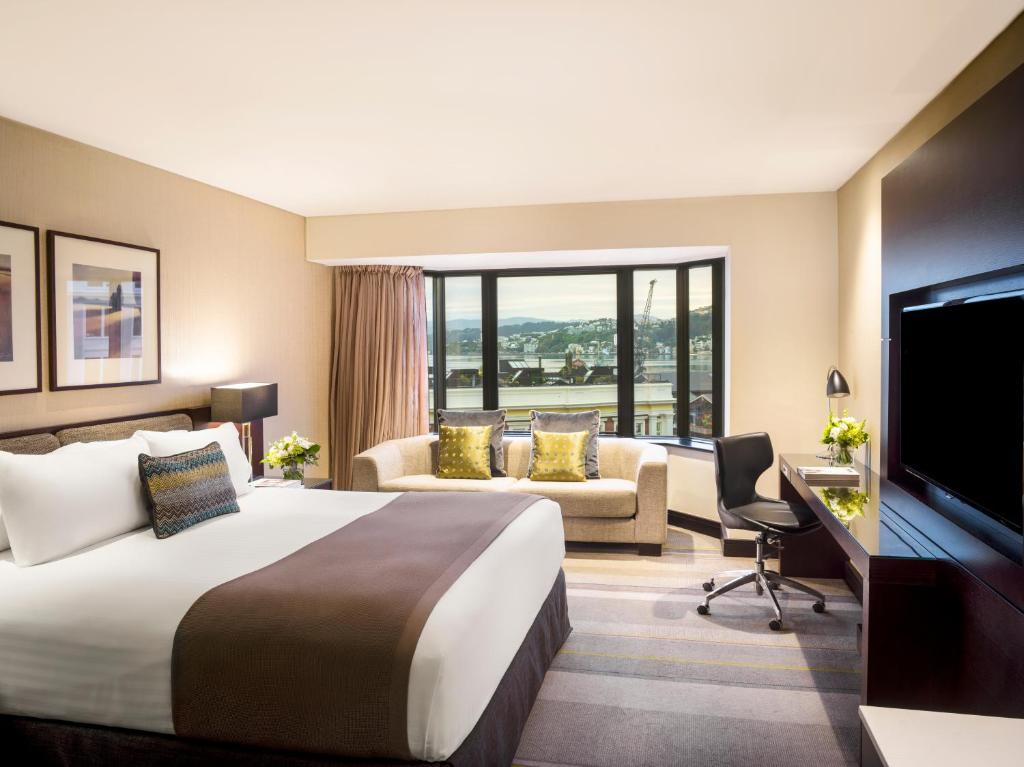
SPLURGE
A refined central hotel close to the waterfront and Lambton Quay, with the facilities to make the final night feel like a reward.
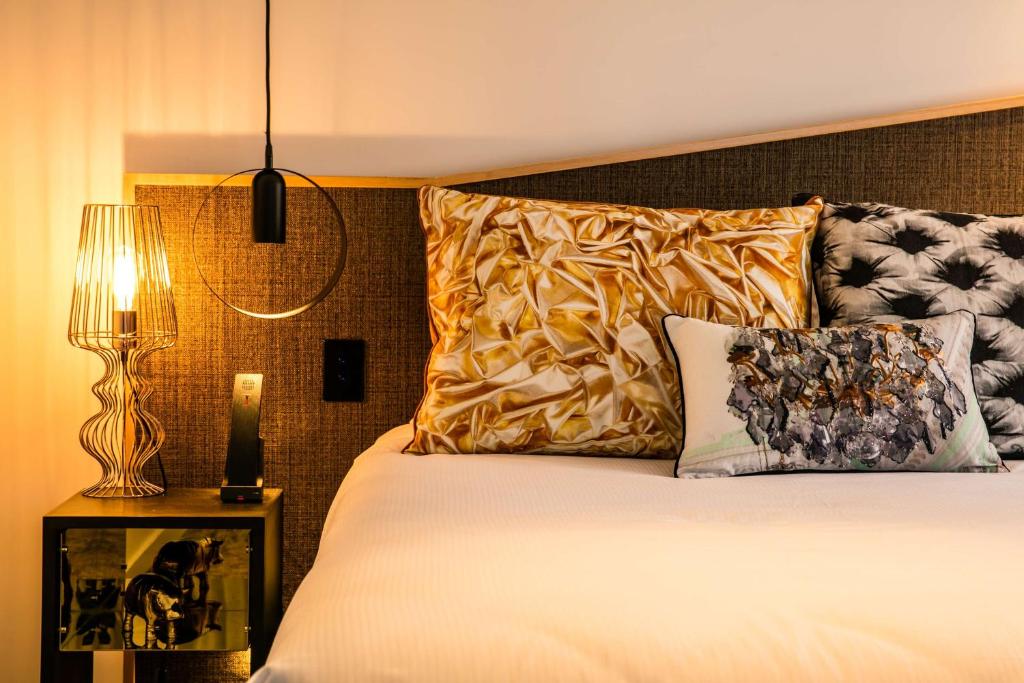
ARTY / WATERFRONT
An art-filled hotel almost opposite Te Papa. This is my pick when tomorrow’s museum, waterfront and restaurant stops are the priority.
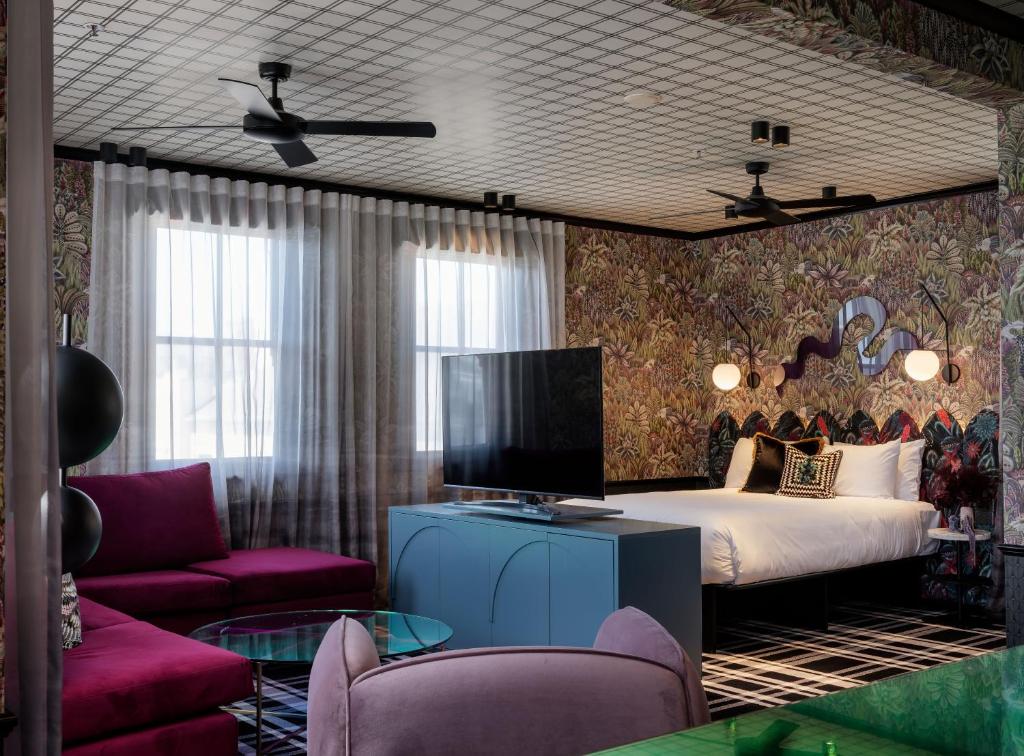
VALUE / CUBA STREET
A colourful central stay on lively Cuba Street, surrounded by cafés, bars and restaurants. It has character without the waterfront price tag.
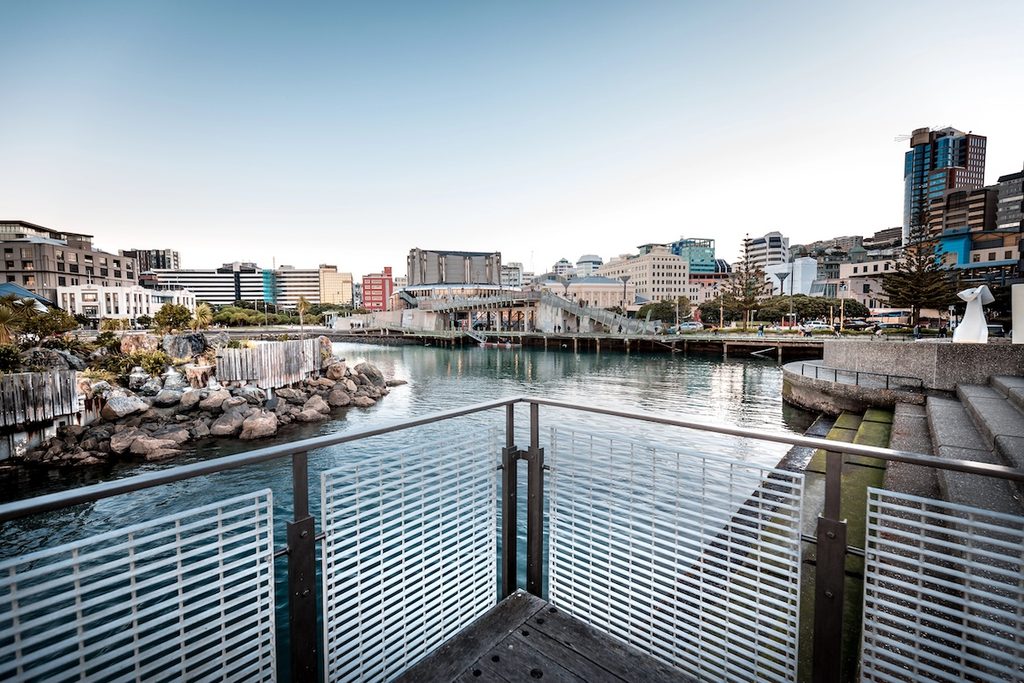
Day 14 – Wellington
Plan: Wētā Workshop → Mount Victoria → Te Papa → waterfront and Cuba Street
Book ahead: Wētā Workshop experience, or swap the city afternoon for a Lord of the Rings half-day tour or Wellington craft beer tour
Sleep: Wellington, unless departing tonight
New Zealand’s capital is compact, creative and very easy to enjoy in a day. Film effects, mountain-and-harbour views, the national museum, excellent coffee and an absurd amount of craft beer all fit without spending half the day in traffic.
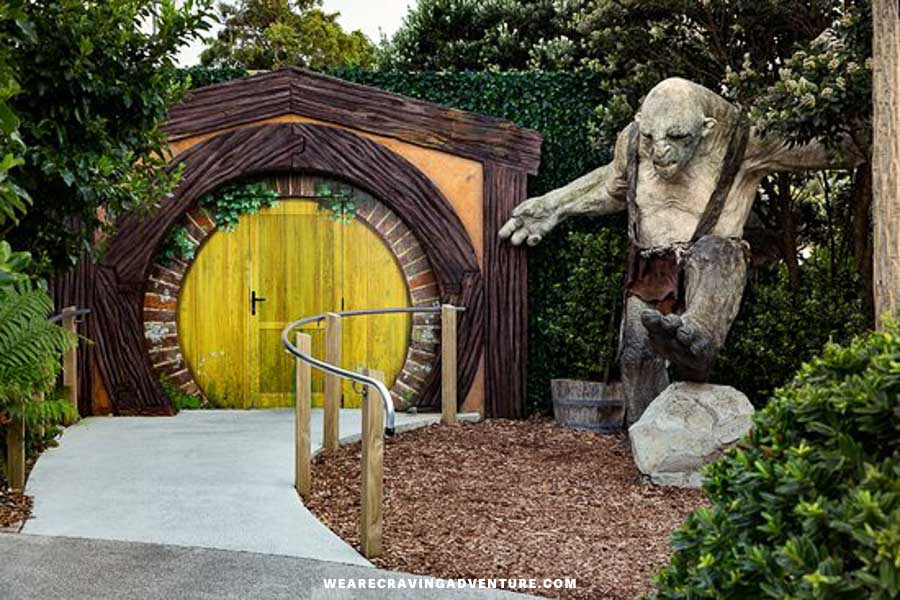
Tour Wētā Workshop
Begin in Miramar at Wētā Workshop, where artists have created props, armour, creatures and effects for films including The Lord of the Rings, The Hobbit, Avatar and many others. The 90-minute workshop experience focuses on how physical effects are designed and made, with guides who clearly enjoy the weird details of their jobs.
If Middle-earth is the main reason you came to Wellington, replace the later city stops with a half-day Lord of the Rings filming-locations tour. Do not book both versions unless you want the entire day to revolve around films.

Mount Victoria Lookout
Drive or walk up Mount Victoria for a 360-degree view over the city, harbour, hills and airport. Wellington is nicknamed Windy Wellington for a reason. Tom put on a cap at the viewpoint and lost it almost immediately, which remains the most efficient demonstration of the local climate I have seen.

Museum of New Zealand Te Papa Tongarewa
Spend the afternoon at Te Papa on the waterfront. The national museum covers Māori and Pacific taonga, New Zealand’s natural history and major art and social-history exhibitions. The colossal squid is wonderfully strange, while the Te Taiao nature galleries help connect the volcanoes, earthquakes and wildlife encountered across this road trip.
General entry remains free for people who live in New Zealand, but international visitors aged 16 and over now pay an admission fee. The ticket is valid for 48 hours, which is useful if you stay another night and want to return.
Finish with Food and Craft Beer
Walk the waterfront towards Cuba Street for dinner, then let Wellington’s craft-beer scene finish the road trip. Garage Project’s Aro taproom is an obvious stop for inventive releases, while Parrotdog is worth the trip to Lyall Bay if you are still around Miramar. Taprooms and central bars change often, so I would follow whichever fresh pour sounds best rather than treating one pub list as sacred.
If you want somebody else to choose the breweries and handle the transport, swap the museum or film tour for a half-day Wellington craft beer tour. Trying to do Wētā, a full museum visit, a film-locations tour and a brewery tour in one day would be ridiculous; choose the two priorities you will actually enjoy.
Choose Your Wellington Priority
- Best first visit: Wētā Workshop experience, then Mount Victoria and Te Papa independently
- Best for serious Tolkien fans: Lord of the Rings half-day tour
- Best boozy finish: Wellington craft beer tour
Next Stop: New Zealand’s South Island
Book the ferry: Compare sailings with Bluebridge and Interislander. If you are taking a car or campervan, book once your dates are fixed because vehicle spaces can fill up.
And that’s the end of this two-week New Zealand North Island road trip! If you are continuing around the country, Wellington is exactly where you want to finish. From here, you can put your car or campervan on the Cook Strait ferry and sail directly to Picton at the top of the South Island.
I genuinely think the South Island is even more spectacular than the North Island, so I would absolutely keep going if you have the time. My complete South Island itinerary takes you through the Marlborough Sounds, Nelson Lakes, the West Coast, Queenstown, Milford Sound, the Catlins, Dunedin and Mount Cook.
The South Island route is written from Christchurch, but it is easy to adapt when arriving by ferry: simply start with Day 3 from Picton and move the first two days to the end of the itinerary.
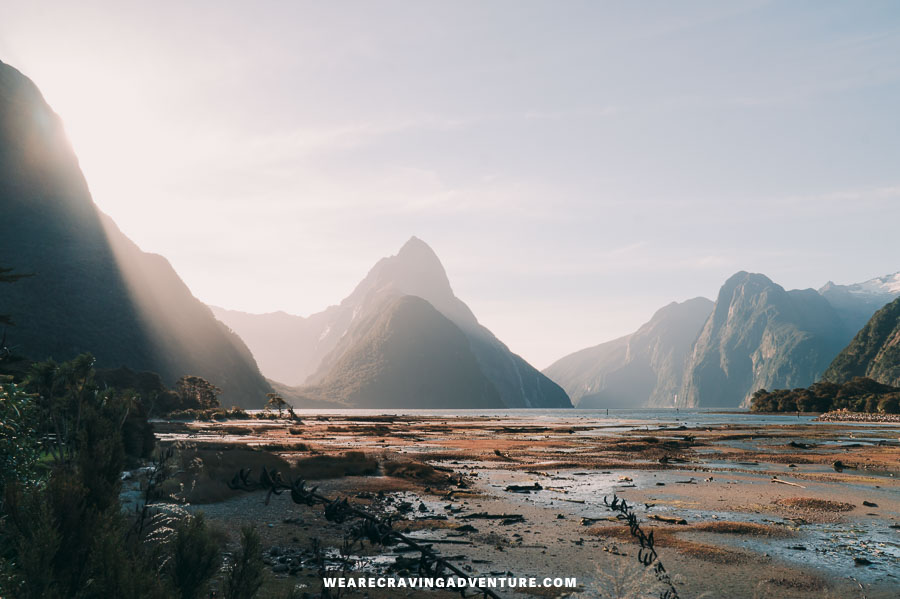
READ NEXT:
New Zealand South Island Road Trip Itinerary
Plan the ultimate 2 & 3 week South Island road trip route
Take the ferry to the South Island…
There are two New Zealand North to South Island ferry companies that can take you there, and it doesn’t really matter which one you pick as they are very similar and equally priced, just make sure you drive to the correct one as they each depart from a different port.
- Bluebridge Cook Strait Ferry – They have a small cinema aboard this ferry where they play movies. The Bluebridge ferry terminal is located at 50 Waterloo Quay , Pipitea, Wellington.
- Interislander Cook Strait Ferry – They have free Wi-Fi on board, which in all honestly is too slow to be of any use. The Interislander ferry terminal is located at Aotea Quay, Pipitea, Wellington.


3-Week North Island Itinerary
Route: Auckland → Bay of Islands → Cape Reinga → Waipoua Forest → Coromandel Peninsula → Hobbiton → Waitomo → Taranaki → Forgotten World Highway → Tongariro → Taupō → Rotorua → Gisborne → Hawke’s Bay → Castlepoint → Pūtangirua Pinnacles → Cape Palliser → Wellington
Start: Auckland
Finish: Wellington
Best for: A first North Island road trip with plenty of hiking, coast, geothermal landscapes and a few genuinely off-the-beaten-path detours
With three weeks, I would not simply tack another seven days onto the end of the two-week route. The more efficient option is to keep the first week, turn inland after Hobbiton, travel through Waitomo and Taranaki, drive the Forgotten World Highway, then circle back through Taupō and Rotorua before continuing around the east coast.
This is very close to the route I travelled myself, except I had the luxury of stretching it over several months. Twenty-one days is enough to cover it at a reasonable pace, while the second day in Rotorua and the overnight at Castlepoint give the trip some breathing room.
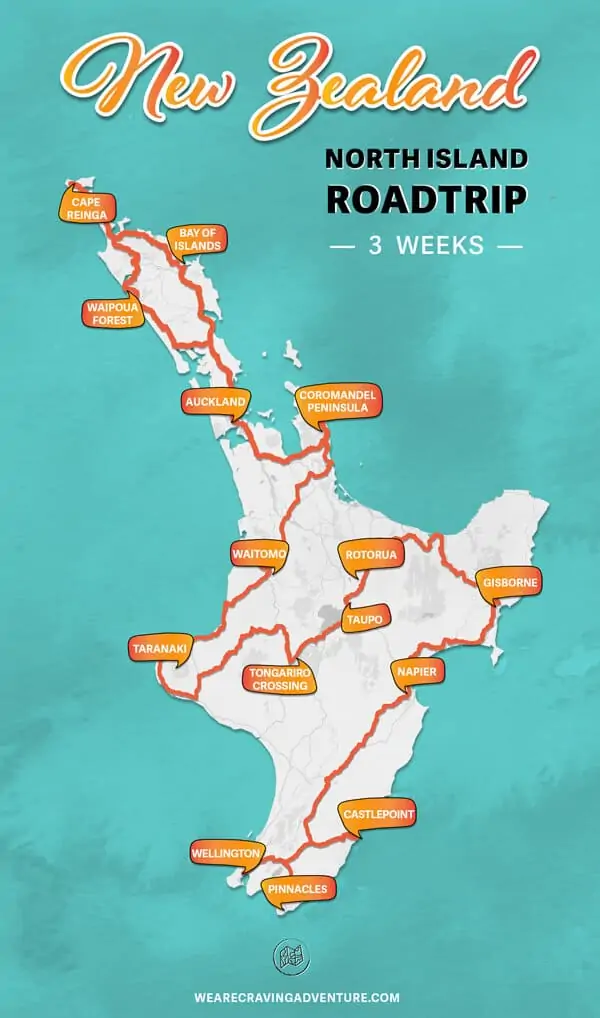
3-week itinerary overview
Days 1-8 – As above
Day 9 – Waitomo
Day 10 – Taranaki Peninsula
Day 11 – Forgotten World Highway
Day 12 – Tongariro Alpine Crossing
Day 13 – Taupo
Days 14 & 15 – Rotorua
Day 16 – Drive to Gisborne
Day 17 – Gisborne
Day 18 – Napier & Hastings
Day 19 – Castlepoint
Day 20 – Putangirua Pinnacles
Day 21 – Wellington
21-Day North Island Itinerary at a Glance
| Day | Route and Main Plan | Sleep |
|---|---|---|
| 1 | Auckland city, Mount Eden and the waterfront. If you want the full Auckland view, book a Sky Tower ticket. | Auckland: Park Hyatt Auckland |
| 2 | Waiheke Island or Piha. For Waiheke, this food and wine tour takes care of the transport between vineyards. | Auckland or Piha Park Hyatt Auckland Romantic Piha |
| 3 | Auckland/Piha → Muriwai → Paihia and Waitangi. You can book your Waitangi Treaty Grounds experience here. | Paihia Paihia Beach Resort & Spa |
| 4 | Bay of Islands sailing day. My pick is the Island Hopper sailing cruise. | Paihia Paihia Beach Resort & Spa |
| 5 | Paihia → Cape Reinga → Te Paki Sand Dunes → Kaitaia. If you would rather leave the long driving day to somebody else, take this Cape Reinga and Ninety Mile Beach tour from Paihia. | Kaitaia or Paihia Paihia Beach Resort & Spa Orana Motor Inn |
| 6 | Kaitaia → Hokianga → Waipoua Forest → Auckland. | Auckland Park Hyatt Auckland |
| 7 | Auckland → Thames → Hahei → Whangamatā. If Cathedral Cove’s walking access is closed or you want to see more of the coast, book the Cathedral Cove scenic boat tour. | Whangamata San Marco Beachside Villa |
| 8 | Donut Island → Ōmanawa Falls → Hobbiton → Waitomo. | Waitomo Waitomo Caves Lodge |
| 9 | Waitomo Caves → west-coast waterfalls and beaches → New Plymouth. Choose between the Black Labyrinth rafting experience or the classic glowworm cave and boat tour. | New Plymouth Novotel New Plymouth Taranaki |
| 10 | Pouākai Circuit or Taranaki alternatives. | New Plymouth Novotel New Plymouth Taranaki |
| 11 | Forgotten World Highway. | National Park Tongariro Crossing Lodge |
| 12 | Tongariro Alpine Crossing → Taupō. Reserve your one-way Tongariro Crossing shuttle before arriving. | Taupo Hilton Lake Taupo |
| 13 | Taupō → Wai-O-Tapu → Rotorua. | Rotorua Pullman Rotorua |
| 14 | Rotorua adventure, spa and Māori cultural evening. The standout combination is Kaituna River rafting followed by the Te Pā Tū cultural experience and dinner. | Rotorua Pullman Rotorua |
| 15 | Te Puia, Rotorua Redwoods and one flexible extra. You can also return after dark for the Redwoods Altitude Nightlights Treewalk. | Rotorua Pullman Rotorua |
| 16 | Rotorua → Ōhope → Ōpōtiki → Gisborne. | Gisborne Portside Hotel Gisborne |
| 17 | Rere Falls and Rere Rockslide, plus Gisborne. If you want a wildlife experience as well, book the wild stingray encounter at Tatapouri. | Gisborne Portside Hotel Gisborne |
| 18 | Gisborne → Napier, Art Deco and Hawke’s Bay wine. If you do not want to choose a designated driver, book a guided Hawke’s Bay wine tour. | Gisborne Portside Hotel Gisborne |
| 19 | Te Mata Peak → Castlepoint. If you want more context before leaving Napier, join an Art Deco walking tour first. | Castlepoint Castlepoint Holiday Park & Motels |
| 20 | Pūtangirua Pinnacles → Cape Palliser → Wellington. | Wellington InterContinental |
| 21 | Wellington. Alongside Te Papa, the waterfront and Mount Victoria, film fans can visit Wētā Workshop. | Wellington InterContinental |

Day 1 – Auckland
Plan: Auckland Domain and Museum → Mount Eden → Sky Tower → Viaduct Harbour
Book ahead: Sky Tower admission, Wētā Workshop Unleashed or Auckland Museum entry
Sleep: Auckland – Park Hyatt Auckland
Complete plan: See Day 1 of the two-week itinerary
Start with Auckland’s volcanic and cultural side at the Domain, museum and Mount Eden, then move into the centre for the Sky Tower and waterfront. Pick the paid attraction that interests you most rather than trying to cram all three into your first afternoon.
Day 2 – Waiheke Island or Piha
Plan: Waiheke Island for wineries and beaches, or Karekare Falls and Piha for the wild west coast
Book ahead: Waiheke food and wine tour, or a rental car for Piha and the road trip
Sleep: Auckland – Park Hyatt Auckland, or Piha – Romantic Piha
Complete plan: See Day 2 of the two-week itinerary
Choose Waiheke if a long lunch, wine tastings and an easy ferry day sound good. Choose Piha for waterfalls, black sand and more time behind the wheel; I prefer sleeping there after a west-coast day, while Waiheke travellers can return to Auckland.
Day 3 – Auckland or Piha to Paihia
Plan: Auckland or Piha → optional Muriwai stop → Paihia → Waitangi Treaty Grounds
Book ahead: Waitangi Treaty Grounds day pass and, if you want the big arrival, an up-to-20,000-foot skydive
Sleep: Paihia – Paihia Beach Resort & Spa
Complete plan: See Day 3 of the two-week itinerary
Stop at Muriwai only if you leave early enough to protect the afternoon at Waitangi. Once in Paihia, make the Treaty Grounds the priority and leave the waterfront, dinner and drinks for the evening.

Day 4 – Bay of Islands
Plan: Paihia → Bay of Islands sailing cruise → Paihia
Book ahead: Bay of Islands Island Hopper sailing cruise
Sleep: Paihia – Paihia Beach Resort & Spa
Complete plan: See Day 4 of the two-week itinerary
Spend the day on the water rather than trying to understand the Bay of Islands from the road. I prefer a small sailing trip with time to swim, snorkel, paddleboard and step ashore over a large sightseeing boat that treats every island as a drive-by photo.

READ NEXT:
Things to Do in Paihia and the Bay of Islands
Discover the best things to do in Paihia and the Bay of Islands
Day 5 – Cape Reinga and Te Paki Sand Dunes
Plan: Paihia → Cape Reinga → Te Paki Giant Sand Dunes → Kaitaia
Book ahead: Cape Reinga and Ninety Mile Beach day tour if you want the beach-driving experience
Sleep: Kaitaia – Orana Motor Inn
Complete plan: See Day 5 of the two-week itinerary
Leave Paihia early, walk out to the Cape Reinga lighthouse and save enough energy to bodyboard down the huge Te Paki dunes. Self-drive if you want control over the stops; take the tour if driving Ninety Mile Beach is part of the attraction.
Day 6 – Kaitaia to Auckland via Waipoua Forest
Plan: Kaitaia → Hokianga ferry → Waipoua Forest → Tokatoka Peak → Auckland
Book ahead: Nothing essential; check the current Hokianga ferry timetable before leaving Kaitaia
Sleep: Auckland – Park Hyatt Auckland
Complete plan: See Day 6 of the two-week itinerary
Cross the Hokianga on the vehicle ferry and stop for the open Tāne Mahuta and Te Matua Ngahere walks beneath some of New Zealand’s most impressive kauri. Skip the long-closed Four Sisters track, add Tokatoka Peak only if you still have daylight, then finish the long drive back to Auckland.
Day 7 – Auckland to Whangamatā via the Coromandel
Plan: Auckland → Thames → Hahei → Cathedral Cove → Whangamatā
Book ahead: Cathedral Cove boat tour if you want to see more of the coast from the water
Sleep: Whangamatā – San Marco Luxury Tuscan Beachside Villa
Complete plan: See Day 7 of the two-week itinerary
Follow the Thames coast to Hahei and make Cathedral Cove the main stop, either using the reopened walking track or approaching it by boat. Continue to Whangamatā afterwards and stay close to the beach so tomorrow’s Donut Island departure is easy.
Day 8 – Whangamatā to Waitomo via Donut Island, Ōmanawa Falls and Hobbiton
Plan: Whangamatā → Whenuakura/Donut Island → Ōmanawa Falls → Hobbiton Movie Set → Waitomo
Book ahead: Donut Island kayaking and Hobbiton Movie Set
Sleep: Waitomo – Waitomo Caves Guest Lodge
Complete plan: See the detailed Day 8 stops in the two-week itinerary
Kayak to Donut Island first, then take the short detour to the recently reopened Ōmanawa Falls lookout before your fixed Hobbiton time.
Unlike the two-week route, continue to Waitomo after Hobbiton rather than turning towards Rotorua.
Day 9 – Waitomo to New Plymouth
Plan: Waitomo Caves → Mangapōhue Natural Bridge → Marokopa Falls → Kāwhia if the tide works → Three Sisters → New Plymouth
Book ahead: Black Labyrinth cave tubing or the gentler Waitomo Glowworm Cave tour
Sleep: New Plymouth – Novotel New Plymouth Taranaki
Complete plan: See the Waitomo and west-coast day in the two-week itinerary
Explore your chosen Waitomo cave first, then work west through Mangapōhue Natural Bridge and Marokopa Falls. Add Kāwhia Hot Water Beach only if low tide fits naturally, and try to reach the Three Sisters near low tide before continuing to New Plymouth.
Day 10 – Taranaki
Plan: Pouākai Tarns hike, or Wilkies Pools → Dawson Falls → Te Rewa Rewa Bridge → Surf Highway 45
Book ahead: Nothing essential for the independent walks
Sleep: New Plymouth – Novotel New Plymouth Taranaki
Complete plan: See the Taranaki day in the two-week itinerary
Use the full day for Pouākai if seeing the tarn reflection is one of your priorities. Otherwise combine Wilkies Pools and Dawson Falls with Te Rewa Rewa Bridge and a few Surf Highway stops for a much more flexible Taranaki day.
Day 11 – Forgotten World Highway
Route: New Plymouth → Stratford → Whangamōmona → Moki Tunnel → Tāngarākau Gorge → Taumarunui → National Park
Driving: Approximately 250 km and 4 hours without stops; allow the whole day
Sleep: National Park
State Highway 43 winds for roughly 150 kilometres between Stratford and Taumarunui, over saddles, through native forest and past tiny settlements that seem to have escaped the rest of the century. The distance is not huge; the point is to stop often rather than treat it as a shortcut.
I had the privilege of driving the highway while the final 12 kilometres through Tāngarākau Gorge were still gravel, and that loose, remote section made it feel like a proper little adventure. It was fully sealed in 2025, so the drive is easier now, but the one-lane bridges, folds in the landscape and complete lack of hurry have not gone anywhere.
Stop at the Whangamōmona Hotel, the unofficial passport office of the self-declared Republic of Whangamōmona. You can still buy a republic passport or have your own stamped for a donation. Continue through the hand-cut, single-lane Moki Tunnel and the green walls of Tāngarākau Gorge before turning towards National Park.
Mount Damper Falls is a worthwhile side trip if you start early. The waterfall drops 74 metres and the walk itself takes about 30 minutes, but the access road makes it a much larger detour. The track crosses private farmland; the annual August–October restriction applies to hunters, while ordinary walkers should remain on the marked track and leave gates as they find them.
Fill the tank in Stratford because there are no fuel stations along the highway. That is the only preparation this drive really needs.
Day 12 – Tongariro Alpine Crossing to Taupō
Plan: National Park → Tongariro Alpine Crossing → Taupō
Book ahead: Free DOC track booking and a Tongariro Alpine Crossing shuttle
Sleep: Taupō – Hilton Lake Taupo
Complete plan: See the detailed Tongariro plan in the two-week itinerary
Start early for the one-way Tongariro Alpine Crossing, using the shuttle to solve the transport problem before you begin walking. Collect the car afterwards and continue to Taupō for dinner, a shower and very little ambition for the rest of the evening.
Day 13 – Taupō to Rotorua
Plan: Taupō lake activity → Huka Falls → Wai-O-Tapu → Rotorua
Book ahead: Māori Rock Carvings cruise or Huka Falls jet boat, plus Wai-O-Tapu admission
Sleep: Rotorua – Pullman Rotorua
Complete plan: See the Taupō and Wai-O-Tapu stops in the two-week itinerary
Choose either the relaxed Māori Rock Carvings cruise or the Huka Falls jet boat, then see Huka Falls from land before following the geothermal road north. Visit Wai-O-Tapu on the way into Rotorua; moving it to today leaves tomorrow free for rafting, a spa and a Māori evening.
Day 14 – Rotorua Adventure and Māori Culture
Plan: Kaituna River rafting → Eat Streat → Kuirau Park → geothermal spa → Te Pā Tū Māori cultural experience
Book ahead: Kaituna River rafting, Te Pā Tū evening experience and your chosen spa
Sleep: Rotorua – Pullman Rotorua
Complete plan: See the complete Rotorua day in the two-week itinerary
Raft the Kaituna River and seven-metre Tutea Falls, then slow the pace with lunch, free Kuirau Park and a geothermal soak before Te Pā Tū. The guides told me roughly half the rafts flip at the waterfall; mine did, and it was hilarious rather than terrifying.

Day 15 – A Second Full Day in Rotorua
Plan: Te Puia → lunch → Redwoods – Whakarewarewa Forest → choose the Treewalk, luge or more geothermal scenery
Book ahead: Te Puia guided experience and, if you want it, the Redwoods Nightlights Treewalk
Sleep: Rotorua
One day in Rotorua is enough to skim the highlights; two lets you do the place properly. Start at Te Puia, where the guided experience combines Pōhutu Geyser and the Whakarewarewa geothermal valley with the national carving and weaving schools and the kiwi conservation centre. It adds context that you will never get by simply looking at another steaming pool.
Spend the afternoon among the enormous Californian redwoods in Whakarewarewa Forest. The ground-level walking trails are free and, honestly, beautiful enough on their own. The paid Treewalk adds platforms and suspension bridges through the canopy; I would save the Nightlights version for after dark.
Use the middle of the day for whatever the first Rotorua day did not cover. Ride the Skyline luge if you still want action, walk through Waimangu Volcanic Valley if geology is winning, or do absolutely nothing productive in another hot pool. You have already earned an unhurried afternoon.
My Pick for the Extra Rotorua Day
Book the Te Puia guided experience for the morning, walk the free Redwoods trails in the afternoon and add the Nightlights Treewalk only if you want the canopy experience.
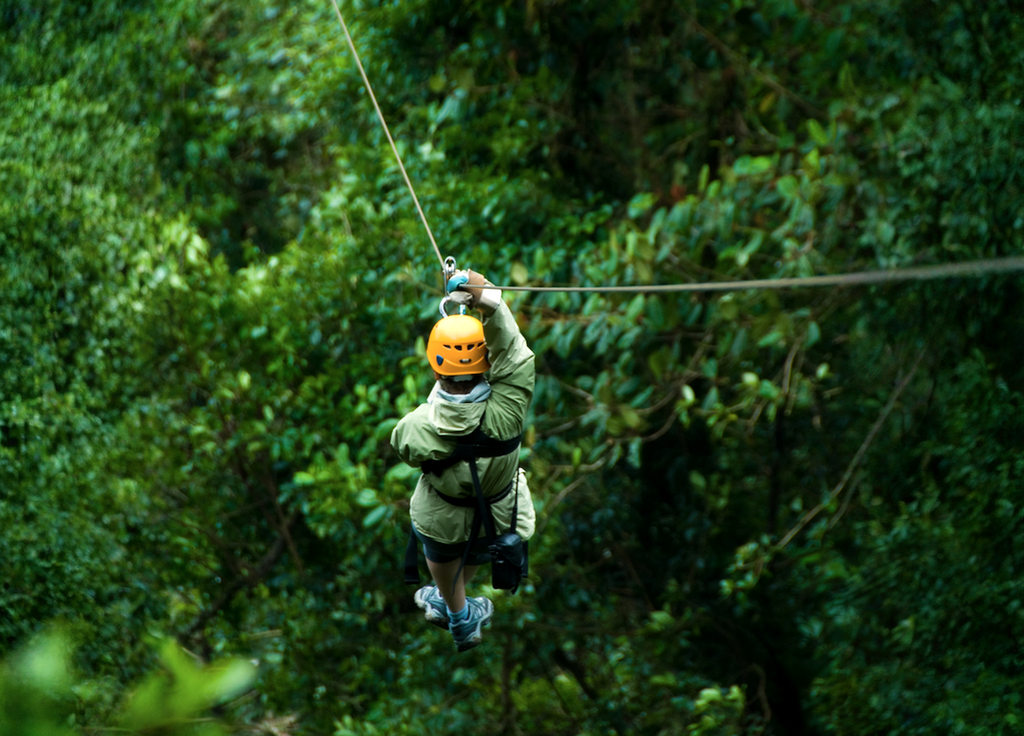
READ NEXT:
Discover the best geothermal, cultural and adventure experiences in Rotorua
Day 16 – Rotorua to Gisborne
Route: Rotorua → Whakatāne → Ōhope Beach → Ōpōtiki → Waioeka Gorge → Gisborne
Driving: Approximately 280 km and 4 hours 15 minutes without stops
Sleep: Gisborne
Today is mainly a relocation day, but it is a very pretty one. Leave Rotorua after breakfast and aim for Ōhope Beach for coffee, a swim or an early lunch. The long curve of sand is a much nicer place to pause than a petrol station beside the highway.
Continue through Ōpōtiki and into Waioeka Gorge. State Highway 2 follows the river between steep, forested walls, and there are several signed picnic areas and short stops if you want to break the drive. Do not build a complicated sightseeing schedule here; the road itself is the attraction.
Arrive in Gisborne with time for Waikanae Beach, the riverside walkway and dinner around the inner harbour. If the tide lines up perfectly, you could move tomorrow’s stingray encounter to late afternoon; otherwise keep the evening empty.
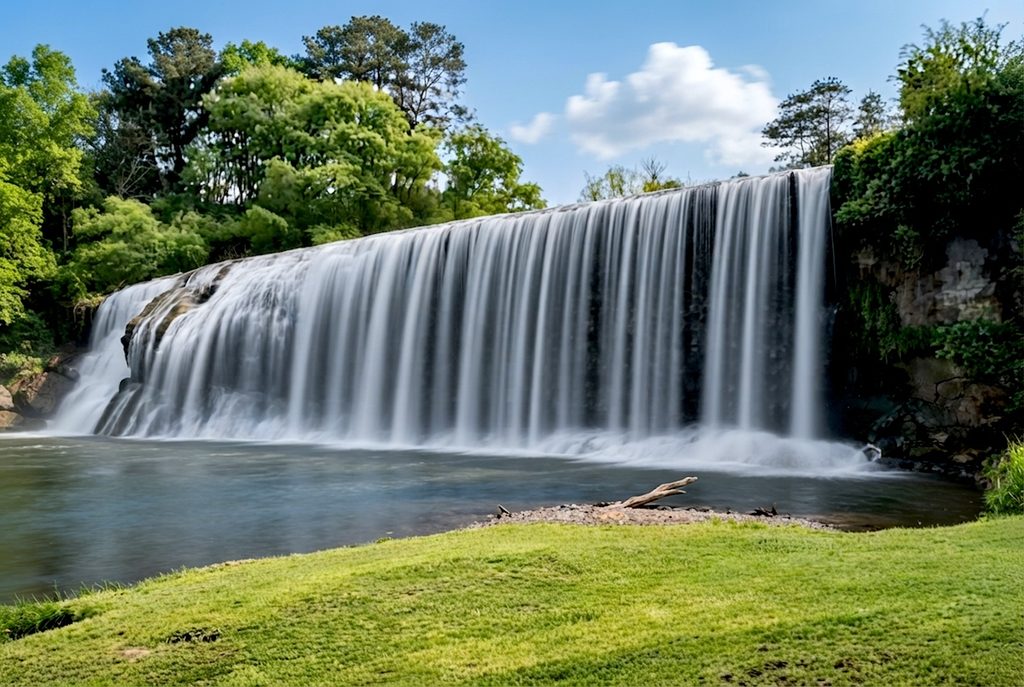
Day 17 – Gisborne, Rere Falls and Rere Rockslide
Plan: Optional reef ecology tour → Rere Falls → Rere Rockslide → Gisborne beaches and harbour
Driving: Approximately 100 km return to Rere
Book ahead: The tide-dependent wild stingray reef ecology tour
Sleep: Gisborne
The coolest things I found around Gisborne are Rere Falls and Rere Rockslide, about 45 minutes inland. Rere Falls is a broad curtain of water dropping into a swimming hole. When the flow is sensible you can walk behind parts of the curtain, cool off in the pool and properly enjoy it rather than merely taking a photograph from the grass.
A few minutes upstream, water has polished a slab of rock into a 60-metre natural slide. Bring a bodyboard or something inflatable, start lower down to work out your line, then commit. I went down on a bodyboard and an air mattress, and it remains one of the most ridiculous and fun free activities I found on the North Island.
If the low tide falls in the morning or late afternoon, add the wild stingray reef ecology experience near Tatapouri. You wade into the reef wearing provided gear while a guide explains the local marine life and wild short-tail stingrays and eagle rays move through the shallows. The exact start changes with the tide, so book it first and put Rere around it.
Back in Gisborne, choose one of the beaches for a late swim or surf, then eat around the inner harbour. There is plenty more on the East Cape, but squeezing that entire loop into this itinerary would turn a good road trip into a driving challenge.
Where to Stay in Gisborne
HARBOUR APARTMENTS
Studios and apartments by the inner harbour, many with balconies, plus a lap pool. My pick for two nights when location and a little extra space matter.
BEST FOR A ROAD TRIP
Modern motel rooms with kitchenettes, easy on-site parking and quick access to the centre. Practical, comfortable and uncomplicated.
BEACH / VALUE
Cabins, motel units and camping right beside Waikanae Beach. Best if you want sand outside the door or need a powered site.

Day 18 – Gisborne to Napier and Hawke’s Bay
Route: Gisborne → Napier → Hawke’s Bay wineries
Driving: Approximately 215 km and 3 hours before local travel
Book ahead: Napier Art Deco walk or the top-rated half-day wine tour
Sleep: Napier
Leave Gisborne early and drive directly to Napier. Rebuilt after the 1931 earthquake, the compact centre is full of pastel façades, geometric details and enough Art Deco to make an ordinary wander much more interesting than it sounds.
The inexpensive guided Art Deco walk is excellent value, but its 10am departure only works if you move it to tomorrow morning. If wine is the priority, leave Gisborne by about 7am, drop your bags in Napier and join the 11am tour. Walk around Marine Parade and the Art Deco centre after the tour, when you no longer need to drive anywhere.
Hawke’s Bay is one of New Zealand’s great wine regions, and a tour makes far more sense than arguing over who has to spit out every tasting. The small-group half-day wine tour visits up to four wineries and includes local pickup, so you can actually enjoy the tastings.
If wine is not your thing, explore Ahuriri, hire a bike for part of the Hawke’s Bay Trails or spend longer in the city. Do not book a wine tour merely because Hawke’s Bay is famous for wine; this route has plenty of other ways to fill an afternoon.
Choose One Hawke’s Bay Experience
- Best overall: small-group half-day wine tour
- Best value: 10am Art Deco walking tour on Day 19
Where to Stay in Napier
CHARACTER PICK
A historic Art Deco hotel opposite the waterfront and right in the centre. Choose it when you want the accommodation to feel like part of Napier.
WATERFRONT
A contemporary hotel on Marine Parade with ocean-facing rooms and an easy walk into town. Reliable and very well placed.
VALUE / CAMPERVAN
Cabins, motel units and powered sites with easy parking outside the centre. A practical option when the road-trip setup matters more than a boutique address.

Day 19 – Napier to Castlepoint
Route: Napier → Te Mata Peak → Castlepoint
Driving: Approximately 250 km and 5 hours, including the Te Mata Peak detour
Sleep: Castlepoint
If you skipped the guided Art Deco walk yesterday and want to do it, take the 10am tour and accept a late arrival at Castlepoint. Otherwise leave after breakfast and make Te Mata Peak your first stop.
Several walking tracks climb through Te Mata Park, but you can also drive to the summit—which is what I did. From the top you get a 360-degree view over the vineyards, fields and rolling hills of Hawke’s Bay. The summit road is narrow, so take it slowly and use the lower car parks if you would rather walk the last section.
Then settle in for the drive south through the Wairarapa. Castlepoint is a small settlement at the end of a long road leading away from almost everything else, and it is still the most worthwhile detour I made on the North Island.
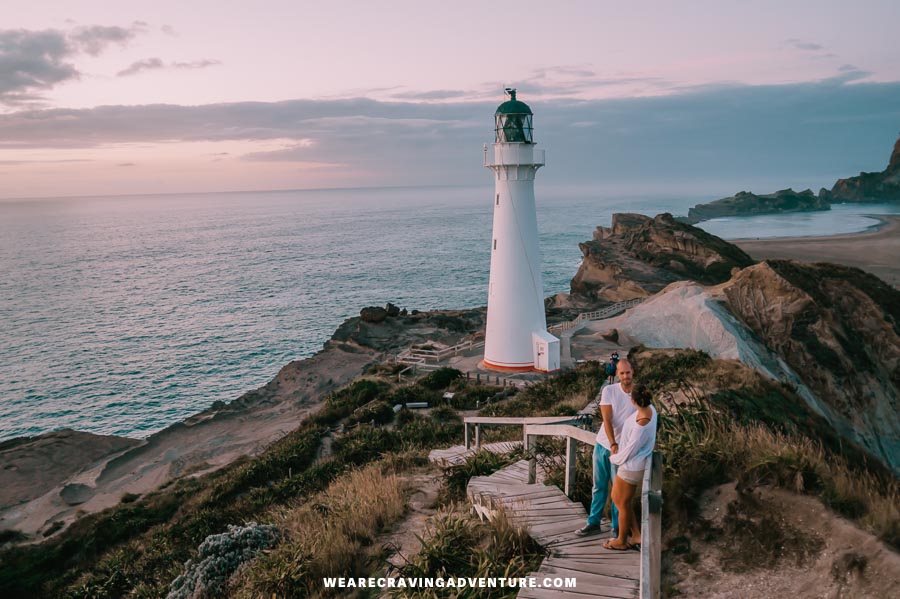
I arrived intending to have a quick look and turn around within a few hours. The beach, lagoon, lighthouse and Castle Rock completely derailed that plan, and I stayed for three days. This itinerary only gives you one night, but arriving in the afternoon means you can see it in evening light and again at sunrise.
Walk the lighthouse path first, then follow the open section of the Deliverance Cove Track to the base of Castle Rock. The track no longer completes a loop and the steep informal spur to the summit is not part of the maintained route, so turn around at the base and enjoy the view back across the cove. Stay off the exposed reef beside the lagoon; the lighthouse path and beach give you the best views anyway.

Where to Stay in Castlepoint
Castlepoint has very little accommodation, which is part of the appeal and also the reason to book early. Castlepoint Holiday Park & Motels is my practical first choice, with beachfront motel rooms, cabins and sites close to the lighthouse. For a private beachfront stay, check Waiwhare on the Beach. Stock up before you arrive because the local shop is small.
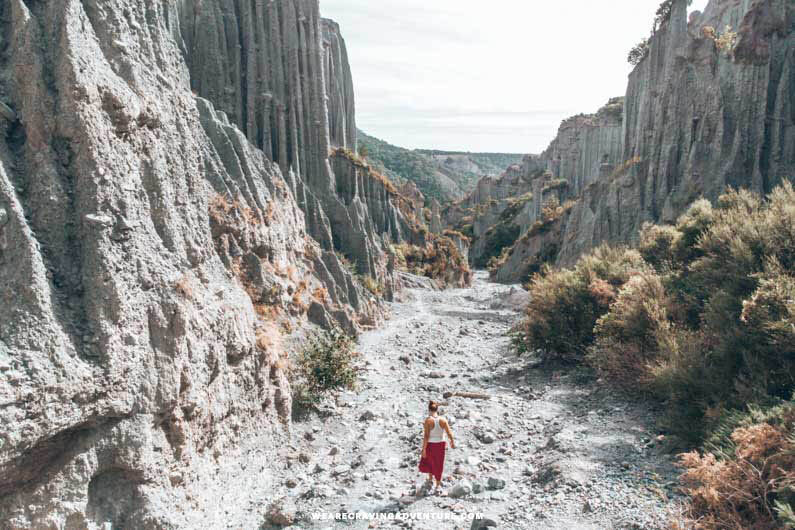
Day 20 – Pūtangirua Pinnacles and Cape Palliser to Wellington
Route: Castlepoint → Masterton → Martinborough → Pūtangirua Pinnacles → Cape Palliser → Wellington
Driving: Approximately 330 km and 6 hours, plus the walk
Walking: Around 90 minutes return to the Pūtangirua lookout
Sleep: Wellington
This is the longest driving day of the three-week route, so watch sunrise at Castlepoint and leave soon afterwards. Drive back through Masterton and Martinborough, then follow the coast to the Pūtangirua Pinnacles Scenic Reserve.
The seven-million-year-old earth pillars look like somebody built a stone city and then abandoned it. They became the Dimholt Road in The Lord of the Rings: The Return of the King, although they are impressive enough without the film connection.
Access has changed since I first wrote about this route. The old walk up the stream and into the base of the formations is no longer open. Follow the marked Pinnacles Ridge Track instead; it crosses the stream once, climbs through the bush and ends at the lookout above the pillars. Allow about 90 minutes return and do not continue up the stream beyond the signed turnoff.
From the track entrance, continue for roughly half an hour to Cape Palliser. A staircase of 253 steps reaches the red-and-white lighthouse, while the rocky shore below supports the North Island’s largest fur seal colony. Give the seals space, climb the steps, take in the view and then start the drive to Wellington.
If you leave Castlepoint late, skip Cape Palliser rather than rushing the pinnacles. The lighthouse is an excellent extra because it sits at the end of the same coastal road, but Pūtangirua is the irreplaceable stop on this day.
Day 21 – Wellington
Plan: Wētā Workshop → Mount Victoria → Te Papa → waterfront and Cuba Street
Book ahead: Wētā Workshop experience, or swap the city afternoon for a Lord of the Rings half-day tour or Wellington craft beer tour
Sleep: Wellington – InterContinental Wellington, or continue your onward journey
Complete plan: See the complete Wellington day in the two-week itinerary
Finish with Wētā Workshop, Mount Victoria, Te Papa and the waterfront, choosing the two or three stops you actually care about instead of speed-running the capital. Celebrate the end of the road trip around Cuba Street with dinner and one of Wellington’s very good craft beers; Garage Project was always my favourite.
Book These Three-Week Additions First
- Day 15: Te Puia guided experience
- Day 17: wild stingray reef ecology tour, if its tide time fits
- Day 18: Hawke’s Bay wine tour
- Day 19: Castlepoint accommodation, because there is very little inventory
- Day 21: Wētā Workshop experience
Continue to New Zealand’s South Island
Book the ferry: Compare sailings with Bluebridge and Interislander. If you are taking a car or campervan, book once your dates are fixed because vehicle spaces can fill up.
After three weeks on the road, you have seen a genuinely impressive chunk of the North Island. If your New Zealand adventure is not over yet, Wellington is also the perfect place to continue south: take the Cook Strait ferry to Picton and start exploring the South Island.
If Wellington is the end of your New Zealand trip, simply return your rental vehicle and fly out from Wellington Airport. Otherwise, get on that ferry—the South Island is far too spectacular to skip.
READ NEXT:
New Zealand South Island Road Trip Itinerary
Plan the ultimate 2 & 3 week South Island road trip route

Getting around New Zealand’s North Island
You need your own wheels for this North Island road trip. You could reach Auckland, Rotorua, Taupō and Wellington by bus, but public transport will not get you efficiently to places such as Cape Reinga, the Forgotten World Highway, Castlepoint or the trailheads. Trying to recreate this exact route without a vehicle would involve a mess of tours, transfers and missed detours.
The real decision is not whether to drive, but whether to rent a car or a campervan. I have travelled New Zealand in a van and genuinely loved the freedom and adventure of it, but I no longer think a campervan is automatically the best—or the cheapest—choice for everybody.
🚘 MY GO-TO RENTAL COMPANY: DISCOVER CARS
I always book my rental car through Discover Cars. They compare local and international agencies to get the best deals. No hidden fees, free cancellation, 24/7 support, and optional full coverage for peace of mind.
Rental car vs campervan for a North Island road trip
| Rental car + accommodation | Campervan | |
|---|---|---|
| Best for | Most couples, comfort, easier driving and proper showers and beds | Travellers who actively want the camping and van-life experience |
| Driving | Easier on narrow, winding roads and simpler to park in towns | Slower and bulkier, especially on Northland, Coromandel and Taranaki roads |
| Comfort | More space, better sleep and no daily bed-to-table conversion | Your comfort depends enormously on the size and layout of the van |
| Typical vehicle cost | Roughly NZ$45–140 per day before optional excess reduction | Roughly NZ$100–350+ per day, with the biggest vans and peak dates costing more |
| Overnight cost | Usually NZ$160–350 for a good motel or hotel room | Often NZ$40–90 for a holiday-park site; some basic DOC sites cost less |
| Fuel | Usually much more economical | Higher consumption; diesel rentals may also have road-user charges |
| Cooking | Choose motels or apartments with a kitchenette | A kitchen travels with you, although cooking in a small van gets old for some people |
| Freedom camping | Not applicable | Only where permitted; a valid green self-containment warrant may be required |
| Flexibility | You need to book rooms, but the vehicle itself is easy to take anywhere on this route | You carry your bed with you, but popular campsites can still fill and local camping restrictions apply |
For most people following this itinerary, I would choose a rental car. It is more comfortable, easier to drive, uses less fuel and lets you properly relax at the end of long days. Once you add the higher campervan rate, campsites, fuel and insurance, a car with well-chosen motels is often surprisingly competitive.
I would choose a campervan if camping is part of the holiday rather than merely a strategy for saving money. Waking up beside the coast, carrying your kitchen with you and having everything in one place can be brilliant. Just compare the complete trip price and make sure the layout is something you could happily live in for two or three weeks.
Compare the total cost, not the headline rate
For a car, add the rental, excess reduction, one-way fee, fuel, parking and accommodation. For a campervan, add the rental, excess reduction, campsite fees, fuel, possible diesel road-user charges, linen or equipment fees and the one-way fee.
Compare rental-car prices
Compare campervan and motorhome prices

A few practical driving tips
- New Zealand drives on the left. If that is new to you, take the first day slowly and rent an automatic.
- Google’s distances are useful, but its times do not include photo stops, one-lane bridges, winding roads or the inevitable coffee detour. Add breathing room.
- Fill up before the more remote stretches rather than trying to save two cents at the next station. Cape Reinga, the Forgotten World Highway and the road towards Castlepoint are not where I would play fuel-light roulette.
- Download offline maps before leaving Auckland and check the NZTA Journey Planner for current roadworks, closures and delays.
- If you rent a diesel vehicle, ask whether road-user charges are already included or settled separately at the end.
My guide to renting a car in New Zealand goes into licence rules, insurance, excesses and the little charges worth checking before you confirm anything.

Travel insurance for a New Zealand road trip
I would sort out travel insurance as soon as the expensive parts of the trip are booked, not leave it until the bottom of the packing list. New Zealand’s ACC system may contribute towards treatment for an accidental injury that happens in the country, but it is not a replacement for travel insurance. It does not cover ordinary illness, cancelled bookings, missed connections, stolen luggage or getting you home, and you may still have treatment costs to pay.
Read the policy details carefully if you plan to hike, skydive, raft, surf or do any other adventure activity. Check medical and evacuation cover, trip interruption, rental-car excess and exactly which activities are included rather than assuming every exciting thing in New Zealand falls under a standard policy.
Get covered before the expensive bookings become non-refundable
Insurance costs and cover depend on your age, nationality, trip value and planned activities. Compare suitable policies and get a free quote, then read the policy wording before buying.
How much does a North Island road trip cost?
New Zealand is not a cheap road-trip destination, but the final number depends far more on your vehicle, rooms and paid activities than on whether you save NZ$3 on lunch. The ranges below are realistic 2026 planning figures in New Zealand dollars, not promises. Christmas, New Year, long weekends and last-minute bookings can push them considerably higher.
| Expense | Realistic planning range | What changes the price |
|---|---|---|
| Rental car | NZ$45–140 per day | Season, vehicle size, one-way fee and excess reduction |
| Campervan | NZ$100–350+ per day | Season, size, toilet/shower, one-way fee, extras and insurance |
| Good motel or hotel | NZ$160–350 per room | Location, season and how early you book |
| Holiday-park site | NZ$40–90 per night | Powered vs unpowered, number of guests and facilities |
| Groceries | NZ$25–45 per person per day | How much you cook and where you shop |
| Casual meal | NZ$20–40 per person | Town, restaurant and drinks |
| Dinner out | NZ$45–90+ per person | Courses, drinks and restaurant style |
| Coffee | NZ$5–7 | Milk choice and location |
| Fuel | About NZ$3.00/L for 91 petrol and NZ$2.70/L for diesel when updated | Prices change constantly; diesel road-user charges may be separate |
| Activities | NZ$0–350+ per person | Walks are often free; rafting, flying and full-day tours are not |
A realistic daily budget for two people
- Rental car, simple motels and mostly self-catering: roughly NZ$300–500 per day for two.
- Campervan, paid campsites and mostly self-catering: roughly NZ$300–600 per day for two.
- Rental car, good hotels, restaurant dinners and regular paid activities: roughly NZ$550–900+ per day for two.
Those totals exclude international flights and very expensive splurges. This itinerary includes several worthwhile paid experiences, so I would make a separate activity budget rather than pretending the glowworms, Hobbiton, rafting, Māori evenings and boat trips will somehow disappear into the daily food allowance.

How to save money on your North Island road trip
The best savings come from planning the big expenses well, not making yourself miserable over every coffee. These are the tricks I would actually use.
- Price the car and campervan versions of the whole trip. A cheap-looking van can stop being cheap once you add campsites, fuel, insurance and extras. A rental car and a motel room with a kitchenette may be better value as well as far more comfortable.
- Book the vehicle early. This matters most from December through February and around public holidays. Compare like for like, including kilometre limits, excess, one-way charges and the driver’s age.
- Mix hotels with motels or apartments. A kitchenette every few nights lets you make breakfast, prepare a hiking lunch and wash the road-trip snack containers without committing to cooking every meal.
- Stock up in larger towns. PAK’nSAVE is often a good place for a bigger shop, while New World, Woolworths and smaller local stores are useful for top-ups. Buy before remote overnight stops where the choice is smaller.
- Use Gaspy to compare nearby fuel prices. Do not drive 30 kilometres to save a few cents, but do fill up sensibly when a cheaper station is already on your route.
- Use First Table for an early or late dinner. Participating restaurants offer 50% off the food bill for two to four diners; drinks are excluded and a booking fee applies.
- Choose the paid experiences you genuinely care about. I would spend on the things that are distinctive to New Zealand, then balance them with beaches, waterfalls, viewpoints, geothermal city parks and hikes that cost nothing.
- Do not build your campervan budget around free camping every night. Some places prohibit overnight camping, others restrict it to approved areas, and a green self-containment warrant does not override local rules. Treat any free legal sites as a bonus.
- Check the currency offered at card terminals. Paying in New Zealand dollars and letting your own card handle the conversion is often better than accepting a merchant’s conversion, but check your card’s fees first.
Money, cards and mobile data
New Zealand uses the New Zealand dollar, and cards are accepted almost everywhere along this route. I would still carry a small amount of cash for the occasional rural honesty box, basic campsite or temperamental card machine, but there is no reason to travel with a small mattress stuffed full of banknotes.
Some businesses add a disclosed surcharge for credit-card or contactless payments. A travel card with sensible foreign-exchange fees is useful, but compare its ATM and conversion charges before leaving home. If a terminal offers to charge you in your home currency, check the rate carefully before accepting it.
For mobile data, compare visitor SIMs from Spark, One NZ and 2degrees with a travel eSIM that works on your phone. Coverage varies between networks and can disappear on rural sections regardless of how much data you bought, which is why I still download maps, bookings and hiking information before setting off.
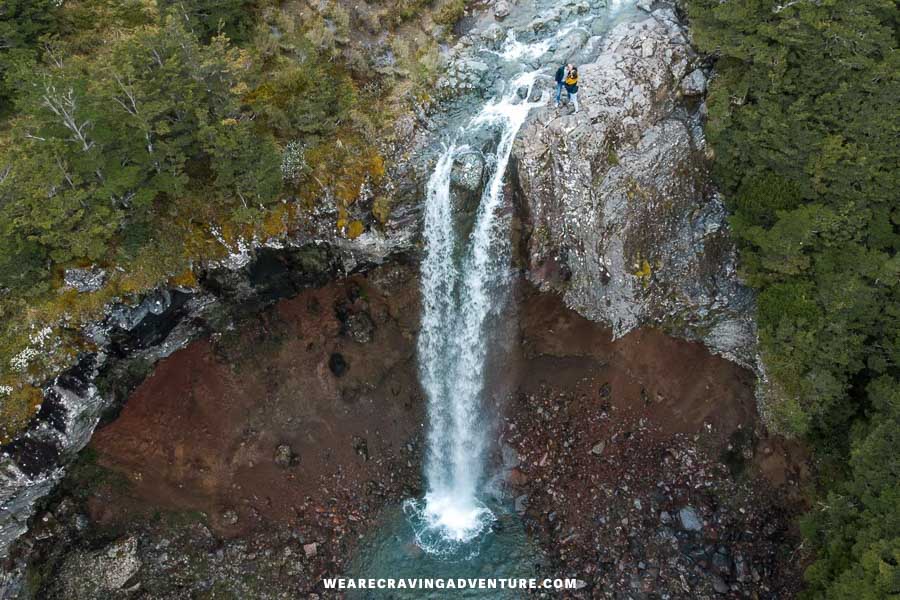
Best apps and websites for a New Zealand road trip
I would download these before leaving Auckland and save the important bookings and maps offline. Reception is perfectly fine in the cities and patchier on some of the rural stretches, so a screenshot still has its place in 2026.
- NZTA Journey Planner: current roadworks, closures, delays and traffic information. Check it before each longer driving day.
- MetService: the weather source I would use for everyday planning. For major hikes, also check the forecast and notices for the actual national park or track.
- Google Maps: save your accommodation, trailheads, fuel stops and restaurants, then download the regions for offline navigation.
- Gaspy: crowdsourced fuel prices. It is most useful when several stations are already nearby rather than as an excuse for a special expedition.
- CamperMate: campsites, holiday parks, public facilities, dump stations and useful services. It is designed with campers in mind but can help any road-tripper.
- First Table: discounted off-peak restaurant bookings in participating towns.
Best time for a North Island road trip
You can road-trip the North Island all year, but this particular itinerary is at its best when the beaches are inviting and the major hikes are in their normal non-winter season. My favourite time would be late February through March: the weather is generally still warm, the sea has had all summer to heat up and the biggest holiday crowds have started to thin.
| Season | What it is like | My thoughts |
|---|---|---|
| Summer December–February | Warmest beach weather, long days and the highest demand for vehicles, rooms and campsites | Excellent if you book early and do not mind sharing the famous stops |
| Autumn March–May | Warm early in the season, with thinner crowds and cooler evenings as autumn progresses | My overall pick, especially March |
| Winter June–August | Shorter days, cool and wet spells, quieter attractions and excellent geothermal-soaking weather | Good for a flexible low-season trip, but replace alpine hikes unless properly equipped and experienced |
| Spring September–November | Fresh landscapes, longer days and changeable conditions; alpine snow can linger | November is a strong shoulder-season option |
There is no need to panic because rain appears in a forecast. New Zealand weather changes, and most days simply require a rain jacket or a reshuffle. The activities that do need more respect are the exposed alpine days—particularly Tongariro and the higher Taranaki routes—where the conditions at the trailhead matter more than the season printed on a calendar.

What to pack for a North Island road trip
Pack for layers rather than one imaginary version of New Zealand weather. Even in summer I would bring a light waterproof shell, a warm layer and something dry to change into after a wet walk or water activity.
- Comfortable walking or trail shoes with decent grip
- A small daypack, reusable water bottle and lunch container
- Waterproof jacket and one warm layer
- Swimwear and a quick-drying towel for beaches, hot pools and rafting
- High-SPF sunscreen, sunglasses and a hat
- Insect repellent, especially if you are camping
- Phone mount, charging cable, car charger and a power bank
- New Zealand plug adaptor and downloaded copies of bookings
For the longer version, including the bits I repeatedly forgot or carried for no reason, see my complete New Zealand road-trip packing list.
North Island road trip FAQ
How many days do you need for a North Island road trip?
Two weeks is the sweet spot for a first North Island road trip if you want a varied route without driving every waking hour. Three weeks gives you Northland, Gisborne, Hawke’s Bay and more breathing room. If you only have one week, use my dedicated 7-day North Island itinerary rather than trying to squash this entire route into it.
Is a car or campervan better for the North Island?
A rental car is better for most travellers who value comfort, easy driving, fuel economy and proper accommodation. A campervan is better if the camping experience itself excites you and you are happy living in a compact space. Neither is automatically cheaper, so compare the total trip cost.
Do I need a 4WD for this itinerary?
No. A normal 2WD rental car is suitable for this route, and the Forgotten World Highway is now sealed. I would choose a comfortable mid-sized automatic over the tiniest possible car, especially with two or three weeks of luggage. Never take a rental vehicle onto a road prohibited by its agreement.
Can I do this North Island itinerary by public transport?
Not as written. Coaches connect the main cities, and tours can cover places such as Hobbiton and Waitomo, but many of the coastal stops, waterfalls, trailheads and scenic roads require your own vehicle. For this route, self-driving is part of the trip rather than just transport between attractions.
Can I freedom camp anywhere in New Zealand?
No. Freedom camping is controlled by national rules as well as local councils and land managers, so permission changes from place to place. Where self-containment is required, the vehicle currently needs a valid green self-containment warrant; the old blue warrants are no longer valid. Even a certified vehicle can only stay where overnight camping is allowed.
How much should I budget for two weeks on the North Island?
For two people, I would start with roughly NZ$4,200–7,000 for a rental car, simple accommodation, fuel and mostly self-catered food, then add the activities you choose. A more comfortable hotel-based trip with regular restaurant meals and paid experiences can easily reach NZ$7,700–12,600+. International flights are not included.
What should I book first?
Book the vehicle first, followed by accommodation in the smallest overnight stops. Then reserve the experiences that run at fixed times or sell out: Bay of Islands sailing, Hobbiton, your Waitomo cave trip, the Tongariro shuttle, Māori cultural evenings and any major adventure activity you would be genuinely upset to miss.
Is it better to drive from Auckland to Wellington or Wellington to Auckland?
Either direction works. I prefer Auckland to Wellington because it fits the route naturally, Auckland receives more international flights and Wellington is the perfect finish if you are continuing to the South Island by ferry. Before booking, compare flight times, vehicle availability and one-way fees in both directions.
What is the best month for a North Island road trip?
March is my favourite for this itinerary. It usually combines warm weather and swimmable coastlines with fewer summer-holiday crowds. November is my second choice if you prefer spring, while December through February is best for maximum daylight and beach weather if you book well ahead.
Can I drive this route in winter?
Yes, with flexibility. The cities, geothermal sights, wineries, caves and most coastal stops still work, and winter can be wonderfully quiet. I would replace the Tongariro Alpine Crossing and exposed high Taranaki hikes unless you have the appropriate winter alpine skills and equipment, and I would keep each driving day realistic around the shorter daylight hours.
Are New Zealand’s North Island roads difficult to drive?
They are manageable, but often slower than first-time visitors expect. Many rural roads are narrow and winding, and one-lane bridges are normal. Pay attention, let faster traffic pass where it is safe, and do not plan every day to the minute.
Planning a trip to New Zealand’s North Island?
I lived in New Zealand for six years and spent a ridiculous amount of that time chasing beaches, geothermal landscapes, waterfalls, road-trip detours and any activity that involved jumping off, flying over or rafting down something. The itinerary above gives you the route; the guides below help you fine-tune each stop.
Start with the destination you are still debating, then use the practical guides to sort the vehicle and packing. I have grouped everything so you do not have to excavate the website one search bar at a time.
Read next:
North Island itineraries & planning:
7-day North Island itinerary
Renting a car in New Zealand
Campervan travel in New Zealand
New Zealand road-trip packing list
Everything to know before visiting New Zealand
Auckland:
Auckland itinerary
Where to stay in Auckland
Best day trips from Auckland
Paihia & the Bay of Islands:
Paihia and Bay of Islands itinerary
Things to do in Paihia and the Bay of Islands
Coromandel Peninsula:
Coromandel Peninsula guide
Auckland to Coromandel road trip
Where to stay on the Coromandel
Cathedral Cove guide
Donut Island kayaking guide
Rotorua & the central North Island:
Rotorua itinerary
Best things to do in Rotorua
Where to stay in Rotorua
Best geothermal parks in Rotorua
Māori villages and cultural experiences
Best day trips from Rotorua
Rotorua to Taupō scenic drive
Rotorua in winter
Hikes, scenery & adventures:
Tongariro Alpine Crossing guide
Castlepoint guide
Lord of the Rings filming locations
Skydiving in New Zealand
Continuing south:
South Island road-trip itinerary

This blog was amazing… I came here for Waitomo info because those caves are on my bucket list. However, it was almost as if each place you listed was even cooler & more beautiful than the last. Pinning & saving this blog for when I make it to NZ.
Hi Shelley, that’s great! The Waitomo caves are heaps of fun, but there is so much more amazing stuff to do around that it would be a shame to miss out. Super glad that we were able to inspire you!
Your photos are so beautiful and always grab my attention! Great post and so many stunning recommendations for a holiday in North Island!
Thank you so much Cass, that is such a nice compliment!! We could honestly easily write about enough places on the North Island to double the length of this blog haha, there is just sooooo much out there that is worth seeing.
What an amazing blogpost!! I absolutely loved reading it and to see how much time and effort went into creating this one. The design and lay-out is so clear and it’s easy to navigate. I’ve wanted to travel to New Zealand for YEARS but it’s so far away from the Netherlands. I just graduated university and hopefully have a job soon. I can’t wait to save my money and plan a trip in the future! Will definitely do a full-on road trip for at least the 2 weeks you suggested.
Yay, we are so happy to read your comment, Melissa! And super awesome that New Zealand is so high on your list. We know exactly what you mean, Tom is from the Netherlands too and it is just so far away that we feel we can’t justify going unless we can spend at least multiple weeks there. Then in our case, it turned into multiple years, haha Let us know when you’re making the actual plans to go, we’d love to help!
Love your pictures and the details in your itinerary 🙂 I love it when blogs have maps with the path highlighted. It’s an essential to plan a road trip!
Thanks Lekha! We love adding little design bit like those maps. Glad to know that they help!
New Zealand is stunning! This is a great itinerary to follow.
Thank you Rebecca, New Zealand sure is! We just can’t get enough, even after already spending so much time in New Zealand, haha!
Cool road trip. We still haven’t made it to Taranaki yet. Good suggestions here.
Thank you, Rhonda! Taranaki is such an incredible mountain and the region as a whole is just beautiful. Definitely worth a visit when you get the chance next time!
Such a comprehensive road-trip itinerary! You covered all potential questions…and loved the photos. New Zealand is beautiful! Pinning for a future visit!
Thank you so much! Hopefully, New Zealand opens its borders again soon so you get to visit! We can’t wait to go back either.
This article provides details about new Zealand north island road trip . This blog happens to be one of the best blog, which give proper details about it. I enjoyed reading this blog and would suggest others too, and you would get to read about it in this link.
I would love to go on a longer road trip like this! There are so many incredible locations to stop at – thanks for all of the tips!
Hi,
I love your guys map. Did you guys created? or someone did the edition? thanks
Hi. I plan to visit NZ for the 3rd time and this time will bring group, family and friends. We are from Indonesia and most of us are above 55 years. We need sugestion which place should we skip from your list. And whether campervan is easy enough to handle. Thank you. This article is awesome.
Hi, so glad you found this article helpful! A campervan is a fantastic way of exploring New Zealand and there’s plenty of campsites for you to choose from. however, if you don’t feel comfortable driving one you might consider opting for a car instead. Some roads can get quite narrow, steep and windy. As per what places to skip – that’s a tough one to answer and it will depend on how much time you have, what your interests are as well as your traveling style and fitness level.